



WHAT WE ARE LOOKING FOR IS WHERE WE ARE LOOKING FROM
A CONVERSATION WITH JAH WOBBLE
Perhaps the term ‘legend’ is tossed around a lot, maybe even too much. But, Jah Wobble is an absolute legend. From his days with Public Image Ltd into his solo career and numerous collaborations, Jah Wobble is much more than just a brilliant bassist. He is an artist who has created many different sounds and images over the nearly five decades he has been performing. And he keeps on surprising and delighting his fans with his constant explorations. His new album, Dub Volume ,1 is a case in point. Wobble takes his listener into his past, the beauty of the diverse (and sometimes struggling) East End of London, and he does it with such class and style. I recently caught up with him via Zoom at his home in England.
We were meant to talk about the new album, and his involvement with his sons’ band, Tian Qiyi, formed by his sons Charlie and John Wardle, but we ended up talking about everything and it was hard, at times, to keep on track. For example, we started our conversation talking about the Canadian music scene.
“My sons, and their generation, consider Canada hipper than America nowadays. For a lot of the music they like, it is more exciting in Canada. I am going to try to get some shows together in Toronto and Vancouver with them. Getting a work visa is fairly straightforward, whereas for America, it is really expensive.”
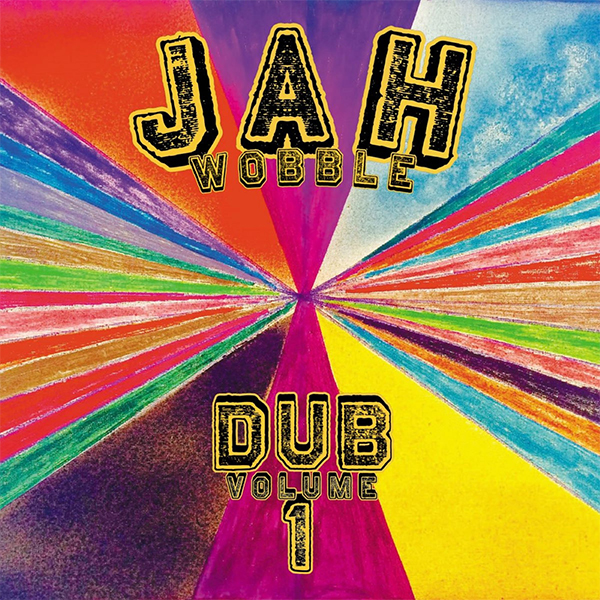
But then we talked about his new album, Dub Volume 1, which is an absolutely brilliant album.
“It is really me, just doing my thing. As a writer, a composer, using ‘dub’ to write top lines and not typical ‘dub’ top lines. One or two of them are, but probably most of them on the album are not. It is very much in a vacuum. I have developed a writing style over many years. I never talk that way, because I think it sounds too grand. But because it has come up in talking about this album, it is a surprise.”
And Jah has every right to be proud of his new album. After 38 albums (give or take) plus equal amounts of collaborations, Jah Wobble has come up with something entirely new and quite different. “My first thought was, ‘not much to say about this album, there are no clever concepts or anything’. But actually, it is the summation of my writing style. Because I hadn’t heard it for a few weeks, and people were saying they liked it, I thought, ‘I must go back and listen’. And I must admit, it is pretty good. I did it myself, it is just me, just naturally writing. The last album I did like that was The Bus Routes Of South London, but that had a concept of a guy on a bus writing on an iPad, writing some basic music and catching the mood, musically, on the bus. Which was pretty surreal. With this album, it is really just me grooving away.”
Dub Volume 1 came about quite organically and was not really planned. “I just recorded, because it was fun. If I start, the crucial thing is starting, once I start that’s it. It is still like that. I will start, if I am not touring, I am at home and I start working and the next thing you know you are bursting for a piss. It’s dark, you are just so intent on it, and it is still the one thing in the world that I get that intent on. I get so intensely into it. And it is so easy now to record with the new technology so forgiving and it is a dream for me. If you had told me when I was joining PIL that in 35 or 40 years’ time, you will be able to record better quality than this, in the studio with PIL, with a little thin rectangular thing with a metal box you cut into which allows you to cut and paste and make collages of things in a way you could not do in those days with analogue. You had to overdub one track over the other for a collage. There is a lot that is really shit about the modern world, but this is a dream. Apple owns me.
DUB VOLUME 1 ALBUM REVIEW
Jah Wobble is being very modest, the album is like a tour of the many cultures of London’s famed East End, an area in which he grew up and had a significant impact on him. And using that as a starting point, it allowed Jah Wobble to express his observations of what is happening worldwide and in his home. “Tragic Slavic Dub”. I was watching the Serbian war on TV, those drones killing Russians but also Serbians, and it is really horrible. Somebody’s son, these terrified guys, young fellows looking, terrified. I just thought, ‘you have two brother nations’…it is as simple as that, just watching TV. That is where that came from. “Tyson Dub”, which is named after my rescue staffie (Staffordshire Bull Terrier) who died. I wanted something very proud, staffies have a proud, kind of stubborn look on their face. It was written, very much, thinking of him, with a slightly playful twist at parts. He was very playful, had a great sense of humour and he loved to have fun. “Lover’s Rock”, I started writing it one day and thought it had a very lovely ‘rock sound’ which is very precise to London, ‘79 to ‘81. Dennis Bovell was probably the king of that sound.”
John Wardle—known as Jah Wobble—grew up in the East End, as a Catholic, but he was exposed to many different religions and cultures, again this is reflected in the new album and his music. “I was born and raised Catholic. I was an altar boy, of Irish heritage and all that stuff. But the area I grew up in, back in the day, was very Jewish. Not now, but then, it had a certain vibe. It was a very old world to me. On a Sunday morning, early Sunday morning, as I was walking home there would be these old Jewish guys setting up their street market, bringing their carts along. And you could have been in the early 1900s somewhere. And that is where Old Jewish East End Of London Dub came from. It is very nostalgic for me, because it is an East End that has moved on. Everything moves on in life, and that world is gone. It was a great world. It was post war, full of Jewish and the Irish, primarily. My mother’s family came over, early in the century from Cork, and my old man’s, well some of them came from Cork too. It was Dickensian. It was very old world, and my mentality is more than that of the modern world. I have a cynical eye, sometimes, on the modern world.”
But to be clear, this is not Wardle putting down young people of today, quite the opposite. “Young people, sometimes, are not very realistic and they get bad press. Sometimes they can be the ‘woke movement’. I am not political, I am not one way or the other, politically. I get fed up with them all, actually. And of course, we are terrible because we are middle of the road guys, we should be taking a very strong stance and be very angry about everything.”
As noted, Wardle is working with his sons, bringing forward his traditions into their new music. The band, Tian Qiyi, are currently finishing up their new album and getting ready for shows. Wardle enjoys spending time with his sons, Charlie and John Wardle. “The way they play, I guess because they are family, is similar to the way I play. But they have their own character to it as well. They have Mongolian heritage as well as Irish, Chinese, UK, and all those traditions. Mongolia is such a rich place. It is really incredible. I love the music the boys are doing. John teaches me the scales, because he is really incredible, seven notes scales, and really sophisticated stuff.”
He may be learning things from his sons, but his distinct bass and ability to write songs in his own distinct way still stands out. “It’s funny, the fundamental bass sound somehow has the same DNA code that grows and manifests in all these different ways.”
“I will give you the honest answer. We change from one day to the next, everything is in a state of flux. I will put it in the four tiers of Buddhism. All conditions and phenomena tiers are suffering because we cling to it. But the trouble is they are impermanent, and they lack an inherent self, so we end up kind of being delusional. So is there something, some change. When I talk to you about my life, everything is a sin and is a state of a sort of awareness, because that is the only unchanging thing. It would be wrong to call it permanent, because it comes into being and is really in space and time. But it is the thing that knows everything is impermanent and constantly changing. Some call it Buddha nature, some the supreme self, some would say the supreme nonself. All the mystics say what we are looking for is where we are looking from.
“This awareness, if you are conscious of that awareness, there is a spaciousness to it. It is a very relaxed quality. It is a contentedness that comes with that natural state. So that is what the music does, and that is where the music comes from. In essence, the music is already formed. It comes to me ready formed, in a way, and I am like a midwife producing it. I want people to follow the music back to their source, because my source is the same as your source. There cannot possibly be more than one type of awareness. That is the shared vision. Yeah, we go to war with each other, and it is fucking crazy. It is ridiculous. This awareness is similar to space, and you are sitting in the same space as me, because there is only one space. You have your own personal things arising around you, arising me too. The music, when I make it, makes me happy and content because it is putting me in touch with that source. So that is what I want people to share, and we should all make each other aware of that source.
Artist Links


Photo Credits: David Guttridge

SPILL MUSIC PREMIERE: BRING YOUR OWN HAMMER – “FROM THE TOMBS” (BY MIKE SMALLE & JUNE MILES-KINGSTON FEAT. BERNARD BUTLER, IAN CATT, TERRY EDWARDS, MARCUS HOLDAWAY & FER...
SPILL ALBUM REVIEW: JAH WOBBLE AND JON KLEIN – AUTOMATED PARADISE

SPILL FEATURE: WE GOT HALF AN HOUR BEFORE PEOPLE ARE COMING LET’S MAKE A QUICK BASSLINE DOWN – A CONVERSATION WITH JON KLEIN
SPILL ALBUM REVIEW: JAH WOBBLE – DUB VOLUME 1

