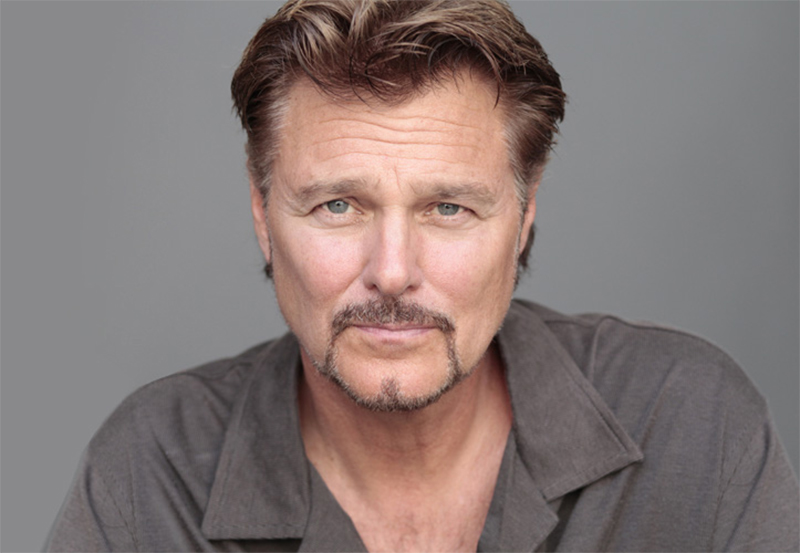
NOT JUST A GUY FROM TV
A CONVERSATION WITH GREG EVIGAN
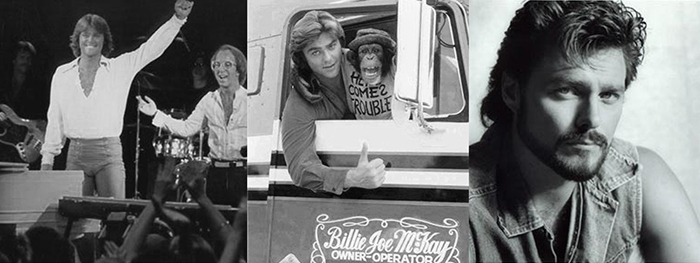
There has always been more to Greg Evigan than meets the eye. As an actor, he has entertained generations of television fans since the 1970s, as the titular “B.J.” in B.J. and the Bear. He also shared lead billing with comic actor Paul Reiser, in the situation comedy, My Two Dads. Among many other roles, he also played a futuristic detective in the 1990s cyberpunk series, TekWar. Seeing how Evigan carved out a career which included stage, television, and film, it may come as a surprise to some people that he recently released an album of original compositions, titled Greg Evigan with London’s Royal Philharmonic Orchestra.
Evigan has made his living in front of the camera, but music has always been a big part of his life. A classically trained pianist, who also plays organ and saxophone, he often had a band or other music project going on, outside of acting. Sometimes his acting and music careers crossed over, such as when he sang the theme song to B.J. and the Bear, or when he co-wrote and performed the title theme for My Two Dads. It may seem unusual but applying his creative musicianship to a project that he was acting in, was not so strange for Evigan. He says, “I was always trying to do that, you know. With Jesus Christ Superstar, I started out as a singer and musician because I was in bands before that. Before I got in high school had, like, four different bands. But the thing that was always was tough, especially at the time, was that it was hard for people to cross from one thing into another. You’re kind of pigeon-holed. When my agent put me out for movies, they would say things like, ‘He’s TV, though, right?’ And so, the same with music. A few people broke through. I mean, Rick Springfield had a good breakthrough there. And there’s a few others that that went from series, even Clint Eastwood. I mean, he was an exception. So musically? You could probably count them on your hand, I don’t know. In those days, that was kind of the struggle. I never stopped. On any movie I did, I always tried to talk to the music supervisor, to get some music in there, see what I could do.”
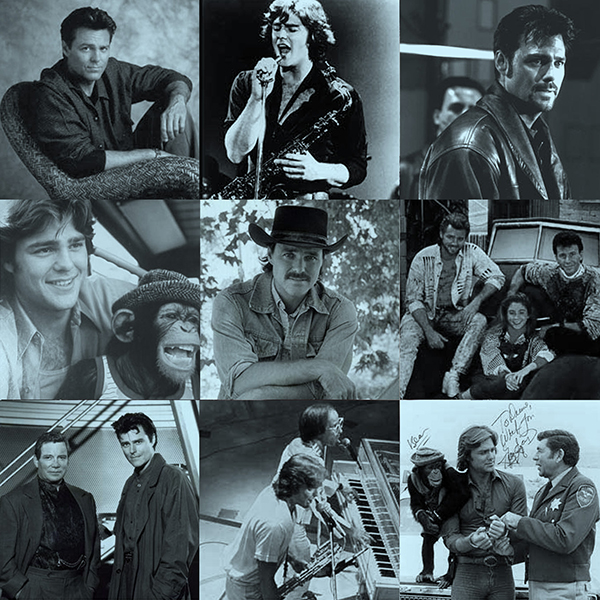
It is interesting to observe an artist who is gifted in more than one discipline. The question is raised with Evigan, as to whether there was a point in his life when he had to choose between acting and music. He is reflective with his response, saying, “It all started in high school days. I should say, in high school years. That’s when the classical training that I had from eight years old to 15, 16, right in there. I let that go a lot. I just wasn’t interested. I put that into the keyboard when I was playing with the band. And, of course, chord structures were a lot easier than what I was playing… I realized that in order to do the plays – because I did first thing was Jesus Christ Superstar – I was singing. I was in the concert tour, on the first road tour, and that was all singing. When I got back to New York, I went up for Grease, and then I realized I needed some acting chops, you know? I feel like from high school plays, I really had a good feel for it. But how that translates to TV and film is a whole ’nother story. Because you’re playing for the back row when you’re doing a play, but when you’re doing film, you’re playing – you’re infinite! You’re right in the face, you know. So, you’ve got to bring it back. A lot of people don’t translate from stage to TV.”
During the time of his early success in television, Evigan tried to stay active in music, but this proved to be a challenge. He notes, “When you do a series, it’s tough to do anything else. But I did put together a show at the Palomino Club, which was a popular club at the time in the valley. I put a band together, did mostly original stuff. Maybe one or two cover tunes, but mostly original. I started putting band together for that, then I did another. I always had the urgency to perform. I’m still trying to do that right now. But it was difficult for the time that I had to do that. It was never something like a band that I felt really close to, you know, like ‘We’re putting this together for us, for all of us.’ It always felt like it was put together because I wanted to show, because I had the TV name. And then the same old problem came up about crossover, you know, ‘Wait, that guy’s from TV! He’s a movie star!’ So, I was always kind of deluded. I’d do it, it’d be done, and then it didn’t turn into anything else, because I had to pay everybody. It wasn’t cheap, and I couldn’t commit to a road situation because I was doing the (TV) show. So you see, in order to really get a band going, I think you got to get out there on the road, and you’ve got to play. You’ve got to tour. It has to be the only thing you do. This is the biggest thing, I think, with people that are trying to do this, [who are] up and coming: if you’re going to do something, I really think you have to do the one thing. You have to pick the one thing.”
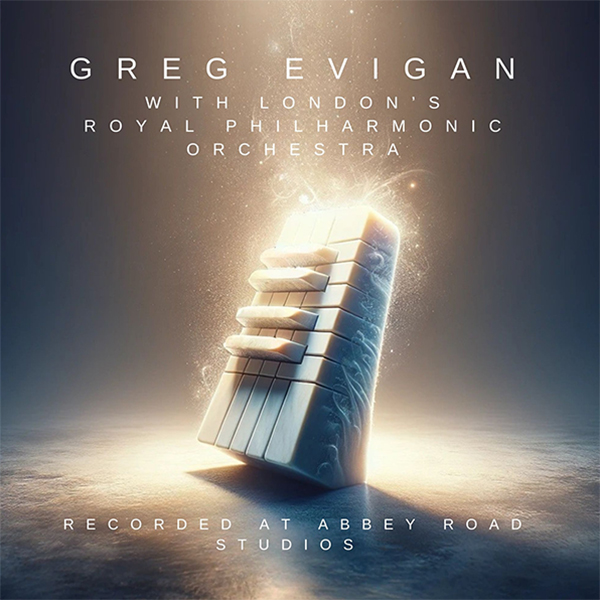
PURCHASE GREG EVIGAN WITH LONDON’S ROYAL PHILHARMONIC ORCHESTRA
While discussing the idea of choosing one art form to focus on in a career, Evigan makes reference to his son, Jason Evigan. A successful musician who is the Grammy Award-winning producer of Benson Boone, Jason made the choice early, to focus on music. Of his son, Greg Evigan points out that, “He dedicated his entire life to that one thing. He didn’t delude himself with trying to be too many things. And purely, he made it in the business. I think it was a little different than he even wanted to be, as a performer. He still does that with Elephant Heart, this group with him and his wife. But he gets off the best on that, I know. The big money’s in producing and in writing songs.”
With the conversation still on music production, our talk turns to Evigan’s album of original compositions with the London Philharmonic Orchestra, which was recorded at Abbey Road Studios, under the supervision of producer/arranger Joe Curiale. The artist discusses how he had been doing some songwriting sessions with Curiale, and he played the arranger some of his instrumental piano pieces. Curiale was inspired to help Evigan record this work, and he booked six hours of studio time at Abbey Road. For this project, Evigan gave Curiale free reign with the arrangements, and the result is stunning – very expansive and cinematic.
Evigan reveals that the album was actually recorded on analog tape some years ago, and he describes the technical challenges which were involved in converting the recording to digital and re-mixing it for this release. As for the experience of recording in the iconic studio, the artist says, “We go inside, and you hear everybody tuning up. We didn’t hear anybody talking. They tune up at the last second. I couldn’t believe that! So, we went in, got everything right, met the engineers and everybody just got situated. But just to walk into that room and think of the history, what’s happened up to that time. That room, I mean, it’s just really something. It’s old, and really classic.”
Technically speaking, Evigan and Curiale made use of the “Decca tree” microphone setup, a system devised by Decca Records in the 1950s, which is designed to capture the huge sonic scope of orchestral music. Evigan’s use of this technology proved beneficial when he converted the project to digital format. He had many modern tools at his disposal, but the original recording had a solid foundation, because of how the orchestra was miked. As Evigan explains, “We got all the plug-ins that we wanted to use. Basically, I didn’t want to take it and change it too much, you know? That’s the thing. You go in there and you can tweak around, and you end up making it worse. The Decca tree had such a great sound that, when you really hear it, you hear the magnitude of that. And if you put the right plug-ins on that, that’s all you need. It’s got to be really subtle. Subtlety was my main goal. But just have the pianos in the right room. You have to have everything. I want to try to keep everything as real as I can get it but still have an impact.”
Having worked in the entertainment field for so long, Evigan’s potential demographic for his music releases is quite varied. People who were fans of his television work, those who have seen him perform in musical theatre, and those who may listen simply out of curiosity – all are potential fans of his new music. As a one-man independent operation, he has released Greg Evigan with London’s Royal Philharmonic Orchestra on vinyl and CD, as well as on select streaming sites.
As for upcoming projects and plans for future releases, Evigan says that he is working on another album of instrumental pieces, as well as one that is more singer-songwriter oriented. He has also cheekily hinted at a possible collaboration with his old friend (and A Year at the Top co-star), Paul Shaffer. Whatever comes of these plans, we can be thankful that Greg Evigan is putting his music in the forefront, once again.
Artist Links



SPILL FEATURE: STRIPPING AWAY A LOT OF THE VENEER AND THE RETROGRADE NOSTALGIA AND REPLACING IT WITH SUBSTANCE – A CONVERSATION WITH ART D’ECCO

SPILL FEATURE: WHERE HISTORY RESONATES – A CONVERSATION WITH PÄR SUNDSTRÖM OF SABATON ON COMPOSITION, COMMUNITY, AND HEAVY METAL’S FUTURE
SPILL FEATURE: WE’RE GOING ON TOUR, SO WHY NOT HAVE A LITTLE BONUS – A CONVERSATION WITH WES MARSKELL OF THE DARCYS

SPILL FEATURE: HOPE AND LOOKING UP – A CONVERSATION WITH CAROLINE MARIE BROOKS