


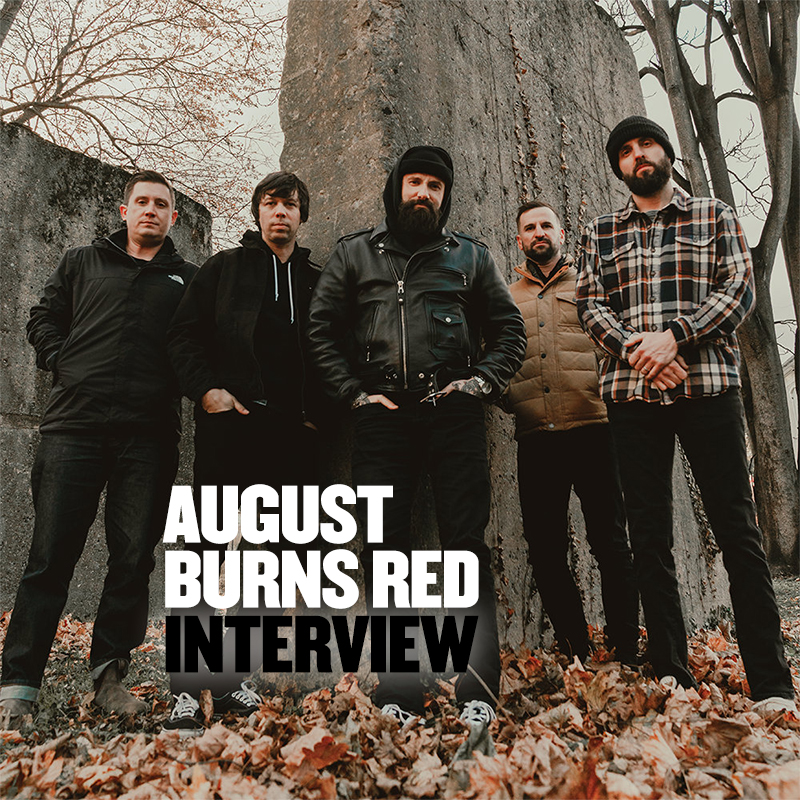
IDENTITY, TRANSFORMATION & THE MEANING OF SURRENDERING
A CONVERSATION WITH JAKE LUHRS OF AUGUST BURNS RED
As the lighting in the hotel lobby creates this sense of calm and serenity over August Burns Red’s vocalist, Jake Luhrs, one can also feel heaviness before he speaks – not the metallic kind that rattles storied venue walls and floors, but a quieter heaviness that settles in after a long season of being human. When Luhrs begins to speak, his demeanor is a mix of long days, exhaustion, and clarity, as if he has stopped pretending not to feel. This new chapter, Season of Surrender, is about much more than identity and giving in to the parts of oneself that are often hidden from view; it is about transformation. When one thinks of the word surrender, one goes through a journey of the parts of themselves they feel or realize they have been resisting creatively, emotionally, and personally, and eventually decide when it’s time to let go. For Luhrs, Season of Surrender was the start to that journey.
“Wow, you’re not asking me my favorite color, man,” jokes Luhrs. “One of the things that I had to let go of was probably in my past, how I was raised and brought up. I guess we might go a little deep here for a second, but I’m a firm believer in what you experience is what you believe, and what you believe is what you act out. I think from my childhood, the way that I was raised, and the issues and experiences that I had, really kind of taught me a certain way to live, which was kind of like a chameleon. You watch others, then adapt quickly, right? So that you can survive, it’s like a survival mechanism, kind of thing. I think you know, with my dad not being around as much as he should have been, and the turmoil that my parents were in, and all that kind of stuff, being in that place for years kind of teaches you it’s, it kind of shows you what, quote unquote normalcy looks like. Some of the patterns that are built based on the roots that you kind of grow into with that kind of soil, you don’t tend to know that you’re doing something because of that, right? And so, facing that kind of stuff and taking a deeper look into who I am and why I operate the way I do, had a lot of resentment, anger, and frustration because I didn’t have a father around and a positive role model. Now, now, the lack of that led me to my faith in God, which I’m very thankful for. But the frustration of not having that in my life, and then seeing time go by, and people dying, and getting sick, and old, and the anger, and frustration of not being able to control any of that, right? I think it was a big thing that I had to, I had to surrender the fact that I can’t change things in my life that that I so desperately wish I could, and so when you do that, when you recognize you know experiences from the past that you cannot change, you don’t have control over them, but they’re living in you, right? They’re kind of rooted in you and part of your identity. I had to heal from that.”
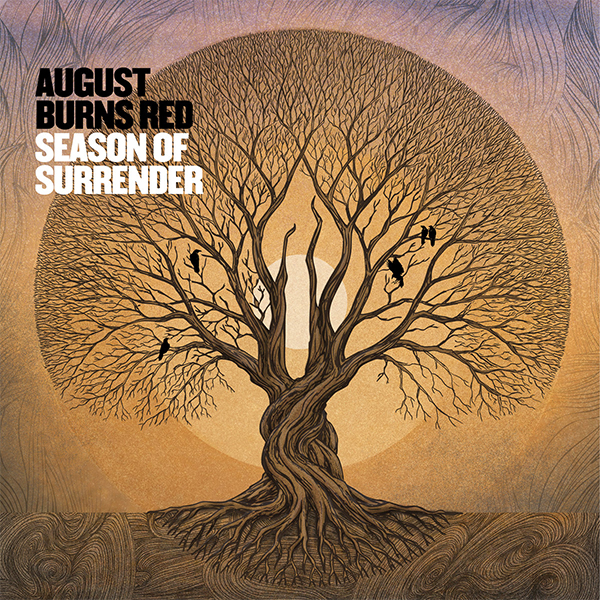
PURCHASE SEASON OF SURRENDER VIA BANDCAMP
As Luhrs embraces overcoming this wall of emotional clarity, he leans back as if replaying this moment in his mind. This wall, up since childhood, was not musical; it was something built up emotionally over time. August Burns Red has always written from a place of intensity, but this time the intensity was not just creative; it was personal. It was the kind of thought one didn’t say out loud. This album is them finally saying it. While metalcore and screaming are often construed as catharsis, what people also forget is that strength can also be avoidance; one can hide inside the volume and feel safe in its presence. For Season of Suffering, it was time to stop hiding behind the noise and embrace the vulnerability and pain that come with facing the truth.
“It’s like having real understanding, a sober reality, and so by surrendering that, like giving it up, you feel like you want to have control, and you can’t have control, you have to let go of that idea, that concept, the thought of you having control, and by doing that, genuinely doing that, whether that’s a season of healing, overcoming something, facing something, or quitting something. When you do things like that, your life changes a lot, because you’re no longer living in a part of your heart where you’re acting things out because of it. So that’s what I did. I had to really face some core realities that I hadn’t ever really faced, because I didn’t necessarily have to,” responds Luhrs. “I could run away from it just like everybody else does, you know? There are tons of people who are running from things that they just don’t want to deal with, right? I mean, the world kind of tells us, hey, if that’s too difficult for you, don’t do it, or if that person is, you know, not fitting your life, just leave them, you know, like the world doesn’t want you to be uncomfortable, but the reality is that, most growth is in the most uncomfortable places, and so that’s my journey. I’ve been putting myself in uncomfortable places so that I can grow and mature as a man, and that’s kind of what Season of Surrender is. It’s kind of painted each song as a topic through the lens of the person who’s experiencing it. One song is about depression, another one is about self-sabotage, betrayal, and grief. There are so many different topics, so the idea is that, through the lens of the person experiencing it, the listener can engage with that story. If something resonates with them, the hope is that they recognize that there’s a choice to be made here, and that they, too, should go on a season of surrender, through a process where they can heal, overcome whatever that is, so that they can be a purer form of their unique self. Because the world, again, not only does it want you to be comfortable, but it wants to put you in a box. Then you’re not really yourself, you’re really just what box you fit in. We do this with our identity all the time. Are you liberal, are you Republican, are you Christian, are you Muslim, are you a gym rat, are you a metal head, we are constantly putting ourselves in boxes, and the thing is, that we’re not intended to be in a box, because what those boxes tend to do is they tend to strip you of your unique gifts or your unique character or personality, because you’re being molded to be like something else, but you were created perfectly how you are, and you were given gifts that are unique and different. ”
Putting themselves in an uncomfortable space became the basis of the writing process for Season of Surrender. The process became less of a studio process and more of a collective unraveling. Instead of chasing riffs and breakdowns, they found themselves chasing honesty – the kind that often stings before it scars and heals with time. Instead of bringing ideas that tested the boundaries of their seasoned and gravid soundscapes, these ideas would test how far they were willing to chase that truth. It became a terrifying question the farther they went in, but what they realized is that truth is not meant to be precise or technical like a time signature. Knowing this, they had to go beyond precision. While Season of Surrender would become some of the longest times the band had spent in the studio, it forced them to confront things they had been carrying for years – burnout, grief, and the pressure to always appear unbreakable. What resulted was one of the most therapeutic records and also their most creative.
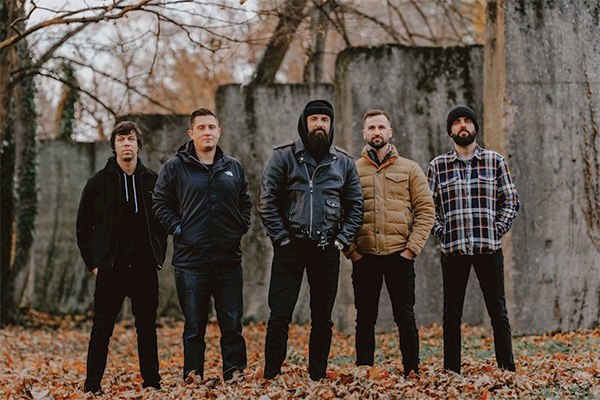
“My desire and my purpose in life is to combat evil and darkness, and I do that by helping encourage people to heal and be more connected to who they are as individuals, and I think that’s what the essence of human existence and expression is: Being able to live to the purest form of who you are. I think when we hold on to traumatic experiences, or we cling to our addictions, or try to form ourselves to look like what’s normal, we lose that; we’re losing ourselves in the process. I don’t think that that’s how we are intended to live life, and so that’s kind of what Season of Surrender is. It’s basically this umbrella of emotion and struggle that, if it resonates with listeners, could prompt them to dig a little deeper and maybe go on a Season of Surrender in their own lives, making some dramatic change. I resonate with all of the content, where I can put myself in that place. I would say 70% of it is something I’ve actually experienced, so I resonate with it all,” Luhrs explains.
“Brent [Rambler] writes lyrics with the band as well, and so he had written some things from not even himself, but another, you know, other experiences that he knows about, and then I would say, you know, surrendering things from, like, those lyrical topics over the past, like, three years. I mean, I’ve struggled, where you know, when I had a family member try to commit suicide, and I remember I was so depressed after that happened. I’ve struggled with having an addictive personality; if there’s something I want to do, I’m going to do it 100%. I’m going to go for it. So, I’ve struggled with that. I would say most of it I have experienced and come out the other side, but yeah. I can easily go back to when our booking agent passed away, Dave, and being in a place of grief, you know, I can easily go back to thinking of that family member trying to commit suicide and go back to a depressive state. I think what’s at the root of all of this is what’s the constant that is going to be there for you when you’re faced with those challenges, because life is not going to change. Like, things in life change, but life itself is not going to stop because you feel bad. It’s not gonna say, “Okay, let’s have a time-out.” Jake is going through a difficult time right now, you know. Let’s not give him another one, you know what I mean. So, like, I think what’s really important is for us to try to find a constant. For me, as a man of faith, God is my constant, and that’s it. I have to lean on God when I am triggered, scared, facing a difficult challenge, or feeling like I’m not strong enough to do this. You’ve got to stand up for what you believe in, and I think that the more you realize who you are, you know, the more you can unravel all of the things, and through that process you become stronger, you become more aware, more wise.”
Artist Links


Photo Credits: Ray Duker

SPILL ALBUM REVIEW: AUGUST BURNS RED – SEASON OF SURRENDER

SPILL NEWS: BULLET FOR MY VALENTINE AND TRIVIUM CO-HEADLINING 2025 NORTH AMERICA TOUR KICKS OFF MARCH 30

SPILL LIVE REVIEW: PARKWAY DRIVE w/ AUGUST BURNS RED @ REBEL, TORONTO

