SOME PEOPLE SAY IT IS A DIFFICULT LISTEN, I DON’T MIND THAT
A CONVERSATION WITH MARK GANE (MARTHA AND THE MUFFINS)
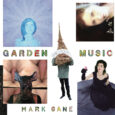
It is hard to believe, but it is true, Garden Music is Mark Gane’s first solo album. Since being one of the founding members of Martha and The Muffins, in 1977, Martha And The Muffins had some of the biggest hits and instantly recognizable songs of the 1980s and 1990s. While Martha Johnson, his partner and fellow Martha and The Muffins, has released solo records, Gane has focused on the band and other projects. I recently had the opportunity to speak with Gane about his new album, Garden Music and his first solo offering.
“I honestly can’t tell you. For some reason I work on a very long timeline, and I don’t know if it is a mixture of procrastination or what. But this particular project started when our daughter, Martha Johnson and my daughter, Eve, was probably six years old. Martha initiated this, she said ‘combine the three things, whatever you love the most.” Apart from them, I thought ‘gardening, painting and sound. She said, ‘do something about that’. So, I started a notebook way back then, which I still have, and it evolved as I planned it.”
For Gane, it was not a simple matter of assembling an album. “But a lot of things intervened,” he said. “There was always some Martha And The Muffins project to do, like the reissues and things, and then there were health issues with myself and Martha, with her Parkinson’s. And things just sort of got put on the shelf. Then, in the middle of COVID, I said ‘I’m going to be dead before this thing comes out, and so I just better get to it.’ And it was 2022 or 2023 where I just basically worked on it all the time. And with this particular album, I had a lot of stuff in my sound archives. I have been collecting sounds for 40 years or more. And there were a lot of things that had never been used, just waiting for their moment. I think Garden Music gave them that moment for me to pull them out and use them.”
To be clear, Garden Music is not a conventional album. It is a sound collage, maybe even a soundtrack to an art installation, with Gane using and exploring sounds. “I would think ‘“Feverfew”, is this a good sound for “Feverfew?” Yeah, it works, let’s go for it.’ It was all very intuitive, which is the way I have always worked, way back to the sound lab at The Ontario College Of Art, way back in 1976. In a way it has come full circle, I think. My friend Robin Cass, who was my friend from OCA and my roommate, said, ‘You know this takes me right back to the sound lab. You were doing this stuff then.’ It was a lot less sophisticated, I had to grow and develop as an artist, but the roots were all there.”
Garden Music also allowed Gane the opportunity to have his mother play on his album. A collaboration that meant a great deal to him. “The recording originally was on vinyl, which my mother cut in 1950 for the Valentine’s Day present she made for my father, where she played “You Can’t Take That Away From Me”, because she was a great pianist and a great singer. I forget the name of the other one. But I couldn’t use those songs because of copyright reasons. So, out of those two songs, I snipped and edited the piano part you hear on “Kiss Me Quick”. It created a whole new song. But the noise level of this 70-year-old vinyl recording , you can imagine. Between myself and Ray Dillard, who had a lot to do with this album, we were able to remove the noise without removing the character of the piano. You can still tell it is very old and far away, but the noise of the scratches is gone. You could have used it like that, and I thought about it, but you were battling the essence of her playing against all the surface noise. The recording of my mother, which I have not listened to that much, was very moving. I only wish both my parents had heard that because they would have been so happy to have this 70 plus year old recording moved into the 21st century as something else. They were both creative people, so I think they would have appreciated it.”
This is an example of some of the technical issues Gane faced utilizing old recordings. Converting older tapes and technology proved to be an issue for Gane as well. “Sound and sound design and music today is all about migrating to the next storage or delivery system. Back then, it was all reel-to-reel tape, or cassettes. So, a lot of the early material was on portable tape decks and cassettes. Martha And The Muffins, very early on, got one of the first professional cassette recorders, which was made by Sony. It had a limiter on, and various tape type settings and we used that a lot. So, there was a lot of that stuff on those tapes. Now, thankfully, there are all these plug-ins that can remove tape hiss. When I discovered that—Oh my God! I can actually use this! Over the years, I would go into that vault and think, ‘this is really good’ but the noise level behind it is really high. And this new plug-in just removed it.”

GARDEN MUSIC ALBUM REVIEW
Although this is a sound collage, that does not mean that the album had to be distant or cold. In fact, the opposite is true. “Being Garden Music and the strange personas that came out of that, it was meant to be organic. Even though there are a lot of things that could be called electronic or electronic sources, I wanted it to be really organic. Apart from the sound of leaf rustling and crickets, when I did use synthesizers or other instruments, I tried to keep them in that world. This means that sometimes using old synthesizers or old samplers which have reduced bandwidth, which automatically makes them sound further away.”
The process of assembling a project like Garden Music took time and careful planning. It also involved knowing the sounds that he had collected over the years. “The first step was coming up with the common plant names that somehow, on a subconscious level, resonated. I had a lot of them and the 11 tracks had arbitrary titles. I thought ‘these are the ones I am going to run with here. Some of them might not work out, others might” There were probably 20 or more alternate names, all as evocative. But at some point, you have to make decisions. The process was making notes and intuitively going, ok, what would “Creeping Charlie”, what would that sound like? But I have a notebook and when I started in the early days, I had all sorts of weird graphs on how songs should precede.”
Some of the tracks are a bit more unsettling and maybe a little scary. Such as “Creeping Charlie”. “With “Creeping Charlie”, much of that track is made in the kitchen I had with Robin, my OCA roommate, on Bloor Street. We had seen performance art and I thought ‘ok, here is a bench here, and I don’t know why I did it, but I did over a rock, over a bush until I was out of breath.’ So that sound sat around since 1982 and I went ‘ok, this is the voice of Creeping Charlie.’ We don’t know what he is doing, but he is doing something weird. It sounded like something that should happen at nighttime, so I added nighttime type sounds. The drum pattern you hear at the end, that is from the same era and same room. There is something about that kitchen that had great acoustics. I did a lot of little recordings in that kitchen. Then “Creeping Charlie” had a life of its own. He is creeping through this weird nocturnal landscape. You hear things rustling and inexplicable noises coming out of places. Is this happening in his head? Is he on his way to axe murder somebody? I don’t know. A lot of these things are open to individual interpretation. I don’t even know what it is about, but I like the feeling.”
The most conventional song on the album, “Love Lies Bleeding” closes the album, and started as a poem or lyric many years ago. “The bed tracks for that have existed since the late 1980s or early 1990s. I had that for a long time, and I remember playing it for a friend in a car, and he said, ‘that makes me cry’. Even then, with minimal tracking, I knew I had something. Looking into all this material I had, I thought this is “Love Lies Bleeding”. It is a feeling of contemplative sadness to it. And of course, the ‘Honey Bee’ could be someone you lost, or it could refer to the bees which are being devastated worldwide. It seemed that it was the way to end the album. I did spend a lot of time trying to get the order of the pieces right. It was the most song-like track on the album, and it seemed like an ending. The song itself seemed like an ending, but it was also an ending to the album.”
In the end, Gane has created a very unique and brilliant album, an album that needs one’s attention or rather time. “First of all, I am asking people to listen to it in its entirety, lying down, in the dark, ideally with headphones. Everybody is inundated with too much stimulation, so I am trying to make a small attempt to bring people into this world I created. I know it is a hard ask. But I know there are people out there that will do this, and every type of music attracts its own audience, no matter how small or obscure. So that is the first thing, I am asking people to bring themselves into this reduced environment, so they can experience this sound collage in its entirety.
“What do they take away with it? I have had some people say it is a difficult listen. I don’t mind that. I have had people fall asleep when I play it for them, I don’t mind that. I don’t mind if they don’t like it. I didn’t do it for other people’s approval, I did it for me. Rick Rubin talks a lot about this, you got to do it for yourself. If people feel something, they will be drawn into it. I have had great comments from people that it really resonated with them. It’s never going to be in the top 40, but it was never intended to be. I say that with tongue in cheek. The encouraging thing is that the strong feedback I have received makes me want to do a Garden Music 2 or get on my next solo album that has been sitting around for 20 years.”
Artist Links


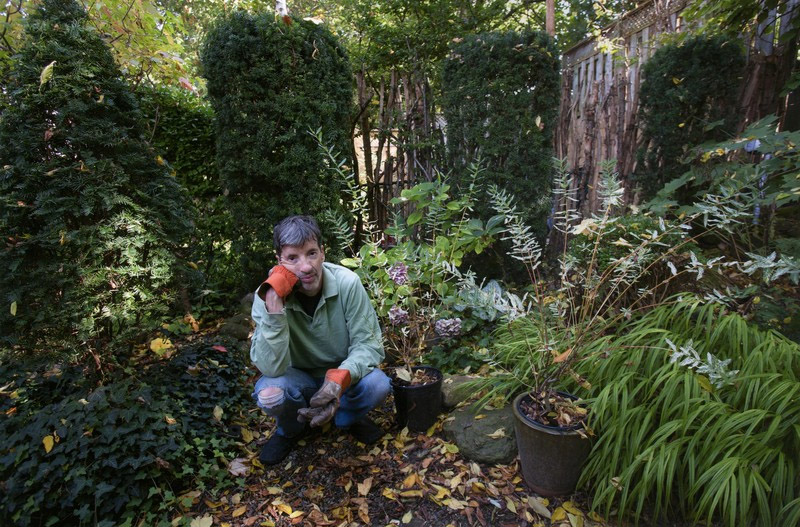
Main Photo Credit: Eve Gane | Background Photo Credit: Martha Johnson