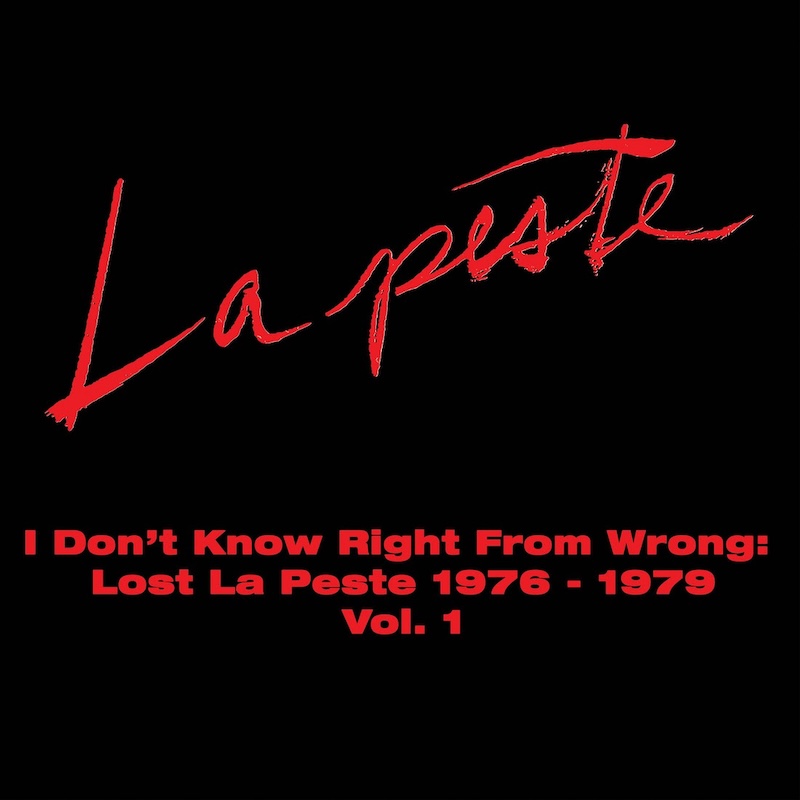
BOSTON PUNK LEGENDS LA PESTE ANNOUNCE RIC OCASEK-PRODUCED COMPILATION
WHARF CAT
The story of La Peste can be traced back to a flyer Peter Dayton saw in Central Park. The future frontman was visiting New York for a concert that had just been canceled. While wandering in search of something else to do, he came across an advertisement for a show at someplace called CBGB, featuring a band of mischievous-looking guys in leather jackets, The Ramones. It was October 26th, 1975. He hadn’t heard of them, or of punk itself. Figuring what the hell, why not, he headed down to the Bowery to check out the show.
Dayton returned to Boston a changed man. “I stood there for 22 minutes, and when it was done, I was like, well, fuck, man, I want to do that,” he says. “And within two and a half years, I was opening for them.”
So begins the story of Boston’s first true punk band. Born as a group of art students who had never played instruments, and over a few short years, became a foundational influence for a Boston music scene that would go on to produce some of the most important and boundary-pushing American bands of the ’80s. They played with the Ramones, worked with The Cars’ Ric Ocasek, and earned the attention of the legendary BBC DJ John Peel, all with only one single, ‘78s “Better Off Dead,” to their name.
Wharf Cat Records is announcing the release of a new compilation, entitled I Don’t Know Right From Wrong: Lost La Peste 1976-1979 Vol. 1, which will feature the band’s unreleased recordings. Due out on April 17, 2026, the collection tells the full story of La Peste, featuring a presentation of the band’s unreleased studio and loft recordings, along with the two tracks that were officially released during the band’s run. The material in this compilation comes from the “Better Off Dead” 7″ sessions, their 1978 studio session with Ric Ocasek, a 1978 session at Electro Acoustic Studios, four-track loft recordings made by Boston punks Billy Dafodil and Dave Cola in 1977, and the band’s first-ever studio sessions in early 1977.
On the A and B sides of this collection, Peter Dayton and Mark Andreasson give their first shot at sequencing the La Peste LP that they never got a chance to make. The C side features the tracks from the loft recordings that were not used on the A and B sides. The D-side is a window into a nascent La Peste and features studio and 4-track recordings with Curt Naihersey (Pastiche, The Kids, Mr. Curt). The D-side also includes a rare curiosity from the La Peste catalogue, their collaboration with Lord Manuel, “Computer Love,” from a sought-after split 7″ on Joe “The Count” Viglione’s Verulven label with The Neighborhoods & Lord Manual on the B-side.
To mark the announcement, Wharf Cat is sharing the Ocasek-produced track “I Don’t Know Right From Wrong,” featuring a brand new video created from archival footage of the band.
“I Don’t Know Right From Wrong” survives as one of a handful of tracks produced by Ocasek, who acted for a time as a sort of unlikely patron and mentor for the band, and gave them a slot opening for the Cars at Boston’s Paradise Theater. He believed he could get La Peste onto the radio with just a little primping, but had the good sense not to give them a full-on pop makeover. With its ghostly synth line hovering above the band’s earthbound churn, “I Don’t Know Right From Wrong” comes across less like The Cars’ slick new wave than it does like Joy Division (who recorded their landmark debut across the pond at around the same time), albeit with a vocal presence that sounds more inclined to nervous mania than catatonic depression.
QUOTE FROM PETER DAYTON
“We didn’t really know right from wrong when we formed La Peste. But the song was always great live, and everyone believed me when I sang it. It had 2 chords, which made it an amazing song for its utter simplicity. When I went back to these lyrics to write them all out, I couldn’t believe how repetitive I was. The verses were usually very similar, and the choruses were almost like I was shouting a political slogan. Our fans had a real connection with each song and often sang along, even though they might not have understood them.”
Artist Links



SPILL NEWS: HOT CHIP ANNOUNCE NEW ALBUM ‘A LONG WAY FROM KANSAS’ OUT JANUARY 8 ON DOMINO
SPILL NEWS: SHE WANTS REVENGE ANNOUNCE FIRST NEW ALBUM IN 15+ YEARS AND SHARE LEAD TRACK | DARK WAVE TRAILBLAZERS SELL OUT FALL SHOWS ACROSS NORTH AMERICA
SPILL NEWS: THE ANNUAL ANDY KIM CHRISTMAS RETURNS TO TORONTO’S MASSEY HALL ON DECEMBER 2
SPILL NEWS: MENAHAN STREET BAND SHARE NEW SINGLE “THERE BEFORE THE SUN” | ‘ILLUSIONS’ OUT NOVEMBER 13 VIA DIAMOND WEST