TEENAGE LESSONS SET ME RIGHT
A CONVERSATION WITH STEPHEN PATMAN OF CHAPTERHOUSE
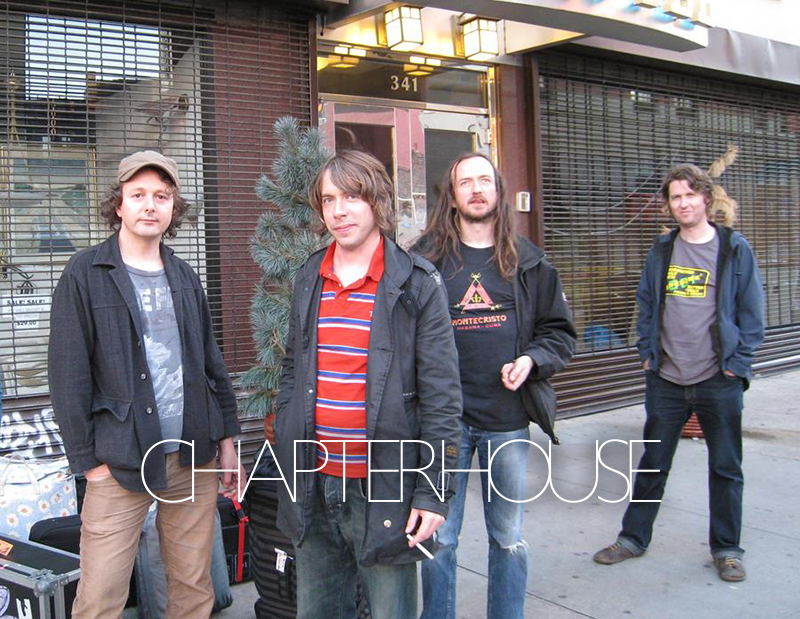
Chapterhouse formed in Reading, Berkshire in 1987 when three friends came together with a common love of music. Andrew Sherriff (vocals, guitar), Stephen Patman (vocals, guitar) and by 1991, having released a couple of successful EPs and singles, the band recorded their debut album, Whirlpool. The album helped define the shoegaze genre and was quickly recognized as a landmark album. That is quite a lot to live up to, but Chapterhouse did and released their second album two years later, Blood Music.
Although there was no official statement, the band split after the release of their second album. Since then, over the years, the band has come together for festival shows and various events. However, in 2025, it seemed more official, Chapterhouse was back and preparing a tour for 2026. That tour is now a reality, and the band is back in full swing.
I caught up with Stephen Patman during the U.K. leg of their tour. We had a chance to talk about the band, the anniversary of their debut album, new tour and possible future plans. The first thing to talk about is the unique front sleeve of Whirlpool, featuring a cat.
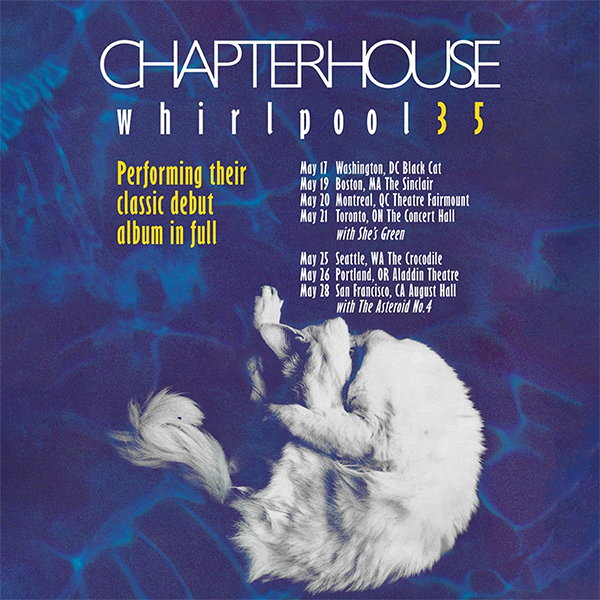
“Originally, we were working with a guy who went under the pseudonym Albert Tupelo. And he was doing the layout for our first EPs, so we gave him the artwork and then he did the layout and logo, graphics and type. The first three EPs were some marbling I had done and adapted into different colours. With Whirlpool, he had the idea of bringing in the picture of a cat, I think was one of his. When it came to the album, he had this other picture of the cat and suggested using that. It was black and white photo, and we thought it needed a little bit more than just that. Andy [Sherriff] and I had this thought…we both loved the film The Graduate and there is a shot where Dustin Hoffman is on an air mattress in a pool. The camera pans and pulls up from him, and he is surrounded by this almost artificial blue rippling pool water. The kind of blue you can only get in swimming pools when the pool has been painted blue. We had that image in our heads, so we decided to go to an image bank, which back then was a room full of drawers of colour slides and found this perfect slide of water and we asked if it could be used as the black element of the black and white image. So, the cat is made up of the water image and looks like the cat is sinking into or being submerged in the water. I am not quite sure the reasoning as to why we went down that route.”
The band was aware of their artistic image, both in music and sleeve designs, and their second album, Blood Music has an interesting history as well.
“We actually had a stained glass made,” recalled Patman. “So that front cover is actually the three foot square stained-glass window that we had made by a glass worker. So, it is leaded glass. I don’t know where it ended up. It was taken around as a kind of promotional thing on that tour. It might be in the vaults of Sony, or it might have been thrown out,” laughed Patman.
2026 TOUR DATES
Both of these sleeve designs have stood the test of time, as have the albums. It is hard to believe that Whirlpool is 35 years old.
“We had been talking about it after we had compiled the box set (Chronology). The box set was a way for us to retell the story in its proper context by putting everything we released in a chronological order. We also introduced stuff that people had never heard. Rather than just the records, it told the story between them as well. Andy, Ashley [Bates], and I, who had worked together as composers for a company, had flexibility to do this kind of thing, and the final catalyst was being asked if we wanted to do the Slide Away Shows.
We had been asked the year before, but I told him we weren’t ready yet, so he asked Swervedriver instead. So Swervedriver played last year, and I had a chat with Adam [Franklin, guitarist/songwriter Swervedriver] and asked how it went. He said they had a good time, and we were asked again. So, we agreed to what were five shows, but they sold out, so they added another Chicago show. We got introduced to a U.S. agent who suggested some headline shows between those shows.”
These shows, plus the release of the wonderful demo collection White House Demos, led to the band being asked to headline some London shows. “It dawned on us that April was the 35th anniversary of Whirlpool, which would be a good time to play London. We booked the London show on the actual anniversary of the release and we were being asked by a lot of promoters and so we slid some U.K. shows. Then we were invited to South America. It became a Whirlpool 35 tour, almost by accident.”
Looking back over 35 years, Chapterhouse has always had confidence in the music that they were creating and hoped that it was not so much flavour of the month, but something that would last. Oddly enough there is an interview with us early on, where we say ‘we may not be understood now, but we want to make records that will be remembered in years to come’. That may have been the arrogance of youth,’ laughed Patman. “But we had the belief that that was what we were doing it for. Now, whether that would actually happen is a totally different thing. But I think in our heads that is why we were doing it, to make music that would be remembered. All of the bands we loved from the 60s and 70s, The Velvet Underground and The Stooges. They didn’t make it when they were around. They were not big bands, they were kind of ignored. And those two bands influenced so many bands. They were the catalyst in pretty much everything.”
In preparing for the tour and completing their box set, the band discovered a lot about the band and even some music that they had forgotten about over the years. “Doing the box set, our bass player, Russell [Barrett], had a whole bunch of cassettes that he kept. Demos were stuck in a drawer, and he kept them after the label went down. We could remember quite a lot, but when we got into it in earnest, I was remastering all the demos to give them some cohesive sound. We requested Sony to send us a list of their archives, and we looked through and asked for the DATS to be sent. There were two or three that we had no memory of doing at all. I was like, ‘did I really write that, I have no memory of doing it’.”
Artist Links