


FAITH, FRACTURE AND THE SPACE BETWEEN
A CONVERSATION WITH DAVE KRYSL OF HASTE THE DAY
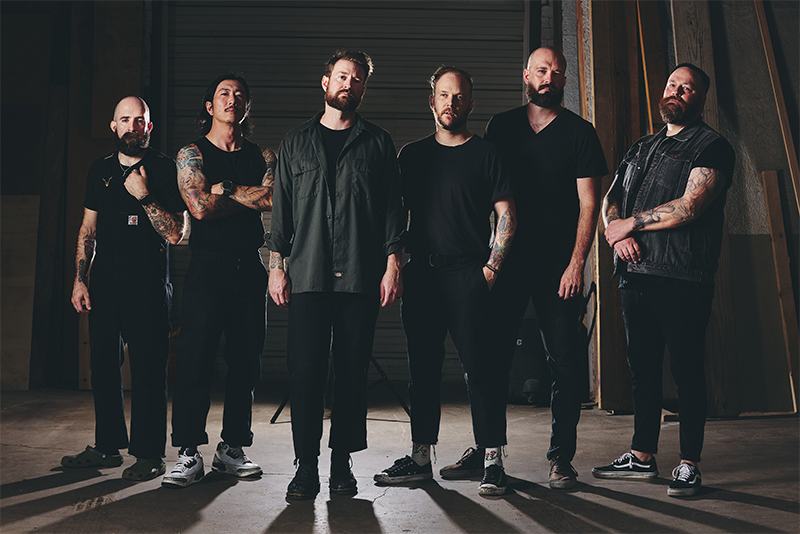
When some bands return, fans expect something victorious – the kind of mythic energy that cements a band as a musical legend. But Haste the Day’s new album, Dissenter, is more than a comeback. After over 11 years of silence, this is not just about a band’s growing pains, but about what time apart changed in them personally and musically. Sometimes, you must let go of the noise to finally face the parts of yourself you have outgrown, hidden from, or escaped. The same is true for longtime lead guitarist Dave Krysl. As we sit down to talk about the album, a quiet settles in – a calm that feels less akin to resignation and more like acceptance. It is the peace that follows years spent wrestling with ghosts thought to be long gone. Haste The Day has lived many lives, each era with its own emotional core. With Dissenter, the band moves beyond religion, reaching instead for something more universal: love and acceptance.
“Haste the Day has always been a traditional Christian band since it started. Everyone kind of grew up in the Christian church, and that was the foundation of the band, but everyone always tried to focus on love and acceptance. That’s always been like the most important thing to Haste the Day. After we broke up in 2011, everyone kind of started walking their different paths in life. Not being part of a cohesive group for so long and kind of having some separation, I think each of the members kind of took their own life path and went through a lot of growth and had a lot of new experiences, whether that be new jobs or starting families or joining different churches or whatever it is. The reality is that many of the beliefs of some members changed, um, myself included. When we got back together in 2023, we did have some conversations as a band about our identity. What’s this band gonna be? Why are we gonna do this again? If we make new music, why would we do that? What are we trying to express with that? And it still came back to the idea that, no matter what walk of life we’re in or what our belief systems might be, it’s fundamentally about, you know, love and acceptance,” states Krysl.
“That is what we want to bring to the music that we create and the shows that we play. All of the interactions we have with fans or other bands we play with are always centered on love and acceptance. But, um, to your point, it has evolved over the years. This record in particular…I think it’s a reflection of a lot of that growth that a lot of the band members went through, you know, in the period that we were not a band and working through these beliefs, working through how we perceive and react to the current political climate. I think out of that came a common theme. It was an exercise for us to process all of that, like, both individually and as a band, and also to get the people listening to the record to ask those same questions, too.”
The tension between who they were and who they have become forms the backbone of Dissenter. While many bands use reunion albums to relive old glories, Dissenter is about facing the ghosts of the past head-on. Which pieces endured the years apart, and which faded away? With a legacy stretching across eras, some might see this history as a heavy burden, especially after more than a decade away. Yet, Krysl views it as a shared inheritance – the trials that forged the band’s identity. Dissenter is less about being weighed down by the past and more about rediscovering themselves. Where the band once balanced relief and doubt, this album lets that tension breathe, transforming it from a shield into a mirror. Now, the convictions they once shouted become a space for those beliefs to grow and change.
“That’s a good question. It’s a little bit, I think, of both. I think that’s the cool thing about being in a band and sharing the experience with other people. Um, and it… and for sure, we had… we had a lot of discussions, uh, especially around shaping the record. First of all, what is it gonna sound like? And it’s, like you said, there’s kind of a legacy to Haste the Day, and we’ve talked about this in other interviews that we’ve done. It’s a bit of a challenge because you’re trying to blend a lot of variables and stay aware of them all. There is a Haste the Day sound. There are things that made Haste the Day what it is,” says Krysl.
DISSENTER ALBUM REVIEW
“Even with all of the different lineup changes that we went through, even including the transition from Jimmy [Ryan] to Steven [Keech], or from Jason [Barnes] to me, it is tough to balance maintaining the classic sound that made Haste the Day what it was, while blending, like, the individual creative expression that is authentic to us as individuals. So, it was very difficult to do that in a group setting, while also trying to create something new and not trying to just phone it in and rehash what we’ve already done. But it was really important for us to move forward as the best version of Haste the Day we could be. But that is one of the reasons why it was important for us for Brennan [Chaulk] to be back. His voice was such a huge part of Early Haste the Day, handling much of the clean singing. His voice is just so amazing. You can’t replicate that sound. So, it was like, if we want that element of Haste the Day, well, Brendan has to be back, you know? At the same time, Haste the Day is a metalcore band. We grew up listening to the styles of music we do; we have influences. But we’re not trying to reinvent the wheel in terms of the music we play; we just want to make it the best and most authentic.”
Musically, Dissenter is sharper, darker, and more deliberate. But Dissenter is not heavier for the sake of being instrumentally heavy, but heavier in the way the truth is heavy, dense, hard to avoid, and clarifying. This wasn’t about recreating the old Haste the Day; it was about taking the versions of themselves that got to this point and writing a record only this version of themselves could make: older and more self-aware. In every track, there is the grit of survival, the ache of reflection, and a quiet sense of hope that comes after one has braved the storms of life. However, Dissenter was not even a thought until 2023, when the band decided to play Furnace Fest. One festival would change the perception of a band that had been quiet for years, to finally come back.
” It would be one thing to look at what’s popular out there and say, oh, this is the kind of music that people want to listen to, so let’s write this kind of music,” explains Krysl.
“I don’t think that would come across very well because it’s not authentic to what we do, and what we do best is really that early-2000s, like mid-2000s, metalcore. It’s still very breakdown-heavy, you know, there’s still a lot of metalcore-style guitar riffs, and all of that. I will say, you know, we naturally did evolve, though. Scotty [Whelan]’s approach to songwriting. He wrote a lot of the music, and Steven wrote a lot of the music as well. Individually, it is just a natural thing, as a musician, to grow and evolve what’s going to be your toolkit for creative expression. And so, a lot of the leads that Scotty wrote for Dissenter are stylistically very different from what he wrote for Attack of the Wolf King. So there is definitely an element of change. It’s a little bit complicated. It’s trying to balance so many things at one time. I think the important thing is just being conscious. One thing I’ll say that really helped was the trajectory of how we came back, because we didn’t, like, reform and plan to do another record. Like, you know what I mean? That actually wasn’t part of the conversation until we first decided to play Furnace Fest in 2023. This was a cool opportunity. Fans still wanted to see us play; it was powerful. Once we started playing shows, it became more natural for us to think, “Hey, what would it look like if we made some new music and did another record?”
As new questions emerged from a band coming together again to write this new record, one question became prevalent: What did faith look like to a band that had grown and changed since 2015? But it was not just them that changed. The world had changed. The current climate is a testament to this change. Whichever side of the fence one falls on, it’s a pretty clear statement that the world is in a state of disarray and unhinged chaos. As the band struggled in their own ways to adapt and move forward in this journey of faith, fear, and the tension between belief and uncertainty, Dissenter became an exercise of answering this one question. As the world continued to change, that question became harder to answer and presented the theme and journey of what Dissenter would become.
“I’ll speak to this first from my own individual story, after the band broke up. I moved to New York City in 2011 and started playing guitar on the worship team at Hillsong Church. Christianity has always been very much an identity for me, having grown up in the church and devoted a lot of my time and energy to furthering and building that community. In my time with Hillsong, I made many of my best friends, but I also saw some of the downsides of big churches in Western Christianity and the way they relate to them. When does religion become a power structure? And power structures throughout history are corruptible. I mean, objectively, there are so many examples of that happening, you know, both in the church and other religions or governments, right? That’s just a common theme throughout human existence, and so I started asking these questions about faith and the relationship with a higher power. How does that relate to the institution that gets created, where it starts to gain power and influence in and of itself, right? So, almost separate from, let’s say, the ideology or the theology or doctrine. So those questions led me to really look inward and ask myself these questions. What does faith mean to me? What is it that I really believe? At the end of the day, what is the most important thing? Um, like, I guess another way of putting it in Christian terms is, like, what is the fruit? Out of all of this, and I think, theology and doctrine aside, I think most people, Christian or not, can agree that it’s just a good thing to love other people,” says Krysl.
Artist Links




SPILL LIVE REVIEW: THORNHILL w/ SPECIAL GUESTS AVOID, OCEAN GROVE & BANKS ARCADE @ AMSTERDAM BAR AND HALL, SAINT PAUL (MN)

