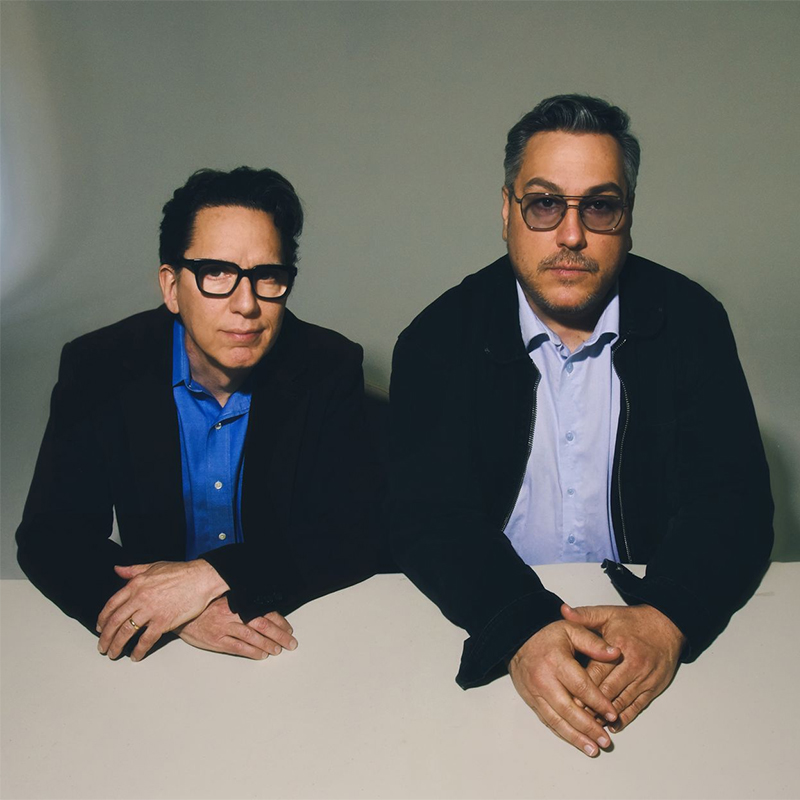
WE ARE TRYING TO KEEP THINGS INTERESTING FOR OURSELVES
A CONVERSATION WITH JOHN LINNELL OF THEY MIGHT BE GIANTS
Acclaimed alternative rock band They Might Be Giants (TMBG) has returned with some fantastic new music. Since forming in 1982, the Brooklyn duo, consisting of John Flansburgh and John Linnell, has been creating quirky earworm tunes in a wide range of musical styles, featuring wacky, humorous lyrics, unconventional instrumentation, and unforgettable vocal harmonies. Their upcoming album, The World Is To Dig, is their second release this year, following the EP Eyeball.
“The process is pretty routine at this point,” Linnell shares. “We each have production studios where we live. We do the songwriting and early demoing at home. In this case, it probably took a little longer than usual. We were kind of crawling out from a few roadblocks, if that’s not too horrible of a mixed metaphor. We had COVID first of all. John was in a pretty bad car accident, and I had some health issues… We were on the verge of finishing the album more than a year ago, and then over the summer, we were thinking there are ways we could improve it, and we came up with a little extra material. This is something we’ve always done. We come up with a lot more songs than we actually need for an album, so we had maybe 30 songs or something. We chose the ones that seemed the best from that. We make these demos, pick the ones we are going to record, send them out to the other guys in the band, and everybody shows up in the big expensive studio, and then we know pretty much exactly what we are trying to do. By then, there are still a few decisions to make once we get to the studio, but we don’t do any real songwriting because by that time, we are pretty much done, and then we are just trying to make a good version of the song in the studio.”
One of the standout tracks from the album is “Wu-Tang.” The incredibly melodic power pop tune explores how the music of the legendary hip hop group Wu-Tang Clan is a transformative experience for a fan. “For some reason, we are attracted to doing things that we have a hard time explaining,” Linnell says. “It began as a wordless pop song with a melody, chords, and an idea of, ‘This is how the pop song form works.’ The phrase ‘Wu-Tang’ came up because it just fit the chorus melody… It fit into this idea that we had discussed, which is, ‘What if we wrote a song in a genre that paid tribute to a completely unrelated genre?’”
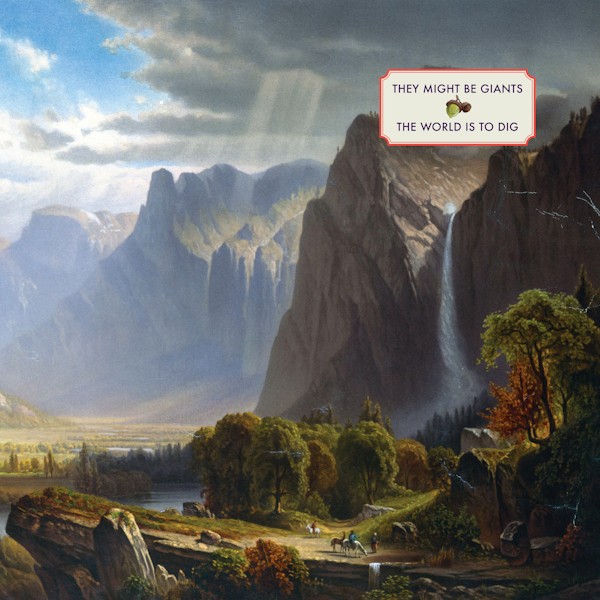
THE WORLD IS TO DIG ALBUM REVIEW
“Je N’en Ai Pas” sees TMBG experimenting with something new. “The impulse was to come up with something that is different than everything else,” Linnell states. “It is much more punk rock, and we have never done a song in French. I’m not fluent in French at all, but I am working on it… I liked certain phrases, and ‘je n’en ai pas’ was one of them. It just means ‘I don’t have any. The phrase ‘I’ve got nothing’ comes up a lot. I think in English, when we are trying to express some idea, and then when we just run out of things to say, that’s just this phrase that comes up. The song is maybe a little bit of a reflection of The Beatles’ song ‘Michelle.’”
The score to Martin Scorsese’s Taxi Driver was a big inspiration for the drums in “Back In Los Angeles.” “Bernard Herrmann does this very odd thing, as there is almost arhythmic drumming,” Linnell states. “It is just like someone hitting a snare drum like they are a crazy person. It has this sort of great menace to it; these brass chords and then this snare drum going crazy. I said to Marty [Beller], ‘Do that.’”
Despite its title, the song “New Wave Will Never Die” is not a love letter to the genre. “This is a Flansburgh song, so I don’t want to put words in his mouth, but I think we kind of have a love-hate relationship with new wave,” Linnell says. “There is something appealing about it in that we have a kind of nostalgia for that period, and yet at the time new wave was considered, I think, this sort of watered-down version of punk music – it was at the time a little bit ridiculous… Now, like anything else from that long ago, you kind of develop an affection for the goofiness of it. If I may speak for Flansburgh again, I think there is a character singing this song who is like this dedicated adherent. There was a song called ‘Rock And Roll Is Here To Stay,’ and it’s a similar attitude. Someone who is obsessively insisting what was then an ephemeral thing is this permanent, important cultural thing, and saying it will never die is pointing out that obvious thing of like, ‘Yes, of course it will die.’”
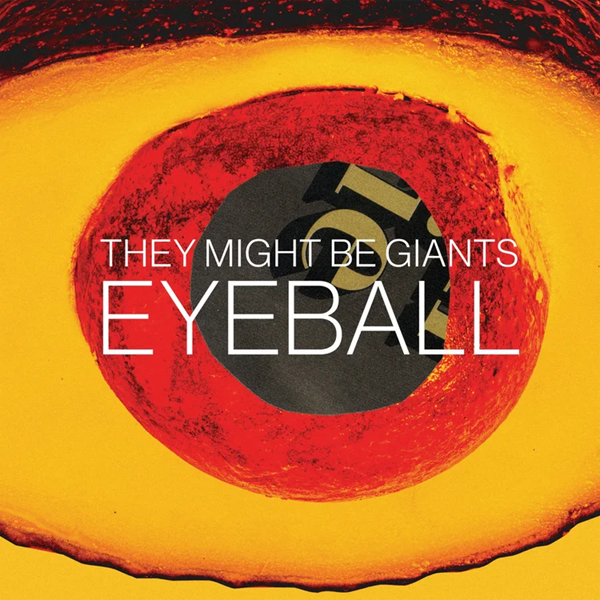
EYEBALL EP REVIEW
TMBG covered the Raspberries’ “Overnight Sensation (Hit Record),” a song they both grew up with and loved. “That was a song that I would listen to on the school bus,” Linnell recalls. “‘Overnight Sensation’ had this amazing, big, explosive production that appealed to me a lot. I think there is obviously this irony with John and I, we are in our mid 60s, moving into our late 60s, so the notion of us experiencing any kind of overnight sensation is kind of hilarious. I think we also thought, ‘This is a great song, but we could change the arrangement up and make it into something that we could perform.’ We created a performance that we could do live. I sing the verses, and John sings the chorus, which is partly because the range of the song goes from very low to very high, and it’s hard for one singer other than Eric Carmen to pull it off.” Initially, their version was closer to the original, but they ultimately decided to make it grittier, heavier, and fuzzier. Linnell continues, “I made a recording of me playing the piano and just more or less doing the original version of the piano riff at the beginning… We came up with this more metal guitar sound. That [song] evolved as we were putting it together. It changed obviously from the original Raspberries version, although we kept a lot of the elements from the original.”
“Get Down” is an irresistibly catchy funky disco jam. “The phrase ‘get down’ probably came even before the music,” Linnell states. “It was probably a goofy mainstream phrase even back in the day. KC And The Sunshine Band had these huge hits, and one of them was called ‘Get Down Tonight.’ It was a phrase that people used that seemed a little square even at the time, and obviously the lyrics are riffing on that, but they take it in this other direction.”
The delightfully charming “What The Cat Dragged In” is sure to appeal to cat lovers. “Flansburgh has cats and has always been into cats,” Linnell smiles. “On his Instagram, he posts pictures of cats. That’s not why the song is on the album, but we are hoping to capture the cat lover market with that, and maybe that will be a fringe benefit of having a song about cats.”
“What You Get” was originally a song that TMBG made for the stop-motion animated film Coraline. “Henry Selick originally wanted it to be a musical,” Linnell shares. “We came up with a lot of material for that version of Coraline, and then over time, he just changed his mind, and he decided he didn’t want to do that. So, we had a bunch of songs. Some of them we have put out. John had a song called ‘Careful What You Pack.’ I had written a song called ‘What You Get’ that was very much derived from the script. We were basing a lot of music on the script. That one, the lyrics have been completely altered.”
The World Is To Dig dropped on April 14. “We are continuing to do this thing that is very exploratory, and we are trying to keep things interesting for ourselves,” Linnell reflects. “We make records that we would like, particularly if we were not in a band or not making music, like ‘What kind of music would we like to hear?’ That has kind of been the guiding principle… That’s what we have been doing the whole time.”
Artist Links


Photo Credit: Shervin Lainez


SPILL FEATURE: STRIPPING AWAY A LOT OF THE VENEER AND THE RETROGRADE NOSTALGIA AND REPLACING IT WITH SUBSTANCE – A CONVERSATION WITH ART D’ECCO

SPILL FEATURE: WHERE HISTORY RESONATES – A CONVERSATION WITH PÄR SUNDSTRÖM OF SABATON ON COMPOSITION, COMMUNITY, AND HEAVY METAL’S FUTURE
SPILL FEATURE: WE’RE GOING ON TOUR, SO WHY NOT HAVE A LITTLE BONUS – A CONVERSATION WITH WES MARSKELL OF THE DARCYS

SPILL FEATURE: HOPE AND LOOKING UP – A CONVERSATION WITH CAROLINE MARIE BROOKS