


RENAISSANCE WOMAN
A CONVERSATION WITH DAYNA MANNING
“When I started writing songs, kind of in my early 30s, I shifted to writing not about me, and more about the world around me. And then what happened was, is these songs took me on adventures.”
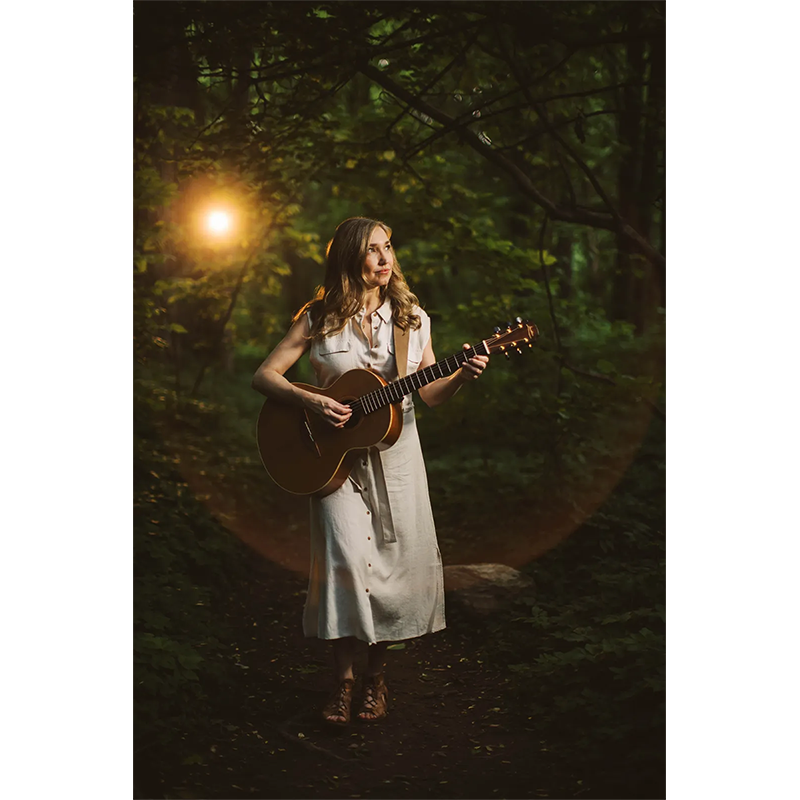
Some people use the phrase “what a time to be alive!” when things are going well; these days, it would be more accurate to say “what a time to be Dayna Manning!” The Stratford, Ontario-based artist already has a number of accolades to her credit. In addition to being a JUNO Award and Polaris prize nominee, she was inducted into the Order of Folk by the Canadian Folk Music Awards. As a singer, songwriter, and producer, Manning has released three albums with the folk trio Trent Severn, and five albums of solo material. She is also the author of Many Moons: A Songwriter’s Memoir.
Turning her hand to musical theatre, Dayna Manning has written the songs for Curveball: The Fast-Pitch Ladies from the Factory Floor, which will be premiering at The Blyth Festival this summer. The show tells the story of the 1953 championship season of the women’s fastball team from the Kroehler (pronounced KRAY-ler) furniture factory in Stratford.
With a new album, Field Notes, set for release on May 8th, and the fact that she was completing graduate studies last year, it has been a very busy time for the artist. Confirming that she has never had a rollout of work like this, Manning states, “I actually did my Master’s in Community Music last year too. So, I’ve never been so busy in my entire life. It’s absolutely crazy, but I love it. I can’t say no. I think that’s one of my biggest problems. But I’m also a really curious artist, so I always want to try whatever comes my way.”
Having played organized baseball as a child, Manning is a true lover of the game, which fuelled her interest in the Curveball story. She explains, “It was actually a play called Kroehler Girls that was presented by Here For Now Theatre here in town, during the 2021, season, and it was first done in a tent on the site of the Kroehler factory, where the girls actually played ball. Their ball diamond was right behind the factory. So, it was really, really special. At the time, they had asked me to be involved, but my life was so uprooted by COVID… Then, after things settled, we started working on it again. So, we kind of had half the musical written when Blyth picked it up, and we’ve been frantically writing the rest of it this winter. It’s been a blast!”
Working closely with the Curveball creative team, Manning wrote roughly a dozen songs for the show, with the thought that ten of them will make it into the final production. Describing the process of creating music for the show, she relates, “We would get together on Fridays and work through scenes and come up with spots where songs could be, and then I’d come back the next week, and we have the song and work on the scene. We did a few trailers. We called them ‘Kroehler trailers’ where we had the community out and got feedback on the scenes. We’d do three or four scenes with songs and kind of had them detail us – if that makes sense – detail the memory. I actually did my Master’s research on that too, on what the audience got out of those experiences, and what the creators were able to gain. So that was really fun to work on, and the creators ended up having more empathy, and the ability to bring more authenticity to the work. The audience, like over a third of them, thought that they had meaningfully contributed to making a piece of art. So, I thought it was a really neat research thing to do.”
FIELD NOTES ALBUM REVIEW
Despite being steeped in the tradition of theatre at the Stratford Festival, Manning nonetheless has passion for rural and regional theatre, like the Blyth Festival, where Curveball will be staged. As she explains, “I was born going to that theatre. I’ve seen every musical there. It’s like baseball and musical coming together for me is, like, my two things I’m a super fan of. But adapting that for that rural story is really where my folk expertise comes in, and that kind of the songwriting that I did with Trent Severn really ties in that storytelling of real life.”
Before Curveball opens at Blyth Festival in July, Manning will be celebrating the release of her album Field Notes on May 8th. Speaking of that album’s inception and how it grew, she explains, “In 2019 I released an album called Morning Light, and it came out of a collaboration with a group in town called Inner Chamber. I would compare them to Art of Time in Toronto. They’ve been running a chamber series here for 16 years, and I was invited to be part of one, and I loved the sound of the chamber they chose for my show, which was French horn, flute, violin and cello. So, I started doing shows with that arrangement, working with Ben Bolt-Martin who is a longtime Stratford Festival player and arranger. And it was really fun for me, because even if all the players weren’t available, I could hire someone else. We had music, so we could go across the country and only bring one or two people and hire like that. So, it was really fun. But from there, we started putting a live show together that included my past catalogue. And so, he really was attracted to songs like ‘The Jack Pine.’ ‘Freedom’ was always a big kind of show-ender for my live show. So, it really came out of my live show. Then I had a handful of new songs that I wanted to record. I probably could have recorded a full album of new material, but I really wanted to update some key past material. I wanted a CD that, when you come to my live show, you’re going to hear most of the songs at the live show and be able to buy that CD.”
Many of the songs were written by Manning alone, though she did collaborate on a few of the tracks. One special co-write centres around the song “From Canada,” which was a collaboration with the late sculptor, filmmaker, inventor, and naturalist, Bill Lishman, who died in 2017. Manning tells how friends told her about Lishman and his work, and that she had not seen the movie based on his life, Fly Away Home. Inspired by Lishman’s story, she says, “I started writing this song as if I was Bill, singing to the birds. And I thought, ‘You know, I can’t get through the song because I don’t have enough authenticity.’ So, I asked my friend David Newland, who knew Bill, to connect us. So, Bill and I had a conversation, probably 45 minutes on the phone, and he said he had a poem that he wrote when he was flying with the birds, and that if I wanted to use anything from it, I could. And so then I put that all together. He invited Trent Severn to debut the song at his underground geodome that he designed and built himself, on Earth Day! And so, the first time I met him in person, was debuting this song at his home. We ended up having a long-term relationship. His sister lives in Stratford. His family comes here. I have relationships with his grandchildren, and I actually had the honour of closing out his celebration of life with that song.”
With talent, dedication and discipline, Dayna Manning is an artist who has carved out a rewarding career. Near the end our conversation, the future of music making is discussed, as it pertains to music writing and production. Responding thoughtfully, she says, “I know I never see it disappearing, and I never see its role really changing: that connecting of people. And I know, for me, a song starts inside. I have a beautiful office where I can work on my music, and it never starts there. It starts on a walk. It starts in the shower, or somewhere where my mind doesn’t have to look or focus on something else. It’s internal, and it’s a process of really trying to get these internal things that already exist, out of your body. And that is primal. You cannot make it in AI. You can’t do anything like that. And when you can get it out of you, it’s in other people too. I feel like it’s an inner link, and I don’t think that will ever go away. I teach, or mentor a lot of young singer songwriters here in town, and sometimes I feel guilty. I’m like, ‘Well, I can’t show you a path to a career here, but I can show you how to make your life more beautiful through music.’”
Artist Links


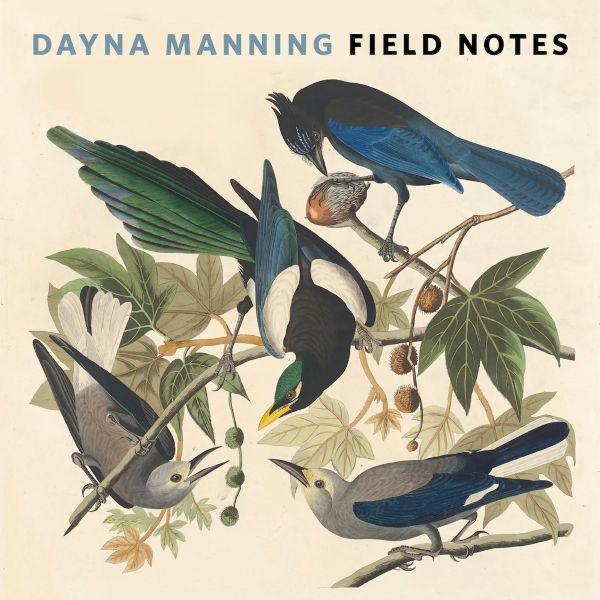
Photo Credit: Michael Steingard | Background Album Cover Design Credit: Scott McKowen

SPILL ALBUM REVIEW: DAYNA MANNING – FIELD NOTES

SPILL NEWS: YELLOWCARD RELEASE NEW SINGLE AND VIDEO “TAKE WHAT YOU WANT” AHEAD OF NEW ALBUM VIA BETTER NOISE MUSIC | TOUR DATES

SPILL MUSIC PREMIERE: LEN MIZZONI – “JUST BECAUSE”

SPILL ALBUM REVIEW: LEN MIZZONI – FOREVER
