PICK UP THE PHONE
A CONVERSATION WITH JACOB TSAFATINOS AND DAVID WOOD OF GOOD KID
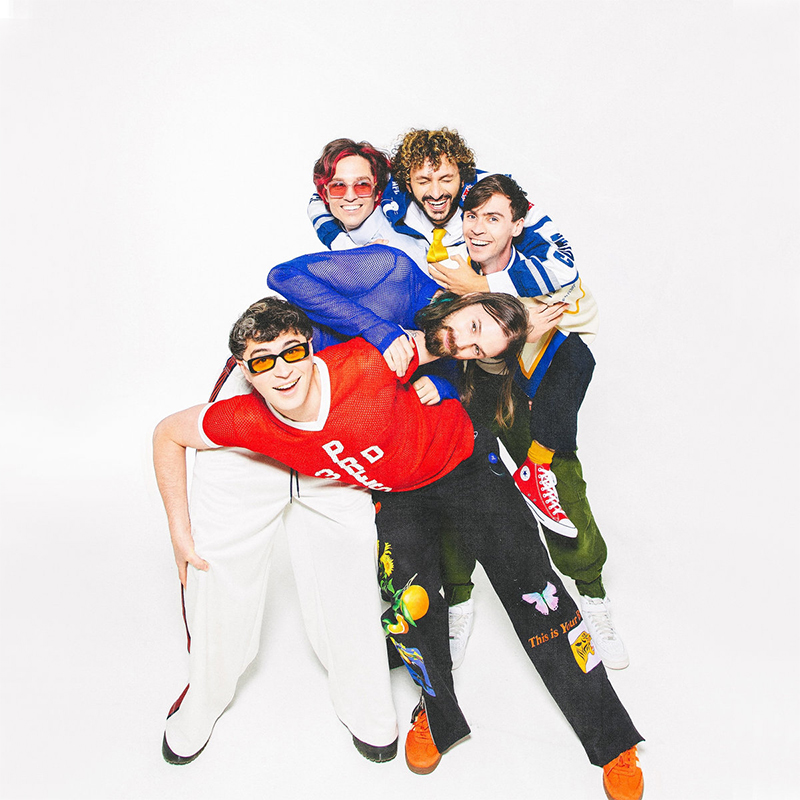
Sitting down with Jacob Tsafatinos and David Wood from Good Kid doesn’t feel like a formal interview for very long. Within minutes, the structure dissolves into something more conversational as stories are overlapping, jokes cutting in, and both of them building off each other’s thoughts in real time.
When the conversation turns to their fanbase, they don’t start with numbers or milestones. Instead, they land on a moment that’s stuck with them for years. When asked at what point they realized that the community was something bigger than just fans and listeners, the response was unexpected, but in a good way. “I think it’s when somebody asked us to sign a toilet seat,” they say, immediately laughing. It wasn’t just a quick interaction either, the fan had waited until the end of the night after a show in L.A., holding onto the top of a toilet seat just to get it signed. As strange as it was, that moment marked a shift and that same fan still comes to shows and is “actually very nice.” according to Tsafatinos and Wood.
But beyond the absurdity, there was a quieter realization that stuck even more. Wood remembers logging into their Discord server about four or five years ago and noticing something unexpected: a small group of fans hosting their own game night. “No mods, nothing to do with us,” he explains. “Just six people who met on the server… hanging out.”
That was the moment it really clicked, this wasn’t just a fanbase orbiting the band anymore. People were forming real friendships inside it. Since then, it’s only grown. Now, fans organize themselves constantly whether it’s smaller interest-based groups or city-specific channels that light up whenever the band goes on tour. Before shows, people will meet in those threads, talk for hours, and then show up already knowing each other. “It’s a pretty common occurrence now,” they say. “People meet online and then become friends in real life.”
Good Kid shows generally feel different compared to others. There’s less of a barrier between strangers as conversations happen easily, and the crowd carries the same energy as the band.
That openness also shapes how Good Kid creates. When it comes to fan involvement, they describe it as a mix of intentional and completely organic. On a practical level, they’ll poll their audience on things like merch designs, letting fans choose between options when they can only produce one. “Usually, the thing that wins is also the best-selling item,” they point out. “Which isn’t surprising.”
But some of the most meaningful collaborations come from fans just… making things. They bring up a fan named Lazy U, who designed a hoodie on her own using her personal style. The band loved it enough to reach out directly. “Can we just hire you to turn this into a real thing?” Tsafatinos remembers asking. That hoodie ended up becoming one of their best-selling items at the time and led to multiple future collaborations.
The same pattern happened with their music videos. Animator XrayAlphaCharlie had been creating her own content using Good Kid songs, and what stood out wasn’t just the animation quality, it was how naturally it synced with the music. “Not every director can do that,” they explain. “She just got it.” Now, she’s worked with them on multiple official videos, turning what started as fan art into an ongoing creative partnership.
CAN WE HANG OUT SOMETIME? ALBUM REVIEW
Still, they’re careful not to frame this as a strategy. “We never bank on fans creating things for us,” they say. Instead, it opens doors for ideas they wouldn’t have otherwise like the cassette project they put together.
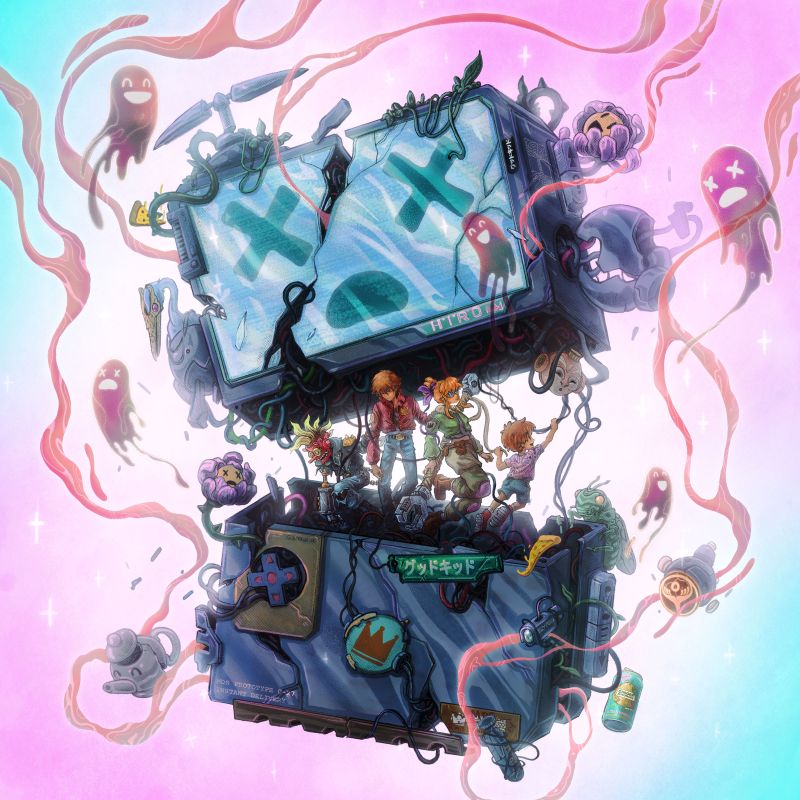
Wanting to make the release feel special, they hosted a fan cover contest across Discord and Twitch. The response was massive as nearly 200 submissions, ranging from near-professional remixes to stripped-back acoustic recordings. Some of those covers made it onto the final cassette, creating a project that felt just as much like a community effort as a band release.
A lot of this ties back to how they built their audience in the first place. Growing through platforms like Discord and Twitch gave them a very different relationship with fans compared to the traditional label route.
Early on, Tsafatinos admits, there was an idea, maybe even an expectation, of what a “Good Kid fan” would look like. But the reality ended up being much more personal. “They look a lot like us,” he says. People who are anxious, introspective, “a little neurotic,” and deeply into things like anime, video games, and storytelling. It lines up with the themes in their music: existential dread, staying in your room, hopeless romanticism.
Because of that, their growth never pushed them to change who they were, it did the opposite. “The more we were ourselves… the more it resonated,” they explain. That feedback loop gave them the confidence to lean further into their identity instead of trying to fit a mold. You can see that most clearly in their live shows. They’re not trying to be untouchable performers, they’re just themselves, on stage. They joke, they mess up, they call each other out in real time. “Jacob falls down at least once per show,” Wood adds. “Sometimes twice,” Tsafatinos shoots back, before immediately deflecting: “Nick [Frosst] forgets lyrics all the time, okay?”
That unpredictability is part of what makes their shows stand out. Usually, one can expect the usual structure most concerts follow, but at a Good Kid show, you quickly realize that you have no idea what’s coming next. “The best place to make a friend is at a Good Kid show,” say Tsafatinos and Wood.
Musically, they’re trying to carry that same balance forward. Wood describes their newer material as a push and pull, experimenting with different sounds while still honoring what got them here. Some recent tracks lean into a more punk-driven style, inspired by bands like Pup and the OBGMs, artists they grew up seeing live in Toronto.
At the same time, songs like “Cicada” feel like a natural evolution of their core sound. They describe it as “a big, unapologetic love song” that still carries an undercurrent of melancholy, bright on the surface, but rooted in feelings of longing and inadequacy.
Tsafatinos approaches that evolution from a technical perspective. When writing, he’ll deliberately avoid using familiar chord shapes or go-to progressions, forcing himself to find new structures and sounds. “I just tell myself you can’t use this, you can’t use that,” he explains. “You have to find something new. It’s a way of keeping things fresh without losing the emotional core that defines them.”
And that core, more than anything, is about connection. Across the album, they describe a recurring theme, wanting to reach people, to close emotional distance, to reconnect with someone you’ve drifted from. Ideally, they hope the music pushes people to act on that feeling. “Pick up the phone,” they say. “Call someone you’ve been meaning to talk to.”
Because for Good Kid, everything from the Discord servers to the live shows to the songs themselves comes back to that same idea: finding each other and holding onto it.
Artist Links


SPILL ALBUM REVIEW: GOOD KID – CAN WE HANG OUT SOMETIME?