OLD SCARS, NEW STORIES
A CONVERSATION WITH MATT GOOD OF FROM FIRST TO LAST
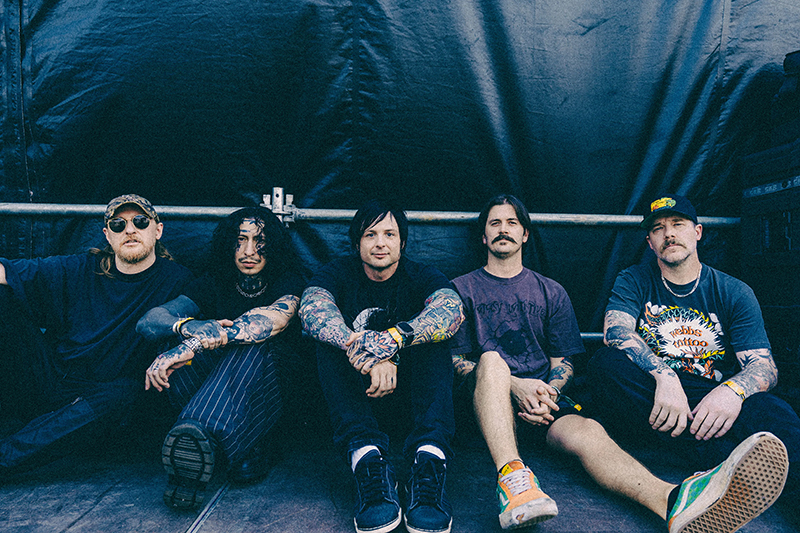
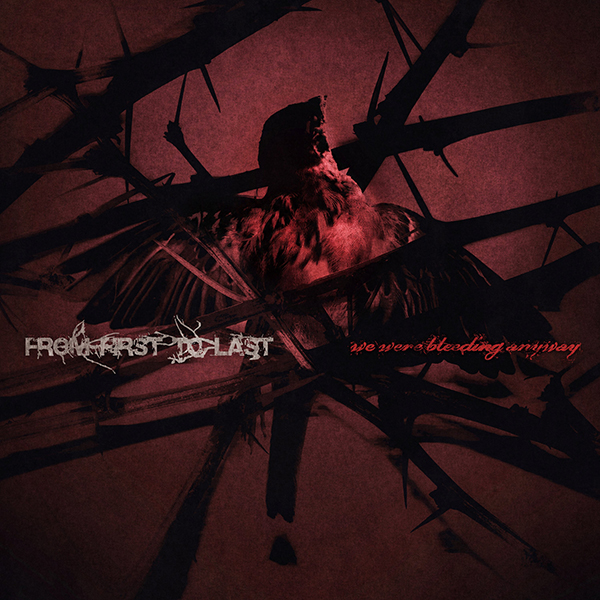
There is a unique sort of ache that only comes from a journey that requires you to return to another version of yourself you thought or swore you would never have to go back to. We Were Bleeding Anyway, the new EP by From First to Last, feels like a sound returning to the old and the ghosts of things we would rather not venture back to, but that are necessary to move forward. But We Were Bleeding Anyway doesn’t lean on nostalgia or regression. Sometimes to return, it requires a deeper level of honesty about the wounds that have shaped the band and the ones that still haven’t quite healed. We Were Bleeding Anyway isn’t a comeback record; as a band that’s been around for over 27 years, adding new members isn’t exactly brand-new territory. However, Lil Lotus arrives at a time when the fan-turned-vocalist brings another perspective, one shaped by mid-2000s emo, post-hardcore, and scene-adjacent music influences that not only shaped his own music, but also brought about a deeper understanding of the inner mechanics of what made bands like this tick, and thus has produced not only a renaissance record, but one of the most emotionally revealing releases the band has ever made. For vocalist Matt Good, this was not about bringing back the past; for a band like this, they have always worn their past and grief like armor; it’s about acknowledging certain snapshots of pain and putting a name to those struggles. If any band can accomplish that, it’s always been From First to Last.
“I know a couple key things for sure. There’s a song about loss, “They Said Your Ghost Was a Promise,” says Good. That initially stemmed from Travis [Richter] and Lotus; they had a friend who they lost recently, a close friend; that’s what kind of started that particular path. I’ve lost some family members and things. I think, as you know, we’re all a little older now; we’ve all dealt with that, right? So, it’s been just kind of, like, a thing that is just unfortunately part of life now as you go through it. You get a little older every day, and you have to start dealing with the fact that you will lose people that you love. That felt important to talk about because I do think that emo in general, as a genre, it is a good way to vent about feelings and things – um, things that you know you want to be awkwardly open about. Some people might say it’s cringe or whatever, but you know there are a lot of ways to do it; back in the day it was always like “Oh my girlfriend did this, oh, my girlfriend that,” but you know there are other things in life that kind of fall into that same train of thought, I suppose, and this happened to be one of them. I also went through a divorce, and Lotus had dealt with addiction in his past, so there were a lot of things to pull from.”
Loss carried a myriad of different connotations, and We Were Bleeding Anyway, on paper, feels like a phrase that refuses to soften that truth, one that confirms wounds that have long existed before someone acknowledged they existed in the first place. This EP leans into that emotional realism – no fancy theatrics, no attempt to rewrite things from the past to make it cleaner in its delivery. For a band defined by whiplash rupture in its lyricism, sonically, personally, and in its identity, there is a weight that comes from growing up under the weight of your own notoriety and mythology. But this EP carries a different weight on its shoulders. It’s not about the events that caused such ripple effects in your life; it’s about what happens when you stop pretending that what happened didn’t physically or emotionally change you. From there, it becomes less about the past and more about understanding it once the Band-Aid is ripped off and you can explore it. People don’t change unless something inside them does first, and for Good, that combination of experiences led to this internal shift.
“I think in general, it was probably just the combination of all the experience that I’ve had at this point in my life as a writer,” admits Good. “The things that I like personally now at the age of 42 versus what I liked, you know, when I was 20, and also having like the utmost respect for what I did and what I liked, which I think is probably the hardest thing for a lot of people to reckon with. It’s like you have to find a way to respect what you did when you thought you weren’t as good as you are now. When I was able to fully do that, that’s when all the songs started just coming together and really working. It’s cool because, like, you mentioned that song “Picking Clothes To Die In” being different, and it is, but not necessarily with intention, per se. It’s kind of like what naturally happened when I was jamming on our old stuff and thinking that the part of me that did these things was still part of me, and I want to reconnect with that part of myself again. Because that was one of the first demos, new demos, that we wrote for the record, and it went through a couple of different incarnations, I suppose, but the core of the songs remain pretty much the same. I think it was just like the new me reconnecting with the old me, and that was the natural outcome of those things.”
WE WERE BLEEDING ANYWAY ALBM REVIEW
Bringing in a new vocalist could have easily destroyed the identity and renaissance that was happening before the band’s eyes, but in From First to Last fashion, it sharpened it in a unique way. The voice at the center of this internal reconnection and transformation within the EP feels like someone carrying the weight of the band’s history without crushing it. That vulnerable determination created a deep sense of reverence, not limitation. It’s a voice that has always understood the band’s emotional architecture: the desperation, its volatility, and the strange beauty that comes from breaking open. While any other vocalist could have chosen a different direction for creative expression, Lotus chose to inhabit these traits and create something new and emotionally moving. This subtle shift didn’t erase the band’s past; it reframed it in ways only a deeply devoted fan and musician could.
“It allowed me to see things from another angle. Well, for one, I think a really huge thing is that because Lotus is a fan, he brought a unique perspective to the writing, where he would be like, “Yeah, that’s cool, but like what about something like this?” Because I feel like when you like the band that you listen to, you know, the energy would be like this, and you’d be like, “You know what? You’re right,” says Good. “It would be cool, like on a vague conceptual level, that kind of stuff. It gets your mind going in a different direction from where you might organically end up with your perspective now, and I thought that was cool because it changed the direction of thought right from the get-go. Still, to me, this band at its best has always been a band where there were two- I mean more than two, really – but, like in terms of singing, there are two vocalists. Unfortunately, that wasn’t always the case; I never fully had the opportunity for that, but whenever we’re back at the point where it can be me and someone else singing, it opens up the dynamic. When we were young, like, our favourite band, or at least one of our favourite bands, was Taking Back Sunday, and I loved how they incorporated two different vocalists. I’ve always loved it. I still think it’s like the gold standard for two vocalists in any band, and they’ve been a huge inspiration to us since day one. We’ve kind of run with that and made our own path with that kind of thought process, I suppose, but it was really great because I got to go back to things thinking, okay, cool, who cares if these lines overlap? I’ll sing this one like it doesn’t matter if these lyrics go on too long. It makes the way you write fundamentally different for vocals; it changes the rules a lot in a fun, good way.”
Such dynamics are why We Were Bleeding Anyway has become such a significant release for them. It’s not an EP that is screaming for attention; something like this was never about validation. It’s an experience that prefers to sit and meditate in the truth. Some wounds aren’t meant to heal; sometimes they evolve, helping us understand them better. This EP isn’t a story about falling apart; it’s an EP that admits it already has. When you’re a band that exists in a strange cultural space like this, mythologized by a generation, growing up in a world with success but still figuring yourself out, the darkness of being misunderstood, and constantly being at war with reinventing yourself and the boxes that put you there, that battle itself is something the band knows all too well, and has the scars from it all to prove it. We Were Bleeding Anyway arrives at a moment where maturity has birthed a different understanding of what being authentic and freeing yourself from expectation truly means. This EP meets this realization with pristine openness and clarity. Sometimes that journey is unvarnished and messy, and it’s exactly what the band needed to say right now. We Were Bleeding Anyway is the band in a new era, not a return to the past, but a reclamation of the emotional truth that made bands like this matter in the first place. From First to Last has always been more than the chaos, more than nostalgia, more than the success story their music and fans built around them. We as humans bleed and break, but we can also rebuild, and in this new chapter, they are letting themselves tell that part of their story.
“I think you’re correct about that. I was talking to someone else about how a lot of times, when taken out of context, like certain lyrics or certain messages can kind of seem cringy or whatever. But when you put them in front of the right mouthpiece, they’re not anymore, and I think that there are certain things that I know that I can deliver in a certain way. Still, I also know there are some things where I don’t really deliver the way I want to hear them, so you know it puts me, as a vocalist, in a box. But I mean, everyone has a box, for the most part; it’s just kind of how it is, right?” he admits. “But bringing Lotus in now, it’s like, okay, now we have this new box to work with. It’s expanded the realm of possibility quite a bit, especially because he can do, like, this really sick thing that I can’t do, where he can, like, sing into, like, a gnarly scream. And, like, we utilized that a pretty decent amount on the record, and I love it. And that was definitely one of my favorite things, just being able to express the things we want to express, without feeling like we are stuck in a box.”
Artist Links


Photo Credit: Cameron Gile


SPILL FEATURE: SURVIVING THE COLLAPSE – A CONVERSATION WITH CODY QUISTAD OF WAGE WAR
SPILL ALBUM REVIEW: FROM FIRST TO LAST – WE WERE BLEEDING ANYWAY

SPILL ALBUM REVIEW: MOVEMENTS – HAPPIER NOW

SPILL ALBUM REVIEW: BEARTOOTH – PURE ECSTASY