SURVIVING THE COLLAPSE
A CONVERSATION WITH CODY QUISTAD OF WAGE WAR
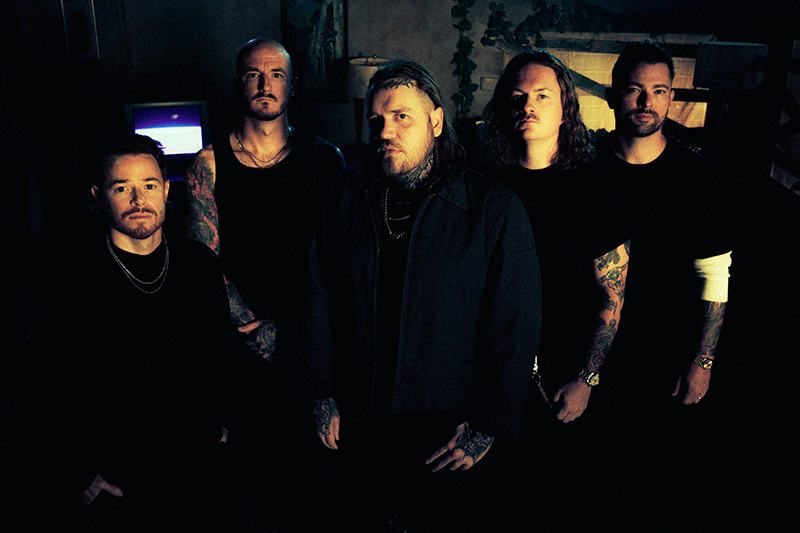
A weird, uncomfortable silence often follows a devastating impact. There are no cinematics to it, just the universe reacting to the internal chaos and destruction caused mostly of our own volition – but there is an exasperated breath that follows after, one of exhaled fear and partial luck, when the dust hangs in the air. You are forced to watch the carnage before you. In a way, Wage War’s new record, Landfall, commits to that feeling, one that holds personal importance to the Florida-bred band.
Wage War’s newest album doesn’t emote the inner struggles of a spiraling mind the way Manic does. Landfall is when outrunning your mind’s struggles fails – hard, honest, and unavoidable – and you are left standing in the wreckage, forced to confront what your brain tried to eliminate or destroy from becoming real. It’s about a band that’s grown tired of running from the storms and is ready to face the mental hurricane head-on.
“I think a lot of it is just life in general. I feel like I say this every time we start talking about records and everything,” Cody Quistad laughs. “I very much view records as yearbooks, the things that you go through, you know, throughout life. And every album is a completely different season. I mean, if you go back to Blueprints, we’re super young kids, right? Like we’re in our early 20s. Not a whole lot’s gone wrong. You know, like all pretty decent childhoods, we’re just happy-go-lucky. Those lyrics are like super positive, and then you start getting into Dead Weight territory. It’s our first year on the road, and you know, relationships and family stuff, whatever. And then all, you know, life starts doing the life thing. You know what I mean? And obviously, it’s been 10 years now since our first record. Life is a lot different for all of us in many different ways. Now that we’re in our early 30s, I think you know that comes with its own set of challenges. You know what I mean? And granted, they’re not the same ones, but it’s still those same things, just in different ways. Relationships and family, whether it be self-worth or anxiety or all these other issues, they keep taking different forms. So yeah, I mean, I think as a whole, I think you nailed it kind of with just the concept of Landfall. We really wanted to keep it Florida-themed. You know what I mean, and make it make sense with the EP.”
One of the most compelling things about Landfall is how much Manic was a part of this story. Much of the song’s DNA carries traces of what Manic began to unravel. Those mental battles are not just shadows lost in time; the scars still run pretty deep here. Whether through the emotional pacing, the push-and-pull between aggressive and sensitive introspection, or the way vulnerability is weaponized, what stands out on Landfall is the intention behind those actions. While Manic’s chaos felt involuntary, somewhat like someone documenting something they can’t quite understand at the height of its existence, Landfall feels like they actively chose this chaos. When chaos feels directed or intentionally used, it can be the difference between drowning and diving right in.
Landfall exposes the ugliest parts of all of that. When panic is traded for clarity and spiraling for level-headedness, Landfall isn’t erasing Manic’s purpose; it’s answering it.
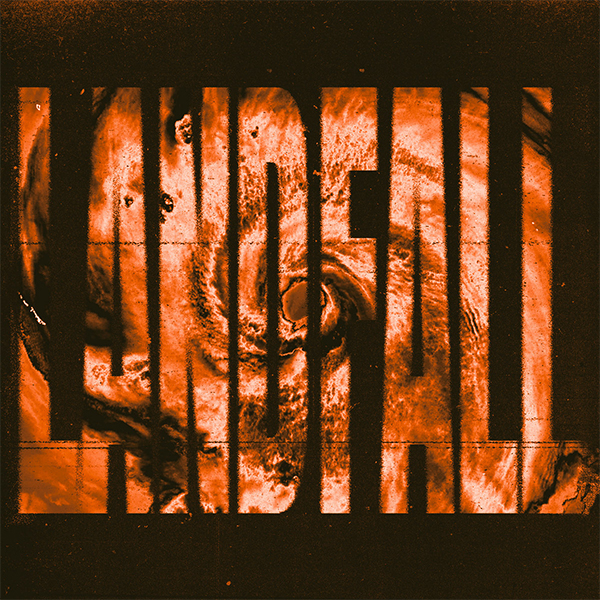
PURCHASE LANDFALL VIA BANDCAMP
“Well, the story starts like last year, when we knew we were working toward new music but didn’t know what we were working toward. We weren’t sure if it was going to be an album or an EP. Then we started looking at timelines for when we could put out an album and when we could put out, you know, an EP and stuff, and going back and forth with our label. Yeah, we kind of just looked at the songs that we had, and we were told that we weren’t gonna be able to put out an album until the fall, so we were just kind of like, well, can we put out an EP? And they’re like, okay. So we looked at what we had and picked five songs that felt like they went together, all based around “Song of the Swamp,” and decided to be ourselves and do our own thing. I think, admittedly, for at least a few, maybe of the middle years of the band, I was trying to play the keep-up game and just chasing, chasing other people’s things, or maybe not fully doing that, but like, this is working, so maybe we’ll lean into that,” admits Quistad. “I really wanted, for starting with the EP, to do our own thing and be our own band. I love all of the popular bands. Right now, the Sleep Tokens and the Bad Omens and bands like that. I love those bands. I love their music. But behind them are like 5000 other bands that sound exactly like them, or are just trying to do that thing because they’re popular. But both of those bands are one-of-one bands for me, and I just wanted to keep carving our lane and not chase something like that. So that was a big inspiration for me. Making sure that whatever we put out is a wage war record and is not, you know, just another record that would fall in line with what’s popular. And that was honestly my biggest goal through the whole record. Extra production and industrial elements and electronic stuff- there is still some of that on this record, but there’s very little of it. You know what I mean? Like most of the record is front to back; it’s a full band record, and that was kind of something I went into in this process. Even the stuff they were taking inspiration from, like we were really looking farther back. Early ’90s metal with, you know, Metallica and Pantera, and there’s even some early 2000s metalcore stuff on there from bands that we grew up listening to. There’s just a lot of different stuff.”
He continues, “God Complex,” as you mentioned, is just weird; you know what I mean? Like, but in the best way, it feels like it’s got some ’90s vibes to it, but it’s also kind of Nine Inch Nails-y, and like it’s a pretty simple song. Like, for us as musicians, the song is legitimately two riffs, but it just keeps changing throughout the whole song, and we’ve never had a chorus like that where it’s not just belting at the top of our lungs. It’s vibey and distorted. I was just kind of in a why-not territory, you know? Like, let’s do it. Let’s keep finding our thing and doing the wage war thing, and not everyone else’s.”
As Landfall takes this next step into personal and musical oneness, what makes it stand out most from other releases is how beautifully it opens up to its listeners – not just lyrically, but sonically. Every choice feels deeply felt and carefully considered. Riffs hit like intrusive thoughts on a late night; breakdowns feel like emotional limits realized, and melodic moments open like windows in suffocated spaces. There’s this unified sense of being there before, but now it’s fully understood: an internal feeling of being hurt, shaping them, but not fully defining them moving forward. They are still standing, even if the ground feels a bit different around them now.
“We want to make the music that we love. I think what we’re finding, especially with this release, is that I feel like the EP was like an identity piece for us, where we put everything into the EP, all the way down to, like, the branding, and just kind of like we all are the Florida guys. We are a Florida metal band, and we obviously carry that,” Quistad proudly beams. “You’ve got the EP, which is zoomed in on the swamp, right? It’s a song of the swamp, and it’s got all these textures. And then landfall zooms out almost like another 30,000 feet. Then all of a sudden, you’re still in Florida, but you’re talking about the other natural disasters that happen, like hurricanes, you know what I mean? Which is something that we know very, very well. So I don’t know how long it’s going to go or how much farther we can go. Still, this record for us- it’s cool that we can really tap into what I feel is the truest record to us, and have it be centered around where we’re from.”
Artist Links


Photo Credit: Sergio Martin


SPILL FEATURE: THE ART OF BEING SEEN – A CONVERSATION WITH LIAM GUINANE & JUSTIN KEURNTJES OF WINDWAKER
SPILL ALBUM REVIEW: FROM FIRST TO LAST – WE WERE BLEEDING ANYWAY

SPILL FEATURE: OLD SCARS, NEW STORIES – A CONVERSATION WITH MATT GOOD OF FROM FIRST TO LAST
SPILL ALBUM REVIEW: MOVEMENTS – HAPPIER NOW