IT’S NEVER YOUR FAULT
A CONVERSATION WITH LISA MOLINARO
Lisa Molinaro has had an incredible career, and with the release of her debut solo album, Blind Trust, it just keeps getting better and better. Lisa Molinaro is a composer, violist, songwriter, and multi-instrumentalist who was one half of Talkdemonic, as well as working with Modest Mouse as both a touring member and studio contributor. And to partially complete her CV, she also performed viola with The National and toured with The Decemberists as a violist and multi-instrumentalist. Throw in a soundtrack (for the film Raging Midlife). One gets an idea of the music Molinaro has created over the past few years.
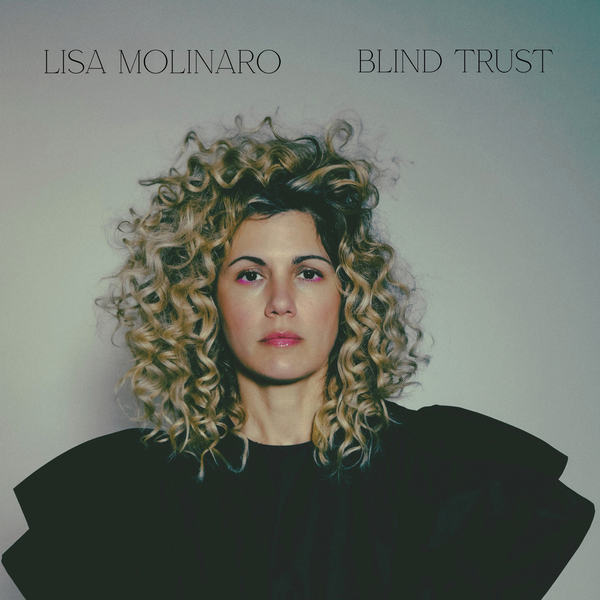
Blind Trust is her debut album. “It is my first solo record,” she told me recently, during our conversation via Zoom.” It is my first output into the world, outside of a film score”.
While writing and recording a film score did assist in preparing her for a solo album, it was a very different process than working on her own solo album. “The process is so different. I started writing this record, then I had to work on the score to Raging Midlife and I had tight deadlines. I put the album on the back burner and switched gears. But I didn’t know which gear I was going to. I didn’t know what it meant to write a score, but I figured it out.”
When she finished the score for Raging Midlife, she was able to return to what would become Blind Trust. “I had to clear my brain of score writing. People need moods, they need that mood to change. I had to serve the purpose of what was happening in the film. I am a people pleaser, I can be a chameleon and I had to shed all that. What is what I want to do? It was a white canvas, whereas before I had a heavy outline.”
By the time she entered into a studio to record, she had prepared everything and was ready with complete songs and ideas of how she wanted each song to sound. “I built a lot of this stuff before I entered into the studio,” she agreed. Molinaro produced and wrote “Blind Trust”, Dustin Dybvig played drums and Justin Harris played electric bass and baritone saxophone.
“I had demos that I sent over to my engineer, and this is what I want. And I want to do the strings, the vocals, bass and drums and any other salt and pepper I want in the studio.,” she said. “Take these sounds, and make them sound even better, so those demos were given to Dustin Dybvig (who also drums on the album). This is how I want it to sound. I was a little bossy,” she laughed. “I had a lot of help in the studio. Zach Bloomstein helped record this and mix it. He did such an incredible job mixing.”
Although Blind Trust is a brilliant, melodic, and well-arranged album, there are times when the production and music becomes sparse and as such there is a great deal of space throughout the music.
BLIND TRUST ALBUM REVIEW
“I am not afraid of space. I am not afraid of it sounding kind of sparse. I did doubt that for a while, then I then leaned on my intuition. I do like space; I wasn’t afraid to be skeletal at times.”
Her writing style worked for her for the new album. She would adapt lyrics once the music was written. “Primarily, I wrote the music first. I didn’t finish the song before the lyrics appeared. I definitely wrote the music first and then I would start writing. Sometimes I never had to go back to it. I would build in a chorus, I am not good at choruses, I had to force in a chorus on a couple of the songs. I don’t mean force it in so it doesn’t sound right, but you can’t just wander around in a song, I wanted to anchor it with a chorus.”
“Something about the writing. It came super easy. I’m not saying it is going to happen every time but I even had old words to other songs that I reworked. I took scraps and made them into songs. I took a break at the onset of the pandemic. I then was writing for quartets and trying to learn how to write more classical music. Then I went back to this. It was when I wrote the song “We All Get Stuck.” I thought all my songs were good and at a certain level, but then I wrote “We All Get Stuck,” and I thought it was up here. I had to make it the cornerstone of the record and make all the other songs rise and meet it.”
For Molinaro, it was at that point that she knew she was making an album. “I had been writing songs, but I didn’t have the guts to call it an album until that song,” she said. “I am doing everything on my own, everything comes out of my wallet that I stuffed with substitute teacher pay. It is hard to make all the decisions on your own. I was trying to be my own publicist until recently and trying to navigate social media.”
Although it is not a concept album, there are recurring themes on Blind Trust. Molinaro grapples with life throughout the entire album. “Writing just what I felt, and then realizing I created a body of work that had some emotional through lines. Grief, regret, rebirth, and some things like that. Some universal stuff. I don’t think I am special with these thoughts. I didn’t write about anything unique, but I did write as I was going through it. So, if I am sad, I might write some lyrics. If I am processing something I write a bunch of lyrics. I wrote a bunch of things and I realized this is about me, how I kind of screwed something up a while ago and this is how someone else screwed something up a while ago,” she laughed. “This is about me and how I forgive them, I did realize I was connecting dots.”
“I hope a listener can appreciate a little of the record. The title of the record is Blind Trust, I give this to you, it’s vulnerable. I put a lot of work into it, and it shows and there is space for you to hear vulnerability. And I want both of those feelings at the same time. I hope they walk away saying ‘that’s a really good record, but I can also hear a human record’. One of the greatest gifts from music to me, is to just feel like a spiritual kinship in the music. This is going to help me get through something, or I feel just like she feels. I am just asking that people can, hopefully, walk away with that feeling. Maybe tap into the universal feeling. ‘I went through heartache; I want to hear this song again. It is helping me.’ That is what music does; it speaks what you can’t say. If you can listen to something you can’t put into words, my job is done.”
Artist Links


Main Photo Credit: Mary Luczycki