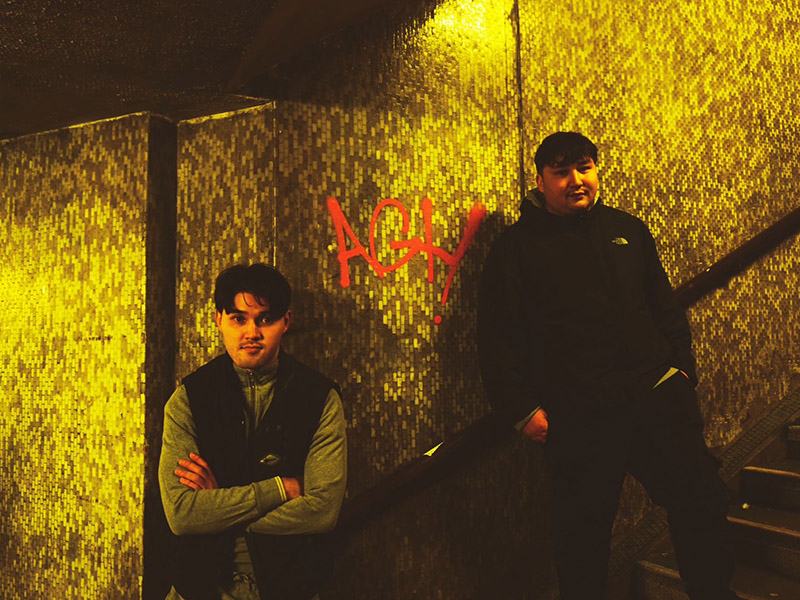
EXPLORING OUR SOUND AND NOT OVERTHINKING IT
A CONVERSATION WITH TIAN QIYI
Tian Qiyi is a very unique sibling duo, featuring brothers John Tian Qi Wardle and Charlie Tian Yi Wardle. The two Liverpool- and London-based brothers come by their musical talent and interest very honestly. In fact, their father who helped them with their most recent album (Songs For Workers), is bassist/producer/writer/musician Jah Wobble (John Wardle) of Public Image Ltd. fame. Their mother, Zilan Liao, is also a musician. Tian Qiyi has developed their own distinct sound, which is a rich combination of their rich family heritage but also bringing in their own musical sensibilities. They blend their father’s pioneering work in post-punk and dub work (along with his Irish background) with their Mother’s Chinese cultural influences.
I had the chance to speak to the two brothers via Zoom, about their new and incredible album, Songs For Workers, and even a little about their family and cultural history. But first, Charlie explained about the band and how he and his brother came to work together. “It came from our own upbringing. Our Dad is a bass player, Jah Wobble, and he raised us listening to similar music and stuff that was his inspiration, some jazzier albums, psychedelic stuff, some rocky songs, and that becomes imprinted in. Then there is my mom’s side. She was a player, her dad was a player and so it comes from our family and upbringing. We were playing instruments from a young age. It was a natural progression from that.”
The duo, and the new album, is a combination of modern electronic, chill music with a great many traditional instruments from China, Ireland and Mongolia. The brothers bring everything together for an original and brilliant sound. “That is the whole point, and it came quite naturally. It is really what we listen to and what we play,” said Charlie. John added, “a lot of this stuff that we both listen to, say the Western side, comes from what Dad had shown to us growing up. But the traditional folk music he had not heard a lot of, because China’s so big. Our mom’s from Southern China, so he would have heard the traditional Cantonese folk songs, but then our grandmother on our mom’s side is Mongolian Chinese. Through her and her uncles we got into it that way.
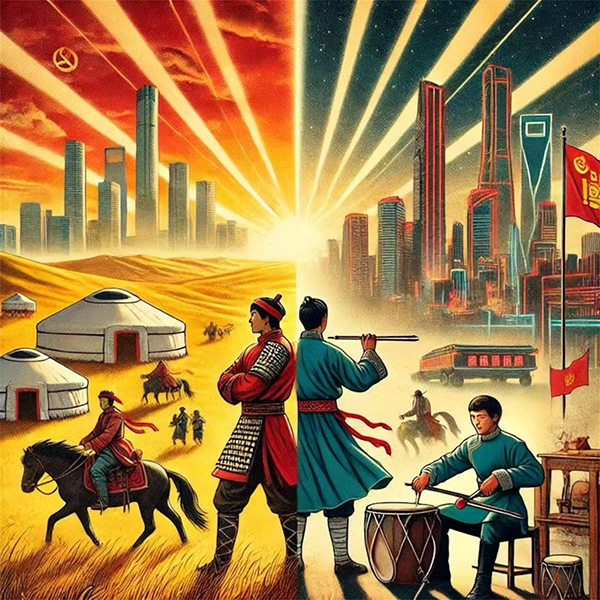
PURCHASE SONGS FOR WORKERS VIA BANDCAMP
“Our dad is Irish born and raised in the East end of London, but he was shown The Dubliners and other Irish folk growing up, but in particular The Dubliners and The Chieftains. Those acts coming from Ireland, and he would play us a lot of that as well.”
Working together with a sibling can be a challenging task for some. “When we first started working together, we would argue a lot and we were quite a bit younger, 16 or 17,” John volunteered. “Now we are a bit more mature, and the easiest way we know to not argue is to stick to things we know. Charlie has a much better understanding of lyrics, melody and harmony; those are his areas. I have grown up with percussion and drums, so I understand the rhythm side a bit more. So, I am not going to argue about melody or with harmony. Charlie will deal with it.”
“But we also know we are going to disagree sometimes, and you just have to let it go,” added Charlie.
And then, throw into the mix, the addition of working with their father, Jah Wobble, who plays on a number of tracks on Songs For Workers. “The way he plays, he leaves a lot of space for melody,” said John. “So there tends to be no clash at all.” Charlie added, “his bass style is so unique as well. You kind of know what he will put down, at this stage. We know we are going to get that driving bass.”
There is a phenomenon in the music industry where an artist’s second album does not achieve the same level of success as their debut, known as second album syndrome. “The only thing we wanted to do,” said Charlie, “from a musical point of view was boil it down a bit. With Red Mist there was a lot of instrumentation, for us this time we tried to boil it down, so it was just me and John. Just our instruments. Then our dad played bass. So, this album was a bit more rootsier, less complex in a musical sense. It was more familiar in terms of what we do and more authentic to our sound. From a musical aspect, it was pretty straightforward.
“I think we gained more confidence, so we could really explore our sound and not overthink it. Not to criticize our first album, but it was our first album, and you really want to impress. Whereas this one is a bit more confident, saying ‘this is our music’.
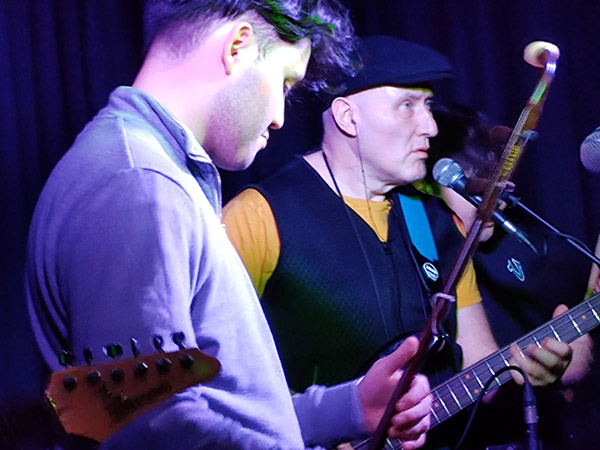
PHOTO CREDIT: MARCUS AUSTIN
For the most part the album was recorded with all the players in one studio. They are able to use a big space in Liverpool, thanks to their mother who runs a community centre in Liverpool. Playing together is important to them both, in order to achieve the sound they wish to create.
“We were chasing that live sound,” said John. “We always like to get the balance in. Sometimes it can be overproduced, other times when the production is right, it is great. We both like the quality of the old school bands that when you listen to it, it sounds live. Like Miles Davies or Alexis Korner, those types of records.” Charlie agreed, “we have a good balance. John hates anything that sounds overproduced and too composed.”
Songs For Workers is a brilliant and very unique album. It is well produced, well written and extremely well played. And both of the brothers have hopes for the album in terms of the listening audience. “I don’t want to make it about identity, but it kind of is. Just in what it is. It is a mix of everything and very individual. You can pick it apart, from a musical aspect, and divide it into the Chinese element, the Irish element, the electronic bass, whatever. You can do that but it is the same for people, especially our Chinese friends who struggle with their identity and who they are. For us, we are who we are. I think there is the identity bit, and outside of that there is the musical goal to make something new. If people can recognize those two things, then I am happy,” said Charlie.
John added, “it is the same for me. I think it is just at the same time, I always thought whoever listens to it can take what they want from it. When we were doing it, we were trying to make it not too much about identity, but the more we did it, it became what it is. Not good or bad, it just is. It is the sound of who we are, where we have come from, what we have listened to, everything. But if someone does listen to it and they get something completely different, I am happy with that as well. Everyone can take what they want from it.”
Artist Links


Main Photo Credit: Ying Ying Liao | Background Photo Credit: Jon Klein


SPILL FEATURE: THE ART OF BEING SEEN – A CONVERSATION WITH LIAM GUINANE & JUSTIN KEURNTJES OF WINDWAKER

SPILL FEATURE: NOTHING LEFT TO SAY, TOMORROW STARTS TODAY – A CONVERSATION WITH ALEXANDRA ROSE OF THE CRYSTAL TEARDROP

SPILL FEATURE: SURVIVING THE COLLAPSE – A CONVERSATION WITH CODY QUISTAD OF WAGE WAR

SPILL FEATURE: NEW CHAPTERS, WRITTEN IN ICE AND LIGHT – A CONVERSATION WITH LEFT TO SUFFER GUITARIST PETER HIGGS