


I AM THE MINISTER FOR ESOTERIC AFFAIRS
A CONVERSATION WITH STEVE KILBEY OF THE CHURCH
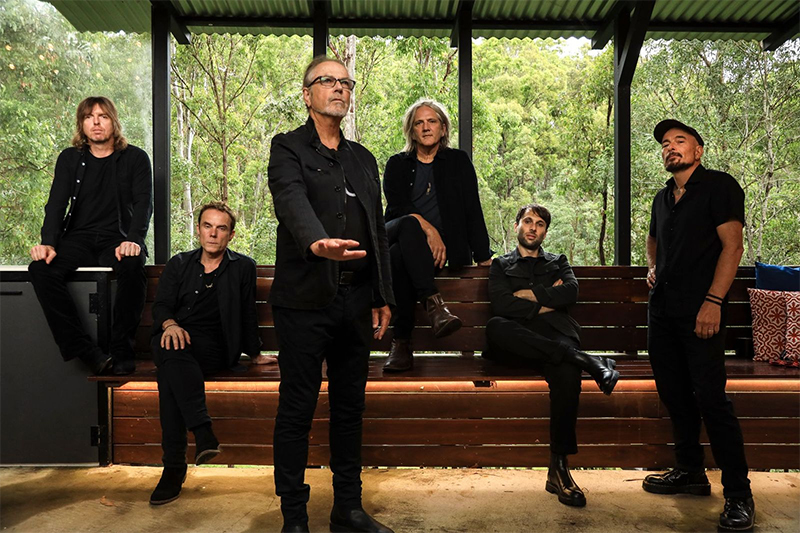
Steve Kilbey helped form The Church in 1980, with their debut album, Of Skins And Heart, which was released in 1981. It is now 45 years later, and The Church (with Kilbey as the only original member) has released their 28th album, Lacuna, an album that fits perfectly in The Church’s ever-expanding catalogue and is full of fantastic songs and images. It was recorded in Texas, something the Australians found very hot (heat wise) but enjoyed the experience.
I had the chance to speak with Steve Kilbey recently about the new album and The Church in general. Connecting with Kilbey, who was in Australia, I couldn’t help but point out I was talking to him tomorrow, due to the time differences.
“Bet on a horse race,” joked Kilbey. “We will clean up.” When I suggest a 50-50 split, Kilbey shakes his head, “55-45, sorry’ and has a good laugh. This sets the tone for the conversation. We turn our attention to the new album, Lacuna. “Have you heard it?” he asks. “Wow! You got an advanced copy.”
I have to ask, the new album is so new and original, after 28 albums, what is his secret? “I trust in the process. I trust in the process, as in, we turned up in Austin in 2024 and our esteemed producer Darrell Thorp, who is a Grammy award winning engineer who has worked with, well, let’s drop some names, Radiohead, Paul McCartney, and the Foo Fighters. He says, ‘what songs have you got?’ and I say, ‘I have no songs.’ And he says, ‘have you got words?” ‘No words.’ ‘Pieces of music?’ ‘no pieces of music.’ ‘Chord progressions?’ no chord progressions. We are starting from the beginning, and we have to trust in the process. And if you trust in the process, the process will always give you something back. But you have to trust in it. The process gets offended if you question it or doubt it. So, the worst thing for me is people doubting my process. Then it is really hard to do it. That is how I do it. I trust in the process, and I always know something will happen.”
But this was not always Kilbey’s way. “Once upon a time I was a callow youth with an acoustic guitar, trying to write songs and they were awful songs. Because I didn’t have a process. I was saying, ‘I know I am a songwriter, therefore I should be able to write songs.’ But they were awful. Still, I had the temerity to write songs, which was more than most people did but they were awful. Then in 1977, I got a domestic TEAC four track machine and I realised I wasn’t writing the right songs for me. I had to embrace a different way to write songs, and that is when I discovered the process. The process of starting with one small thing, but sometimes you must be open to the old ways as well. A song will go ‘wow,’ and you’ll play it and it will all be there. But a lot of time you have to start with one tiny thing. A kickback drum pattern, one chord, and then keep on trusting and following the process and that’s the process I discovered in 1977. I also discovered, write the music first and the words will follow. Some people do it the other way around, occasionally I have done it. But I find writing the music first, the music will always suggest the words. And the music will suggest the words you wouldn’t have thought of, without that music. You need the music to tell you what the words are going to be. That is my process.”
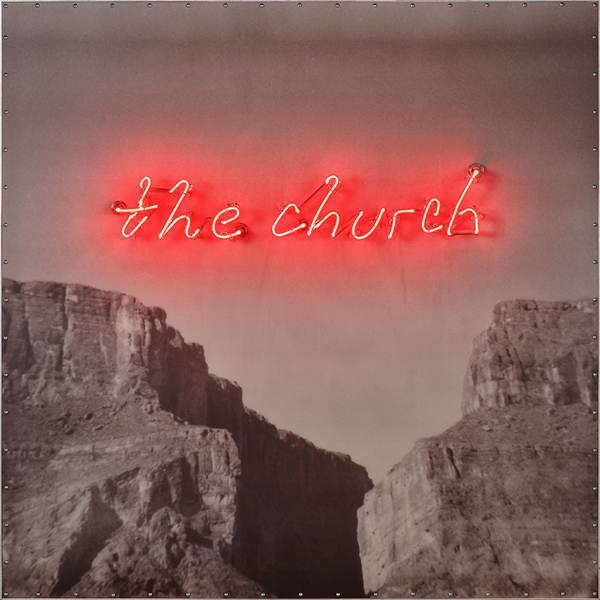
PURCHASE LACUNA
The title of the new album, Lacuna (which means unfilled space or an omission of something, like a missing page of a book), is an unusual yet descriptive title of the album. Nothing is missing, but there are gaps for the listener to fill in. “I had been thinking of that word for a bit. It was sort of bubbling around in my subconscious and when it came time to title the album, I threw some words around and that word was the most popular with people, and then it became appropriate. A space where something ought to be, a gap where something is missing and it became more appropriate because it took so long for this album to come out. It is just a lovely word, a Latin word. I never knew what it meant, and I remember the first time I saw it, I had to look it up. It just has a nice feel for a Church album title.”
And, with a title like Lacuna, and songs on the album referencing the American west, one can be forgiven for thinking that the album would have an Americana flavour to it. “We were in Austin, right?” where the album was recorded. “If you go to Austin, Texas, and you are a songwriter, you have to soak it all up. If I had been sent to Africa or Asia, or, I don’t fucking know, Perth (Australia), wherever it was, you have to let it in. So, when we got to Austin, it became clear that some of the songs were about Western cowboys or Texas. But always from an outsider’s point of view. Never like, this is The Church’s Americana album, where we pretend that we are an Austin based blues band. It is very much like everywhere I go, I carry the stranger around with me, going ‘wow! Look at all of this.’ What a strange and wonderful city Austin is! If you are going to be in Texas, let it in. Let those influences into the music.”
The album was recorded before the current administration came into power, so that aspect is nowhere to be found on Lucana. But recording in America did have an impact on Kilbey.
“My impressions of America, my impressions of everything, are filtered through this person that I am. When I take on America, or if I went to Scotland, or even being in Australia. I am not really an Australian either. I feel like I am eternally in this position of being a stranger, an outsider, and I look at everything and I don’t take anything for granted. I am walking alone in Austin, and it is a really hot summer’s day, the clouds overhead with ominous weather, and there are crazy people, cowboys and beautiful young women and weird shops selling strange things. To me, it is ‘wow!’ I am always impressed. I have never properly grown up, which is really good. I keep the child in me alive, and I am going ‘look at that tree, look at all that stuff, look at the person, look at what is going on’, being open to everything so I can get that in the music, like a child would. Instead of walking around saying ‘oh yeah, I have seen it all before…”
Although he was influenced by being in Austin, one song, “Martian Skyline,” allowed him to look backwards on his youth. “I allude back to this block of flats, where I grew up. There was a block of flats, and I don’t know why, but they used to call it The Martian Skyline. It all came back to me that that is what the song should be about. When you grow up in a neighbourhood, there are always these legendary people that precede you that you may never get to meet. You get to school, and there are kids there that aren’t there anymore. You move to a city, and the kids go, ‘that was once where a witch used to live’. And then one day, 60 years later, thinking I am going to write a song, and suddenly Martian Skyline, after you haven’t thought about it for so long, it revolves back in your head. Finally, I have been carrying this around with me, it can become something for this song.”
After all these years of recording, Kilbey is very pragmatic to all the changes in music production over the years. “It doesn’t really affect me what it comes out on, making an album a vinyl record was no different than making a CD, no different than making something that most people will hear streaming. I don’t fret and fuss over all those details. Sonic quality has never been my forte. Technical stuff, I don’t worry about it. I am purely, as I used to say to the old band with the guys there, I am the minister for esoteric affairs. I don’t think about formats or record companies or all that other stuff. Eventually you have to, but I am just there to get the music done”
And Kilbey hopes that people will enjoy Lacuna, but maybe a little bit more. “I hope it turns them on…when I first heard that phrase so long ago, The Beatles, ‘I’d love to turn you on,’ I thought, even though I didn’t properly understand what it meant at that stage of the game…I just want people to really enjoy it. Smile and laugh and tap their feet. It is entertainment. All my favourite records were doors into worlds into which I could escape. I get home from a horrible day at school or job, go into my room, put a record on and then a door opens and you go into that world. I hope Lacuna can be a world like that for people. For people who want to get away from all the Donald Trump and Iran and the water is running out and the sun is going to explode…we can’t pay our taxes…I hope Lacuna can be a place of respite. You can just put it on and disappear and not have to worry for that hour and a bit. You can just enjoy yourself.“
Artist Links


Photo Credit: Adam Nicholas

SPILL NEW MUSIC: THE CHURCH RETURN WITH THE SMOKY-FLAVORED SINGLE “WESTERN” | NEW ALBUM ‘LACUNA’ OUT OCTOBER 30 VIA COOKING VINYL

SPILL ALBUM REVIEWS: THE ALAN PARSONS PROJECT – THE TURN OF A FRIENDLY CARD | EYE IN THE SKY | AMMONIA AVENUE (REISSUES)

SPILL NEWS: GIPSY KINGS FEATURING TONINO BALIARDO SHARE NEW SINGLE “HISTORIA” | THE TITLE TRACK FROM NEW ALBUM OUT MAY 15 ON COOKING VINYL

SPILL NEWS: THE DARKNESS KICK OFF FESTIVITIES WITH NEW “MISTLETOE AND WINE” COVER

