NOTHING LEFT TO SAY, TOMORROW STARTS TODAY
A CONVERSATION WITH ALEXANDRA ROSE OF THE CRYSTAL TEARDROP
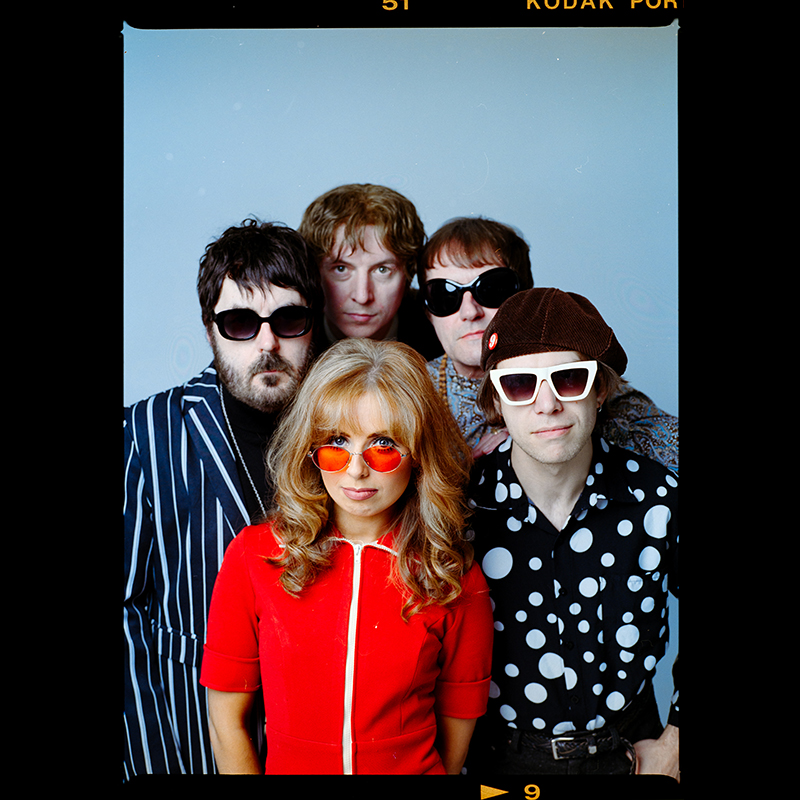
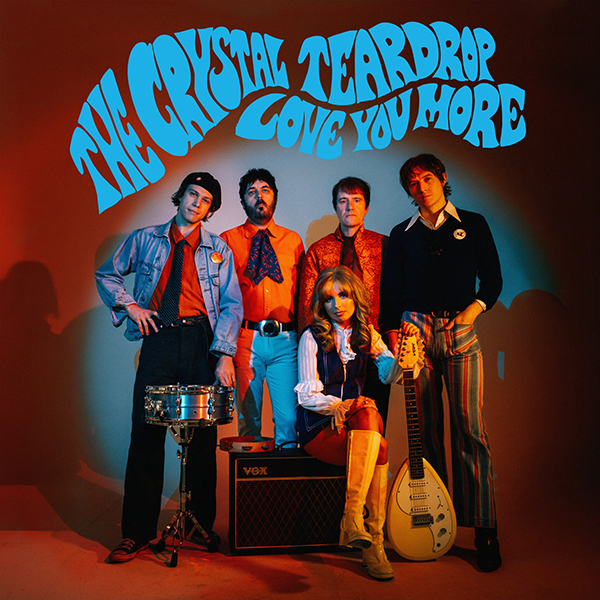
There is a difference between revisiting the past and bringing its spirit into the present. For Alexandra Rose, frontwoman of British psychedelic pop group The Crystal Teardrop, the distinction is essential. Deeply immersed in the music and culture of the 1960s, Rose and her bandmates draw inspiration from an era of musical experimentation, colourful identities and boundary-pushing creativity. Yet their intention is not to recreate a bygone decade. With their latest album, Love You More, they are building something of their own.
Rose reflects on a record that balances sunshine-soaked melodies with lyrics that invite closer examination, while exploring the creative freedom, musical authenticity, and collective spirit that have shaped the band’s rapid evolution.
Looking back on Love You More after its completion, Rose finds herself hearing something she may have overlooked during the recording process: enjoyment.
“There’s a lot of stress and pressure as you’re there in the room,” she explains. “Whilst it is enjoyable stress and pressure, it’s always a good thing. When I have had that gap between actually putting it together and then listening back to it now that it’s been released, all I hear is all of the enjoyment that poured into it.”
That enjoyment sits alongside a more meaningful approach to songwriting. Beneath the album’s bright, harmonious exterior are lyrics that touch on endings, uncertainty, infidelity, and control. Rose deliberately leaves room for interpretation, allowing listeners to engage with the songs at whatever depth they choose.
“I’m very conscious to make songs meaningful if you wish to tap into it, but if you don’t wish to, then they’re just nice songs to listen to,” she says.
Her approach draws on stories that reveal different meanings depending on the reader’s perspective, including Alice in Wonderland and The Little Prince. What appears innocent on the surface can contain something considerably more complex beneath it. Rose applies a similar sensibility to her lyrics, sometimes drawing from personal emotions and sometimes imagining characters whose experiences have little connection to her own.
The result is songwriting that rewards curiosity without demanding it.
That ability to move between the personal and the political becomes particularly significant on “The 11th Hour.” For Rose, creativity is not separate from the world beyond the recording studio. In an era marked by humanitarian crises and political turmoil, she believes musicians have a responsibility to engage with the realities surrounding them.
“Creativity in music is a very powerful tool to help fight the battles that are going on around the world,” she says. “As artists, we have a responsibility to use our platform to help humanity.”
The 1960s were hardly an uncomplicated golden age; political upheaval and social unrest helped fuel some of its most compelling artistic developments. Rose sees clear parallels with the present, arguing that difficult times can provide artists with new material and opportunities to push boundaries.
Yet she is equally conscious of the danger of becoming trapped by nostalgia.
Rose insists that the band never tries to be a pastiche, also known as a throwback act.
For Rose, the 1960s were not a single, uniform aesthetic. Music, fashion, and cultural attitudes shifted dramatically throughout the decade, creating a vast landscape of influences. The Crystal Teardrop draw from that diversity while maintaining their own identity, rather than becoming a tribute act dressed in vintage clothing.
Their musical approach reflects that philosophy. While the band recorded its first album using analogue techniques, Love You More was recorded digitally, allowing greater flexibility in vocal harmonies and instrumentation. The decision wasn’t about abandoning the past; it was about using contemporary tools to expand their sound.
Additional vocal layers give the record a richer, airier quality, while Eastern instruments, including tambura, swarmandal, and acoustic sitar, add to its psychedelic character.
Rose particularly relishes the chance to explore these sounds, citing The Beatles’ influence and their embrace of Indian instrumentation in the late 1960s. Her admiration for the group extends well beyond their musical arrangements. They have shaped her understanding of what a band can represent.
LOVE YOU MORE ALBUM REVIEW
A lifelong Beatles fan, Rose recalls wanting to be like Paul McCartney from the age of five. Rather than dreaming of marrying a Beatle, she wanted to become one: making music, performing with friends, and enjoying the freedom of being part of a band.
That ambition eventually led her to Liverpool, where she completed a master’s degree focused on The Beatles. Her dissertation examined how the group helped break down gender barriers in the music industry and made rock music more accessible to female musicians.
For Rose, that history remains relevant. Psychedelic rock has often been framed through the mythology of male musicians, and she wants women and people who don’t conform to traditionally masculine expectations to feel equally welcome in its world.
Her own presence in the scene is part of that ongoing conversation, demonstrating that the music’s spirit of experimentation need not be confined by gender or tradition.
The Crystal Teardrop’s creative philosophy also extends to the recording process itself. Although digital technology can make it easier to correct mistakes on Love You More, the band deliberately kept imperfections to bring out the performances’ natural character.
“We are big fans of mistakes as long as they’re not absolute clangers,” Rose says. “We want it to be authentic, and we didn’t want it to be perfect.”
This is a particularly pointed position in an age when artificial intelligence can generate increasingly convincing imitations of music. Rose is wary of letting technology replace the human effort involved in writing, performing, and discovering new sounds.
She believes there is still plenty of musical territory to explore but hopes musicians will keep pursuing those discoveries themselves rather than relying on computer programs to deliver polished results.
The distinction becomes even clearer onstage. The band’s performances include an extended, largely improvised instrumental passage that requires the five musicians to listen and respond to one another in real time. Rose compares the experience to a dance, with each player reacting to the others and allowing the music to develop organically.
“We’re constantly learning from each other when we perform live,” she says.
That unspoken musical understanding reflects the close relationship between the band members, who also manage much of their own operation. Without a manager, they handle bookings, travel arrangements, merchandise and the everyday demands of keeping a band moving forward. It is a considerable workload, particularly as they balance their musical commitments with other jobs.
Still, Rose recognises how quickly the project has developed since the group’s first gig in 2023. Within six months, The Crystal Teardrop had signed to Rise Above Records. They have since toured internationally and performed alongside artists they deeply admire, including Love and The Pandoras.
Among the songs on Love You More, “Times Are Gone” holds particular significance for Rose. She introduced it to the band early on their journey but deliberately waited for the right moment to release it.
“It’s one that’s so special to me, and it’s my favourite thing that I’ve ever gone anywhere near,” she says. “I always wanted that one to be out into the world, and I’m really glad now that it is.”
Her pride in the song reflects a broader appreciation for the experience of making music with people she trusts. Although the band hopes to expand its collaborative songwriting on a future third album, Rose is already grateful for what the group has achieved.
She has also learned to appreciate the moments that might otherwise disappear beyond the practical demands of touring. Playing abroad, meeting audiences and sharing music with strangers were once ambitions; now, she makes a conscious effort not to let them become routine.
Ultimately, that awareness brings Rose back to the quality she values most: the human connection at the heart of the music.
In a world weighed down by uncertainty, conflict, and an endless stream of troubling headlines, perhaps it is no surprise that people are drawn to the past. Nostalgia offers more than fond memories — it offers a place to escape, a reminder of how music can make us feel hopeful, connected and, quite simply, happy.
The band reminds us of music’s power to lift our spirits, spark our imaginations, and transport us beyond the chaos of everyday life. With Love You More, they capture the colour, energy, and infectious optimism of psychedelic pop while creating something that feels alive and relevant today. If you haven’t discovered this remarkable band yet, now is the time. Seek out Love You More, turn up the volume and let yourself be carried away. You may just find your next musical obsession in The Crystal Teardrop.
With Love You More, Alexandra Rose and her band have created something that deserves to travel far beyond the UK, reaching listeners across the Atlantic and beyond. For those who haven’t yet encountered their music, this is a chance to discover something special before the wider world catches on. Sometimes, the most rewarding musical discoveries are the ones we make for ourselves before the rest of the world is listening.
Artist Links



SPILL FEATURE: THE ART OF BEING SEEN – A CONVERSATION WITH LIAM GUINANE & JUSTIN KEURNTJES OF WINDWAKER

SPILL FEATURE: SURVIVING THE COLLAPSE – A CONVERSATION WITH CODY QUISTAD OF WAGE WAR

SPILL FEATURE: NEW CHAPTERS, WRITTEN IN ICE AND LIGHT – A CONVERSATION WITH LEFT TO SUFFER GUITARIST PETER HIGGS

SPILL FEATURE: A REBIRTH THROUGH VINYL – A CONVERSATION WITH YOUNG MEDICINE