


WHERE HISTORY RESONATES
A CONVERSATION WITH PÄR SUNDSTRÖM OF SABATON ON COMPOSITION, COMMUNITY, AND HEAVY METAL’S FUTURE
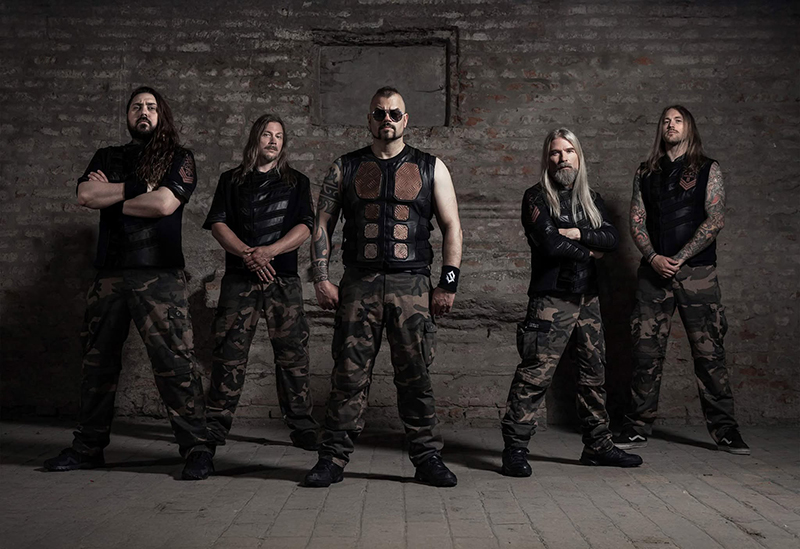
When an ocean of devoted flooded the Great Canadian Casino Resort in Toronto on September 27, 2026, the thunderous chants echoing off the venue walls proved once again that Swedish heavy metal titans Sabaton have mastered an art form entirely their own. Following the 2025 release of their latest album, Legends, founding bassist Pär Sundström reflected with me on the art of uncovering lost history, the discipline of the studio, daily life on the road, and the electric synergy between Sabaton and their global legion of fans.
Sabaton’s relationship with their audience extends far beyond traditional touring; it serves as a global crowdsourcing network for historical storytelling. For Canadian fans, memory runs deep as far back as 2019, back to the band’s discovery of Francis Pegahmagabow, the legendary Ojibwe WWI sniper, politician, and activist from Parry Sound, Ontario. As Sundström explains, those localized connections continue to fuel the band’s creative engine while touring across North America and beyond.
“We are always curious about what is out there,” Sundström shares. “I get a lot of emails from fans all over the world telling us about their local history. We also meet people who bring us books or other writings about stories from their area. Sometimes those stories are really interesting, and this is actually how we find many of the subjects we write about. Fans sharing their local history are a big part of that.”
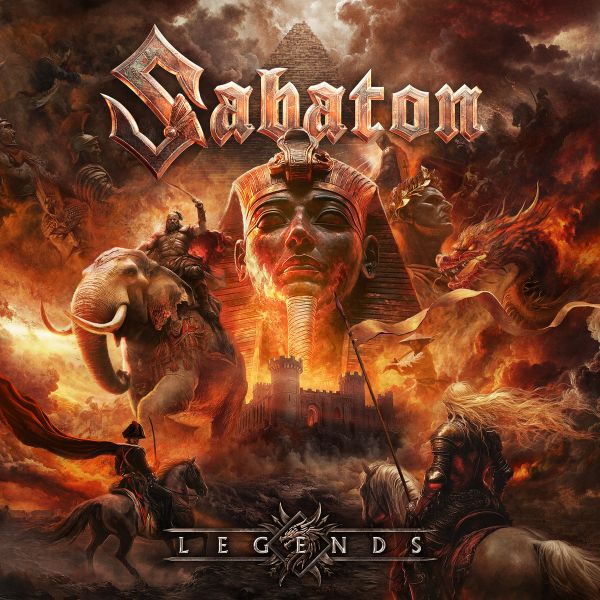
That relentless curiosity directly shaped their newest release, Legends. After immersing themselves in the mud and trenches of World War I across two previous concept albums, the group felt a compelling pull to venture deeper into the ancient and medieval past, tackling figures ranging from the Knights Templar to Genghis Khan and Hannibal.
“At its core, Sabaton is a heavy metal band from Sweden,” Sundström notes. “We found military history as a lyrical theme because we thought it suited our music. We were not the first band to do that, but over 11 albums we have explored it in depth, with each album having its own direction.
For Legends, we wanted to do something different. Our previous two albums were based on the First World War, so we felt it was time to go further back in history. We always start with the music, and when we heard the first song written for this album, we felt it was a good Templar song. That became ‘Templars’ and helped set the direction for the rest of the album.”
Crafting an album that balances historical weight with infectious, high-energy heavy metal requires a balance of creative pressure and refined studio mechanics. Despite decades of experience, Sundström candidly admits that writing high-quality songs never becomes automated.
“Songwriting always puts a lot of pressure on the band,” he reflects. “After writing so many songs over the years, the challenge is still to create good songs. That part does not become easy just because you’ve done it before.
At the same time, we feel more and more comfortable in the studio. We have worked with our producer Jonas for many albums now, and once we enter the studio, most things go very smoothly. That was the case with Legends as well.”
When structuring the final sequencing for Legends, the band resisted the temptation to arrange tracks chronologically by historical era. Instead, dynamic musical pacing took absolute priority.
“We based the track order on the songs and the music,” Sundström explains. “We did not arrange the album as a historical timeline. The aim was simply to create the best listening experience for the fans, so the music came first when we decided how the songs should fit together.”
For aspiring musicians inspired by Sabaton’s massive, orchestral sonic landscape, Sundström offers a refreshing, non-pretentious perspective on studio gear and music production. Rather than focusing on expensive software or boutique instruments, he emphasizes foundational focus:
“I don’t think there is any specific piece of gear that everybody needs,” he advises. “What matters most when you want to create something is having a vision in your head. You can overcome the other obstacles over time as you gain knowledge. With music, the important thing is to have fun and have a solid vision of what you want to create.”
LEGENDS ALBUM REVIEW
Life inside a touring heavy metal juggernaut requires rigorous discipline, where creative artistry constantly intersects with business management. On any given show day, Sundström pivots seamlessly between executive logistics and stage preparation.
“On tour we try to sleep a little longer than usual because we want to have energy for the evening’s performance,” Sundström reveals. “We usually get up around lunchtime, have lunch and get an idea of what is happening that day.
For me, there are normally a lot of emails and office work, meetings and things to go through with the venue or promoter. There are financial matters as well, so I have quite a lot to deal with during the day. After that, the band talks through the show. There might be time for the gym or a run, and calls to family members. Then we warm up and it is showtime. That is a fairly typical day on tour, with the management work, music and personal life all fitting around the concert.”
To recharge amidst the demands of global touring, Sundström frequently revisits the foundational classic rock and metal records that first ignited his passion for the genre.
“What I listen to changes a lot over time, but I very often come back to classic rock and metal bands like Judas Priest, Black Sabbath and Iron Maiden,” he says. “They are always fundamental sources of inspiration for me. Helloween, Grave Digger and Running Wild have also been there as inspirations, and Savatage has always been a big one!”
Behind Sabaton’s formidable tactical themes lies a deeply creative spirit that extends well beyond heavy metal. When asked what career path he might have pursued in an alternate universe where Sabaton hadn’t achieved global stardom, Sundström points directly to immersive world-building.
“I love creating things, and computer games are something I would love to create,” he reveals. “Board games as well. I would enjoy putting my creativity into something like that, whether it was creating adventures for Dungeons & Dragons or building entire worlds. That is the kind of work I would love to do!”
As heavy metal faces an era of rapid technological shifts and evolving listener habits, Sundström maintains a grounded view of the genre’s identity. While open to evolution, he champions the enduring legacy of traditional heavy metal.
“Heavy metal can and should evolve, but I think it is important that it remains heavy metal,” Sundström observes. “It came from other genres and became something of its own. If something evolves from heavy metal into something new, that new thing can exist while heavy metal remains. Music should always keep evolving, but there will also be people who recognise and feel at home with a certain type of heavy metal. Especially with AI, I have no idea what music will sound like in 25 years. For Sabaton, I hope we can continue doing what we do. I hope we are a heavy metal band that one day retires as a heavy metal band, and that we have a great life until then.”
Ultimately, for Sundström and Sabaton, everything converges on the visceral experience of the live performance, the shared bond between the musicians on stage and thousands of voices singing in unison.
“Every live concert is a combination of give and take,” Sundström reflects in closing. “We give everything we have to the fans, and they give everything back. That exchange of energy is a huge part of the experience. We want to give them a lasting memory of that night, and we go on stage with pride, aiming to give each person in the audience a memory for life.
Looking out at a sea of people and knowing they have come for something we created is an amazing feeling. It also brings responsibility: we want to make sure that every one of them is satisfied when they go home.”
Artist Links


Photo Credit: Steve Bright

SPILL ALBUM REVIEW: SABATON – LEGENDS

SPILL NEWS: FINGER ELEVEN ANNOUNCE OPEN CALL TO ARTISTS WITH ‘LAST NIGHT ON EARTH’ CONTEST | TOUR DATES

SPILL FEATURE: 7 SEAS: A RETURN TO WATER, AND THEMSELVES – A CONVERSATION WITH DIRTY HEADS

SPILL NEWS: EVA UNDER FIRE DROPS NEW TRACK “MURDER SCENE”

