THE MORNING SUN STILL SHINES
A CONVERSATION WITH DON DANNEMAN OF THE CYRKLE
“I’m Don Danneman, original founding member of The Cyrkle, and I just want to thank you, the fact that you guys come out to see us. I, at 82 years old, get to rock out on stage!”
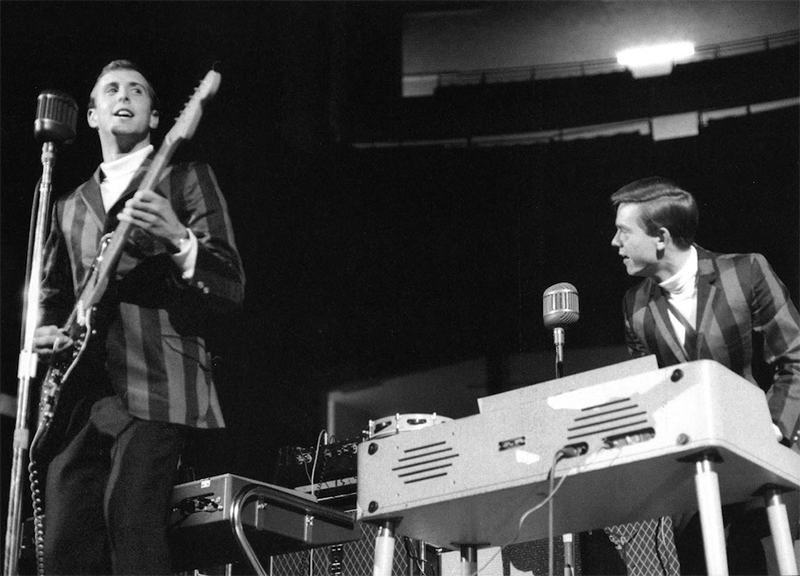
It is interesting to consider the 1960s – a time of political and social change, when youth culture was at the forefront and the future still looked bright. It was in this era that The Cyrkle emerged: a group of musicians who, while their tenure was relatively short, nonetheless made their mark on popular music. Before making it big as The Cyrkle, Don Danneman, Tom Dawes, Marty Fried, and Earle Pickens were known as The Rhondells – a fraternity party band from Lafayette College, in Pennsylvania.
Looking back on the 60 years since the release of their big hit “Red Rubber Ball” (# 2 on the Billboard chart, #1 on Canada’s RPM chart), and their follow-up hit, “Turn Down Day” (#16 in the U.S. and Canada), original founding member Don Danneman shared some of the backstory behind The Cyrkle, and of this milestone anniversary. Speaking about “Red Rubber Ball” (a co-write between Paul Simon and The Seekers’ Bruce Woodley), Danneman recalls, “We were at the point of just beginning our actual record career. We weren’t even ‘The Cyrkle’ yet. We were still The Rhondells from Lafayette College, but we were hanging around in Greenwich Village, and bandmate Tommy Dawes met a guy named Barry Kornfeld, who had a publishing company with Paul Simon. Tommy heard ‘Red Rubber Ball’ on a scratchy 45 record of just Paul playing guitar and singing it. He brought it to the band, and we all thought, ‘Yeah, cute. That’s a cute song. Let’s record it and see what happens.’ That’s basically where it came from.”
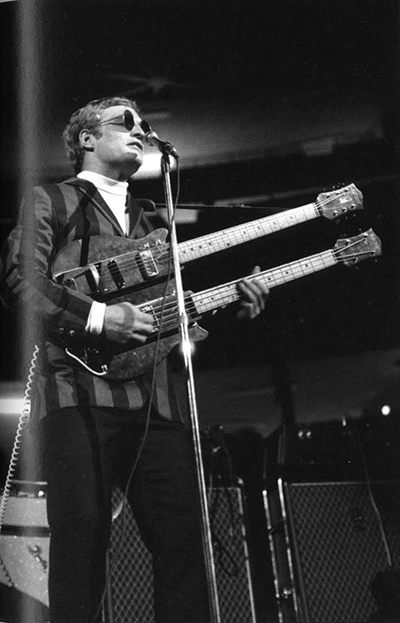
Danneman goes on to say that, while he was proud of recording ‘Red Rubber Ball,’ and was amazed that it became a hit, he never thought about it much, beyond that. This changed in the 1980s, when a record company called Sundays acquired the rights to release The Cyrkle’s material from their original label, Columbia. Danneman describes listening to his band’s music for the first time in years, ahead of its re-release, “I realized, ‘Wow, that sounds like The Cyrkle! That was our sound! What a good recording and what a good song. That is so cool!’ I was way more impressed with it, at that listening, than I ever was back when we had first recorded it.”
Danneman’s attitude towards ‘Red Rubber Ball’ has continued to change during his band’s revival in recent years. He describes signing 45 rpm singles of the song for fans, and of folks telling him how ‘Red Rubber Ball’ got them through some difficult times in their lives. In one particular instance, Danneman describes the interaction, “A guy comes up. He’s wearing a veteran’s cap, and he introduces himself. He says, ‘I want you to know – ‘Red Rubber Ball’ – we had it on a little battery tape recorder in Vietnam. And I can’t tell you how many battles that song got us through. It just made us feel good!’ And we teared up, literally. We cried on each other’s shoulder. We had a big hug… Realizing that I actually had an effect on thousands and thousands and thousands of people, some of whom I now get to meet, it was an amazing phenomenon.”
Prior to the band’s big success, Danneman explains that, “having had a very successful college band career, in the summer of 1965 we were playing at the Alibi bar in Atlantic City. Right at the end of that summer, when we were basically going to go our separate ways. You know, we had a great time, we played. In walks a gentleman who introduces himself, ‘My name is Nat Weiss. I am a friend and partner of Beatles’ manager Brian Epstein, and we’re forming a management company here in the States. I think you guys sound really good. Let’s stay in touch. Maybe we can get something going.’ Well, we, of course, thought, ‘Bullshit!’ You know, we just wouldn’t believe that.”
When talking about his initial meeting with the famed Beatles manager, Danneman recalls reaching out to Nat Weiss, saying, “one evening, I thought to myself, ‘you know, this guy says he knows Brian Epstein. Maybe I’ll give him a call,’ I had his card. So anyway, I call him, and he answered the phone. He remembered me – I was surprised at this – he remembered me immediately, ‘Oh, Don, oh yeah! So nice to have you call me. Hey, why don’t you come down to the city?’ – this is Eastchester, suburban New York, getting into the city – ‘why don’t you come to the city, and I’ll introduce you to Brian?’ So, I’m thinking, ‘Really? Okay…’ So, I took a buddy of mine and we drove down, and he gave me an address and a time, and it was a side street on the Upper East Side, on one of these small, you know, four or five story buildings. So, we go in, walk up one flight, there’s and there’s a party, sure enough. Nat was not there, and we’re both kind of shy. My friend and I were standing in the corner. Anyway, finally, Nat walks in, and I walk up to him. ‘Oh, Don!’ he says, ‘yeah, come on, follow me.’ I follow him. He leads me down the stairs. I follow him. And there is a limo parked right outside on the street… With very dramatic arm gestures, he opened the door and beckoned me into the limo. He sits me down, and son of a gun, I’m looking right into the face of Brian Epstein.”
It was an auspicious meeting in the history of the band. After being signed to a management contract with Nat Weiss and Brian Epstein, they made some demo recordings and were picked up by Columbia Records, with John Simon as their producer. They had started recording “Red Rubber Ball,” but they knew that a change in the band’s name was necessary. Being The Rhondells would simply not cut it, in the wider music market. Recounting how their being dubbed “The Cyrkle” came from an interesting source, Danneman explains, “One evening in Columbia recording studios, we’re recording. Brian was there, and he came up to me and said, ‘Oh, Don, take a look at this.’ And he hands me a business card, you know? I see it says ‘Brian Epstein’ on the card, just a regular business card. ‘No, no. Don, turn it over,’ Brian said. I turn the card over, and I see scribbling on the back. It’s really scribbling. I can’t read it. ‘Brian, what am I reading?’ (Epstein says,) ‘Oh, Don, that’s your new name. And notice it’s The Cyrkle with the funny spelling, C-Y-R-K-L-E. When I was back in Britain, I asked the boys – as he lovingly referred to the Beatles – I asked the boys, ‘Who has an idea for the name of our new American group? And wouldn’t you know, it was John that came up with the name. You know, how funny John thinks, amazing brain, with the funny spelling!’” In live appearances these days, Danneman excitedly tells the story of how John Lennon named their band, but admits regret at having thrown away the business card with Lennon’s handwritten note on it.
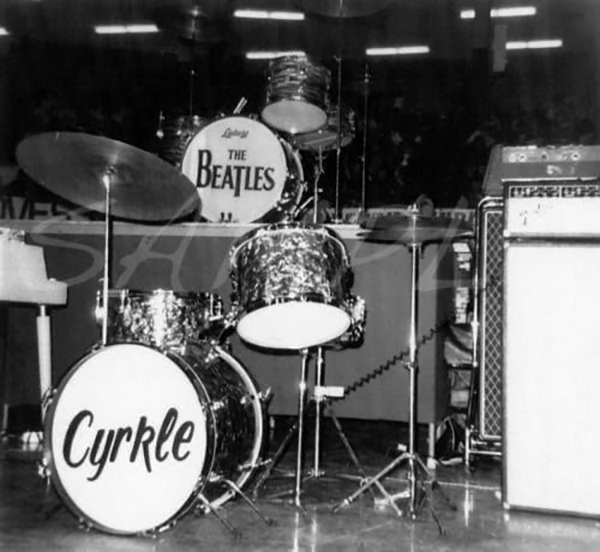
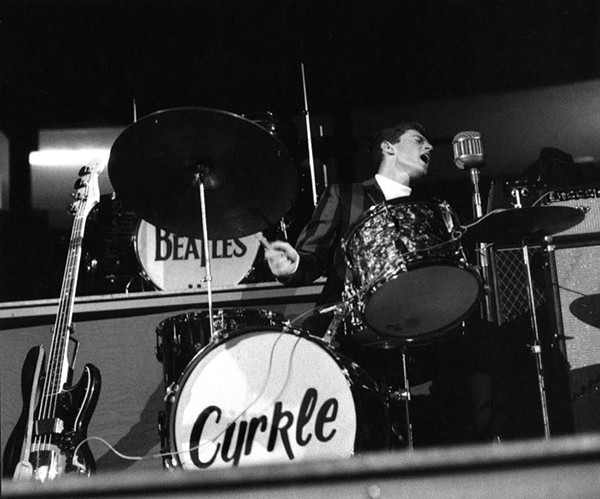
The Cyrkle were one of the supporting acts on The Beatles’ final tour of America in 1966. While this tour was marked by controversy due to The Beatles speaking out about the U.S. war in Vietnam, and John Lennon’s comments about how The Beatles were more popular than Jesus, Danneman says that the controversy did not reach the members of The Cyrkle, and he has fond memories of his interactions with the Fab Four. “I had a wonderful conversation with George, and it was a real conversation,” he says, “It wasn’t forced or dry or anything like that. It’s just an amazing thing. That was what that conversation was like, just two guys sharing some stuff.”
Don Danneman is rightfully proud of The Cyrkle’s accomplishments, and of the attention to the band, surrounding the 60th anniversary of ‘Red Rubber Ball.” Having had the rare opportunity to contribute to the music world during a pivotal time in history, he looks back on those days fondly. Presently, he plays select concert dates with the current version of The Cyrkle, of which he is the only original member. He stays motivated to make music 60 years on, asserting, “I’m very thankful to do it. When people come to hear us, these are people from that era, and for that hour, two hours, or whatever it is, they get to be 17 again. You get to have the feelings of youth, because music does that. And to play it is a similar thing. I get to be 17 again, rocking out on stage.”
Artist Links


SPILL FEATURE: SONGS ARE JUST CONSTANTLY EVOLVING – A CONVERSATION WITH SPENCER KRUG
SPILL FEATURE: IT’S A LIVELIER RECORD THAN OUR LAST ONE – A CONVERSATION WITH BRIAN D’ADDARIO OF THE LEMON TWIGS
SPILL FEATURE: WE ARE ALL CONNECTED – A CONVERSATION WITH MAX KERMAN OF ARKELLS
SPILL FEATURE: REFLECTING ON WHO WE ARE AS A BAND – A CONVERSATION WITH EMILY HAINES OF METRIC