THROW AWAY THE INSTRUCTIONS
A CONVERSATION WITH STEPHEN MALLINDER OF CABARET VOLTAIRE
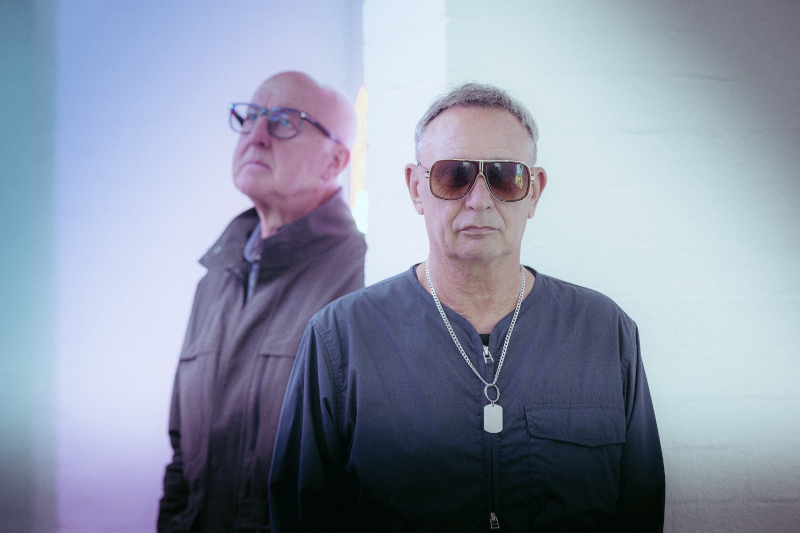
“I’ve never been very good at following rules and that’s mainly because I didn’t know what the rules were,” says Stephen Mallinder of pioneering electronic band Cabaret Voltaire about the joys and benefits of doing everything the wrong way.
The band has been through a few line-up changes since their debut at a student disco in Sheffield, England in 1973, until their disbandment in 1994. They’ve had a few brushes with mainstream success, but for the most part have remained an underground cult favourite. Now, the remaining original members of the band have re-formed for a one-off tour that takes them through the UK and North America. Mallinder describes it as a celebration of the band’s history, but this isn’t a typical reunion tour where a legacy band plays to an audience that expects them to flog the same two hit records. “We’re playing from the very first LP we did right through to what we did in the ‘90s in Chicago with Marshall Jefferson. We’re not from a period. We’ve been relatively unsuccessful for many, many years.” He laughs proudly. To understand where this self-deprecating attitude comes from, one must understand the history of the group.
Cabaret Voltaire got their name from a cabaret in Zurich, Switzerland that is recognized as the birthplace of the Dadaist art movement. Founded as a response to the aftermath of the World War I, Dadaism has a playful DIY spirit and could be characterized as a youthful thumbing of the nose to the established order. The band was inspired by the entire ethos of this movement.
“The artists at that time were the first that lived in a world of mass media and mass production. They were using the words and objects of everyday life, the things that were in magazines and in books, and recontextualizing them. But for us those found sounds were in television.”
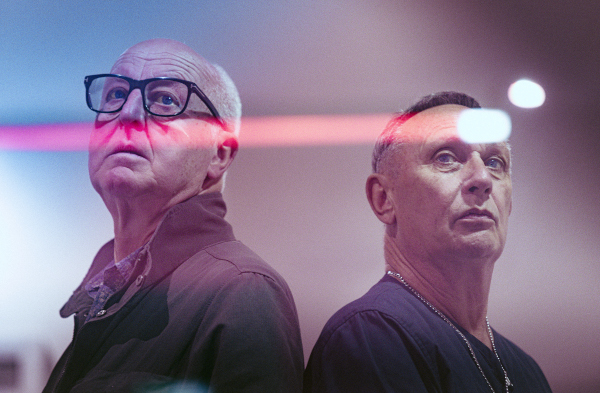
Mallinder brought up Canadian philosopher Marshall McLuhan, who famously wrote about humankind’s relationship to technology. McLuhan described television as a fast-paced “hot medium” that spits information at you faster than you can process it, which felt particularly resonant to them as young kids watching the violence of the Vietnam War playing out on their television sets. They felt a need to gain sovereignty over the sounds that dominated their everyday lives, which led to the TV sampling and sound bites that can be found all over Cabaret Voltaire’s work.
Mallinder says one of the philosophies that deeply influenced their music came from an interview McLuhan did for Playboy Magazine: “the idea that we make the tools and thereafter the tools shape us. We’re all very much a product of the technology we create.” So how do we ensure that we have autonomy over those tools and don’t allow them to shape how we think?
According to Mallinder, it’s simple: throw away the instructions. “When we bought a drum machine or a sequence or a synth, the first thing that we did was throw the instruction book in the bin. Which upon reflection was probably stupid.” He laughs. “But the last thing we wanted to do was use technology in its desired and intended way.” True to the spirit of Dadaism, he believes “the most fun and creative thing to do with any tool is to use it inappropriately and see what you can get out of it.
Cabaret Voltaire is defined by distorted and fragmented beeps and bops. Mallinder prefers this sound because those errors and imperfections are what lead us to question technology and our relationship to it. If Kraftwerk were perfect syncopated robots, then Cabaret Voltaire were insubordinate androids who were glitching and causing chaos for any humans who would attempt to control them.
In an age defined by the eerily perfect human-sounding AI voices, this approach might remind us to question the information that these bots are feeding us. Consider programming your AI assistant to speak to you like a Dalek from Doctor Who and see if you still trust it. Mallinder believes the rise of AI has lead to a very disconcerting tension in the air. “We’re absolutely living in that world of what is real and what is the simulation?” What’s more, how we use technology is also defined by who has access to it.
“Wealth gives us the access to perfection, but we didn’t have banks of synthesizers. We had tape recorders and we had synths that we built ourselves. There’s something about fractured and broken technology that is much more attractive than perfection. And that is slightly classed in the sense that we didn’t have the wealth to buy all this slick stuff. We were three working-class kids in a Northern city; we made electronic music against all the odds.”
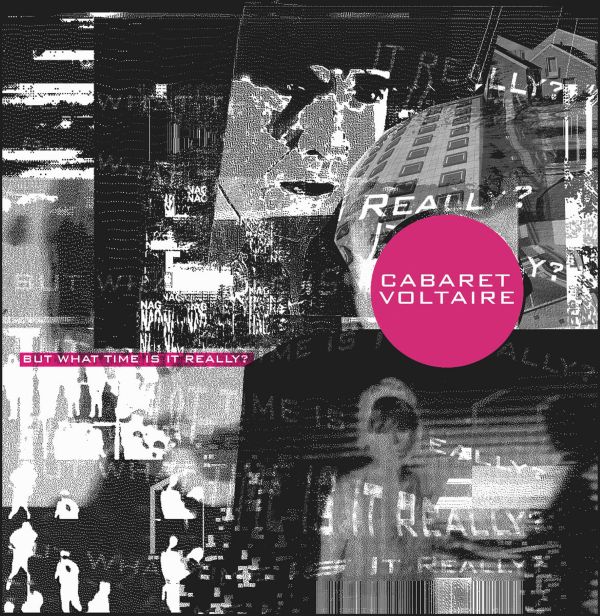
BUT WHAT TIME IS IT REALLY? ALBUM REVIEW
The band has remained in touch with that experience with the only new song in its repertoire, “Tinsley Viaduct,” which fans will hear on the UK dates featuring Chris Watson, the creative force behind the song. Named The song was built around a sound map recording of the 1033-meter-long, two-tier bridge in Sheffield, it’s an improvised piece comprised of all the sounds and images of the machines that define the texture of that area. Mallinder seems to have been shaped by his experiences growing up around industrialism, because he freely uses it as a metaphor for creating music:
“In the analogue period, you had to import a chunk of something to a piece of music. It was almost like laying bricks. But now we live in a digital age, and there’s a fluidity in incorporating those sounds, so they become enmeshed in the composition, whereas in the earlier days, there were almost… how shall I say… blocks of sound in there.”
When discussing formats with imperfect qualities, Mallinder cited experimental Canadian film as an influence on the band’s work. The Canadian experimental underground film scene of the latter 20th century was known for using found footage and low-cost amateur consumer formats (or as Mallinder put it, “Super 8 and all those mad things”). He feels there is a natural artistic understanding between Canadians and Brits, and reflects on how Toronto responded to the group in in its early days.
“It was the first time [touring]. We weren’t sure what we were going to get from anywhere, in any city. I remember playing Toronto, and the response was great. I remember waking up in the morning, opening the door, and there were people asleep in the corridor all waiting outside my room.”
Despite enjoying the memories of the superstar reception he once got in Canada, Mallinder heartily rejects the idea of being a “legacy artist.” He is proud to be a working artist who has never sold out or done an endorsement. “I don’t think anyone would ask us to endorse anything. I think it would kill the product,” he says with a roaring laugh.
Cabaret Voltaire will be playing the Phoenix Concert Theatre in Toronto on September 18. If you wish to catch Stephen Mallinder’s attention, instead of bringing a sign, perhaps you could brandish a copy of Marshall McLuhan’s Understanding Media.
Artist Links


Photo Credits: Paul Heartfield


SPILL NEWS: CABARET VOLTAIRE FINAL NORTH AMERICAN TOUR CONTINUES IN SEPTEMBER | LIVE ALBUM ‘BUT WHAT TIME IS IT REALLY?’ AVAILABLE FROM CABS STORE AND ON THE FORTHCOMING TOUR