
A BIT CLOSER TO BEING HUMAN
A CONVERSATION WITH OV SULFUR’S CHASE WILSON
Time. It’s a concept that can help one find purpose or can lock one into a vacuum of aimlessness. For the Vegas deathcore band, Ov Sulfur, time has been the one thing that has made all the difference. Catapulted by the return of ex-Suffocate vocalist Ricky Hoover and inspired by his disdain for religion, Ov Sulfur’s five years as a band have surpassed his time within Suffocate, making music that has existed within the dark corners of extremity and spirituality. Their new album Endless commits to their dedication to making music that is not only brutal and timeless within its themes but also weaponizes their blackened deathcore sound for external confrontation. However, in an effort to strive for something lasting emotionally and artistically, the album Endless was born from a lack thereof; the creative process frozen, unable to move forward. As writer’s block threatened to cripple the band’s journey to create their next album, two singles, “Seed” and “Wither,” would set the trajectory for the themes that would come to shape Endless.
“Well, when we were writing Endless, we were just going through the last album, going over things we did like about it and the things we didn’t. We decided from there that we wanted to write something more personal and emotional,” says vocalist and guitarist Chase Wilson. “Almost like a concept album. We then thought of the idea of eternal life. What if you had it, and you had to go through endless suffering? We were going through what felt like endless suffering, endless doubt, all these different emotions. That’s when we arrived at the point of writing about it. We wanted to write something a bit more meaningful and impactful, so our fans could connect with it. It seemed that on the last record, the songs that really hit were the more personal, emotional ones. That was how we arrived at that. We wanted to tell a story that was more than just about religion.”
While it may seem that the band wanted to create something that served as a divider from the anti-god bangers that have made their career, Endless still retains much of the essence that has made their previous efforts so successful. The overarching theme calls back to a line from “Earthen,” a song about Hoover’s nephew’s tragic losing battle with cancer. While such themes focused on one child’s suffering, this extended beyond a single person’s never-ending battle. This extended to everyone who has shared the same space of never-ending pain. If religion claims us all as children of God, it presents a question that became the shaper of Endless: What kind of benevolent maker would create so many trials and tribulations and unleash them on the people the divine loved the most? It’s a question that Ov Sulfur wanted to answer, but one that needed a different kind of transparency outside the usual thematic conventions upon which the band usually sought to.
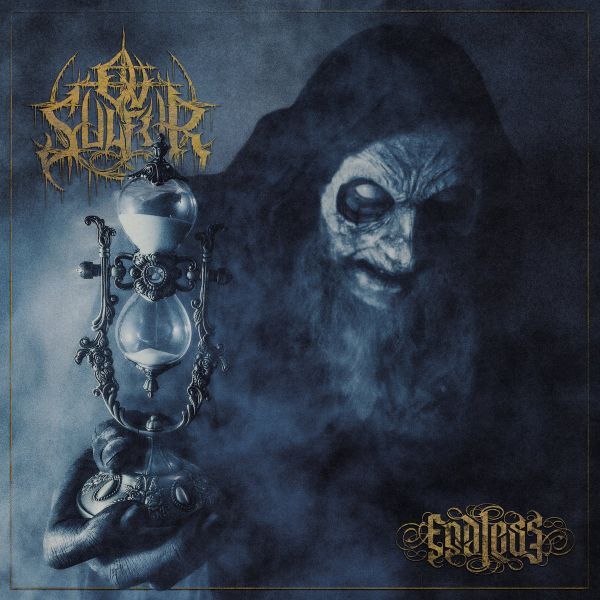
ENDLESS ALBUM REVIEW
“It’s a good question, honestly, we are the same band. We will always be that band that creates music about anti-organized religion. That said, there are other things we want to talk about besides that,” says Wilson. “I feel like, with The Burden Ov Faith, it is very on the nose, very straightforward: This is who we are. With this album, we wanted to open up more. We didn’t want to pigeonhole ourselves into being just one thing. We like to explore different sides of music and different sides of ourselves. I feel like we were able to do that with this album. Our producer, Josh Schroeder, was very open to trying new things. So, I feel like this album is the same Ov Sulfur sound. We will always be anti-religion, but we wanted to do something a bit more adult and a bit closer to being human.”
In the end, Endless is not just about taking the band into thematic territories, but a listening experience that refuses to let the listeners slip back into a comforting semblance of certainty. For everything Endless accomplishes in creating elevated soundscapes, it also succeeds in expanding the emotional and psychological space their music occupies: its brutality purposeful, its atmosphere deliberate, its questions uncomfortably sincere. What is left behind is heaviness, yet within that heaviness lies clarity: the realization that eternity, suffering, and doubt are not abstract chains of thought, but sentient forces that shape, haunt, and even define us. The result of such a journey doesn’t offer answers to any of this, and it doesn’t try to. Instead, it’s invited us to sit in the elephantine weight of the unknown and consider what it means to endure when, mentally, the world is crashing down around you. For Ov Sulfur, much of the album’s evolution stemmed from trusting the process in what they were creating.
“We have always aimed to be that cinematic type of band. When in production, we are always thinking about whether we can hear these beautiful parts in a movie. Sometimes the strings or vocals gave off a terrifying vibe. Almost scary or spooky. There was a lot of that. Our drummer, Levi, handles all production for our songs. There were times when I had an idea for strings, melody, or something in my mind; that’s all very basic when I demo out songs. I use stock Logic plugins essentially. So, I would write it out and get it on our audio workstation. If I had an idea for symphony arrangements in a song, our drummer, Levi, would zhuzh it up. He’s kind of our secret weapon for why these songs came out the way they did. He did an amazing job on this record, and I’m stoked that it translates and even extends the emotional impact of this record,” he smiles.
Wilson continues, “You talked about pushing boundaries and not being afraid to take risks. I feel like we did that with this album and more. You gotta feel and make music for yourself first. You have to like and understand the music you are making. You have to believe in what you are writing or putting down in your recordings. The most successful bands have gone viral on TikTok and on other platforms because they believed in what they were doing. At the end of the day, Lorna Shore never intended to be a viral band, and Kublai Khan never intended to be a viral band. They just do what they do. At the end of the day, we want to be like that, not clickbait, but something people remember and connect to. But that all comes from being genuine and believing in what you are creating. I know I keep saying I’m stoked with how everything turned out, but it’s the truth. There were a lot of things that we wanted to do on The Burden Ov Faith that at the time we probably just couldn’t execute due to time, other restraints, or due to us thinking that maybe we couldn’t do it. Honestly, it was a lot of trial and error, between us individuals as well. Contrary to popular belief, bands don’t always agree. We are each our own person. But with this one, we had more time, and we were really able to hone in on what we wanted for this album.”
Artist Links




SPILL FEATURE: THE QUIET POWER OF ROARING WAVES – A CONVERSATION WITH STEVE HACKETT & STEVE ROTHERY
SPILL ALBUM REVIEW: STEVE HACKETT & STEVE ROTHERY – THE ROARING WAVES

SPILL ALBUM REVIEW: CROWN LANDS – APOCALYPSE

SPILL FEATURE: APOCALYPSE – A CONVERSATION WITH CROWN LANDS’ KEVIN COMEAU & CODY BOWLES