SON OF GLEN
A CONVERSATION WITH JAKKO M. JAKSZYK
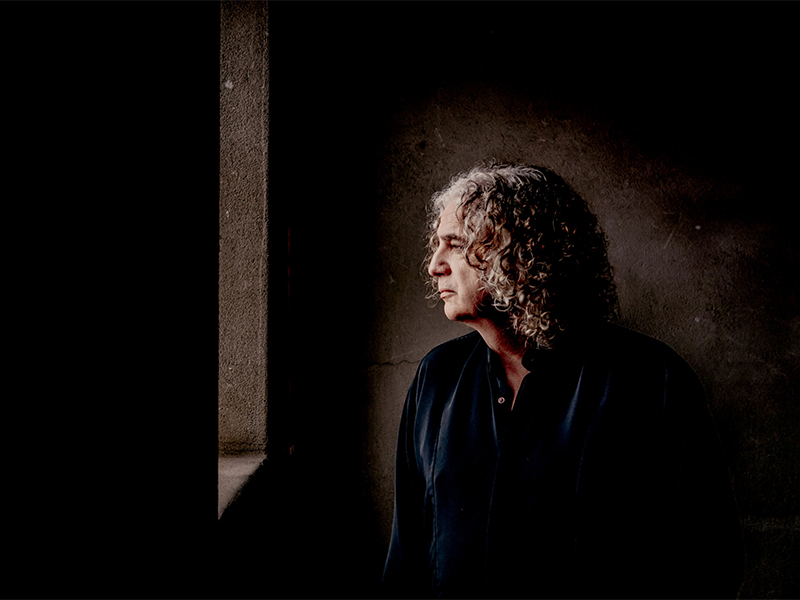
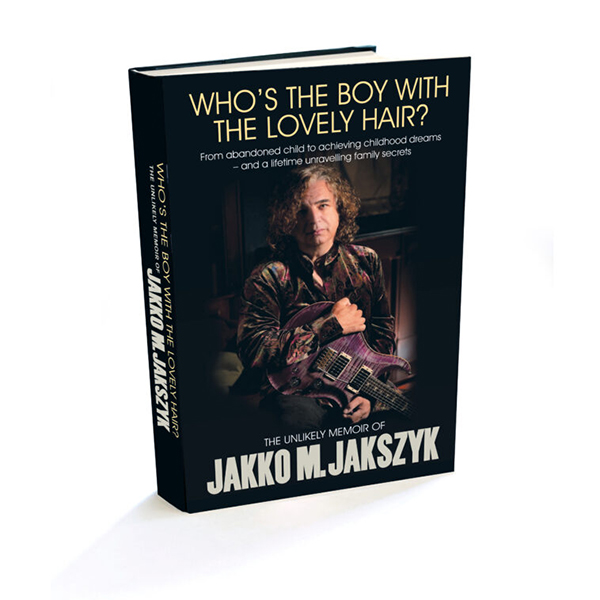
I have been a fan of Jakko M. Jakszyk for a very long time. From his stylish solo albums, to his work with Robert Fripp (and Mel Collins) to being a member of King Crimson. I have been a fan. Along with King Crimson, Jakszyk has been a member of Dizrhythmia, The Tangent, and 21st Century Schizoid Band, has been a producer of note, has remixed several albums and established himself as a solo artist. He is also regarded as one hell of a great guitarist. He is also a string vocalist and arranger. Further points to his resume include writing an incredible book, Who’s The Boy With The Lovely Hair? The Unlikely Memoir of Jakko M. Jakszyk. There was a great deal to talk about, including his new album, Son Of Glen.
“I was writing bits and pieces, but I kind of lost my confidence, really. And around the same time I was helping the lovely Louise Patricia Crane make her record, an album called Netherworld and I helped with some arranging and mixing and playing guitar. We co-wrote a couple of things. And she managed to utilize part of my musical DNA that I have not really utilized in my own work. Some kind of Genesis type things that I had never done, but I was a fan of when I was a kid. After we had done that, I had a real crisis of confidence, and she was amazing, and turned my optimism on.”
PURCHASE/STREAM SON OF GLEN
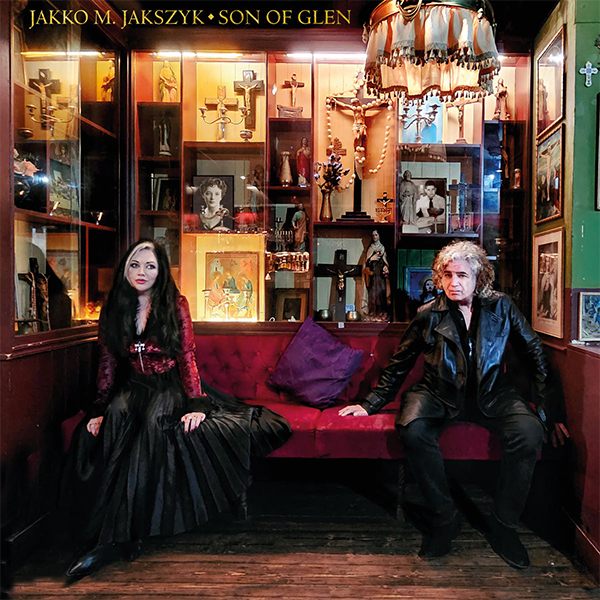
Along with his confidence returning, Jakszyk was also feeling the lasting impact of writing his memoir in the brilliant book, Who’s The Boy With The Lovely Hair? The Unlikely Memoir of Jakko M. Jakszyk. “Louise and I were chatting one evening about the book I had just finished which was published at the end of last year, and we were talking about an aspect of that. I had found my real father after decades of fruitless search. She pointed out this thing, that I am in existence because my father had met a dark-haired Irish singer and fallen in love and here I was in a very similar position. And it hadn’t even dawned on me. That started off this fantasy idea of my dad, a man I never knew, a man who died when I was 14, a romantic idea of him watching over me. The title track, “Son Of Glen”, was the way in. And it started as an acoustic thing and both of my kids play and there are guitars lying around the house. And there was a guitar, tuned in a weird way, I don’t do alt-tunes, but however it was tuned, I came up with this thing. A bit of a melody and somehow it kept going and changing and it became this 10-min epic of a title track. That’s really where it started. The idea was to use songs that were relevant to the book, a companion piece. So, they all have elements to them that are about my life and about identity, being adopted, my relationship with my adoptive father. That’s how it came together.”
How incredibly brave he is to write the book and album, which are both very personal, and sharing it all with the world. “I am reminded of the line by Neil Innes (of Monty Python Flying Circus fame) that I always liked… “I’ve suffered for my art. Now it is your turn,” laughed Jakszyk. “It is that old cliché, write about what you know. And I remember Steven Wilson saying to me once, he doesn’t write like that, because he had a very happy childhood, and a normal upbringing. He said, ‘you can’t really write songs that come from an emotional experience,’ which is why he writes about serial killers.”
Writing the book cleared the way for the album, but at the same time, the book proved somewhat difficult to write. “I spent a lot of my life dipping in and out of the search of who I am. I think I have a workaholic tendency, which is part of deflecting or avoiding or distracting. Writing the book made me sit down and examine and it was cathartic, but it was also very upsetting. It was everything. It was a roller coaster. It was funny…but it is such a solitary act. There was time I would write stuff, and I would think, well you are just putting words on a page and I can always delete all this stuff. But I was getting it out. But in the end, I thought ‘no. That was my experience’. The complicated nature of where I am from, and who I am, and who any of us are, the whole nature versus nurture. All those questions are relevant to all of us. But it gets placed in stark relief when you are confronted with a potential alternative.”
PURCHASE WHO’S THE BOY WITH THE LOVELY HAIR? VIA KINGMAKER PUBLISHING
The ‘alternative’, for Jakszyk was meeting family he had never met before. Some did not want to meet, others did. “When I met that part of my family from the southern states of America [where his father was from and settled], and who ideologically could not be more opposite to me. And you think, ‘I could have been brought up here’. And there is that fundamental question as to how much of who we are innately us, and who would I be if I had been brought up there. I am pretty sure I would not have been in King Crimson. Or maybe I would not have been a musician. When I discovered my real father three years ago and I spoke to one of my new sisters, and she spoke to her mom, my dad’s widow, she said, “they were both convinced that had my dad know I existed he would have taken me on’, and his widow said, ‘we would have brought you up’. Then you are confronted with a whole other thing. I could have been brought up in Madison County in Missouri, who would I have been there?”
And while Jakszyk was sorting this all out in music and his book, he had the opportunity to have his son, Django, play bass on the album. “He is genuinely very talented, genuinely very good. Plus he is cheap and local,” laughed Jakszyk. “He has a great vibe about him, a great feeling. He is only 22 and he was thrilled to just know he was one half of the rhythm section with Gavin Harrison. Gavin said to me later, ‘is that him playing the bass? God, he’s good isn’t he?’ which made my son so proud. But of course, it had to come from Gavin. It is lovely, and it is keeping with the concept of having him on the whole record.”
“It’s a piece of work that I have done for myself, that exists largely because of the encouragement of Louise. Am I pleased with it? Did I achieve something? If other people like it, that is an amazing bonus. Of course, you want people to like it but I don’t know… if it touches people and if some of it resonates with their lives or makes them think of aspects of the human condition that I have experienced then great!”
“But, Jakszyk, laughed, “it really is a pretty self-indulgent thing. But of course, you hope people will respond to it.”
Artist Links



SPILL FEATURE: A BIT CLOSER TO BEING HUMAN – A CONVERSATION WITH OV SULFUR’S CHASE WILSON

SPILL FEATURE: LET ME SHOW YOU THE CODE TO MY MIND – A CONVERSATION WITH ZERO OF LUCY DREAMS

SPILL FEATURE: THE TORCH TO MOVE FORWARD – A CONVERSATION WITH JOE NALLY OF URNE

SPILL NEW MUSIC: 54•40 RELEASE NEW ALBUM ‘PORTO’