




IT WAS A VERY POSITIVE ALBUM, STILL IS
A CONVERSATION WITH JEREMY CUNNINGHAM OF LEVELLERS
Levellers formed in 1988. Taking their name from a 1600s British political movement, it was no wonder that the folk-punk and post-punk band had a reputation for being somewhat political. Also, given the fact that, according to Jeremy Cunningham, The Clash were not one of their favourite bands, but also a big influence.
Levellers released their debut album in 1990, A Weapon Called The Word, but it was their fourth album, Zeitgeist, that justifiably earned the band their first number one in the U.K. and earned them fans all over the world. Not surprisingly, it is an album that features strong melodies and very passionate and extremely well-written lyrics. Not merely a protest album, but songs that expressed the concerns and struggles of everyday people in the early 1990s, while not forgetting the history of the original organization.
Zeitgeist is celebrating 30 years, and to celebrate the anniversary, a new, expanded version has been released with a new remaster, giving the album an even crisper sound. I was able to pull Jeremy Cunningham away from his art studio to talk about the new re-release of this landmark and much-loved album.
As we talked about the impact of the album and that the band still plays songs from it when they tour, Cunningham seems shocked that the album did as well as it did. “We weren’t, you know, we were kind of aware we wanted to leave lasting work, but you had no idea we’d be talking about it 30 years later. No idea. That’s a whole generation, it’s crazy.”
The album released before Zeitgeist [1993’s Levellers] had gone to number two, with Zeitgeist, they hit the number one position, which also took the band a bit off guard. They were not expecting the album to do as well as it did. “No, no, no, it was a shock for us, no, we weren’t expecting it at all. I think the record company had high expectations for it. But we were kind of out of the loop, because we were really on tour. For most of the ’90s, we were just on tour, basically, we’d record an album, go on tour. So when Zeitgeist came out, we were probably in Germany or France or somewhere like that, just on the road, you know, just came out. And then suddenly, there was all this talk of it being number one. It’s like, great.”
ZEITGEIST (30th ANNIVERSARY COLLECTION) ALBUM REVIEW
Seeing as the band never wanted to make it easy on the record company, the album had an unusual title, Zeitgeist. An unusual title and an unusual source and inspiration for a post-punk/folk band. Cunningham was influenced by an industrial band.
“Yeah, well, that was kind of my idea, the title, because I’d always been really into a German band called Einstürzende Neubauten, right from when I was a kid, like industrial, you know, industrial music, music in a loose term. But I always loved them. And they used the word a couple of times, Zeitgeist, which means time goes, literally means time goes, you know, but it kind of doesn’t. That’s its literal translation, but it kind of doesn’t. It just means more like the spirit of the age kind of thing would be a better translation of it.”
“And I just really liked the word. And so when we were fishing around for titles, I put that one forward with a whole list of other titles. And that was the one that got chosen, partly because it would look good as well, because it just looked good on the record. And partly because, you know, we felt that we were a part of the Zeitgeist at that time, because we were, you know, the band was so big, you know, we felt that we were kind of part of that writing of pop music history back in those days. Well, I think the pop music history or the rock music history is carried forward to today. I think you guys are a definite part of rock history.”
In putting the new release together, Cunningham was surprised there was so much material in the archives that was available to include on the re-release. “I didn’t realize there was so much stuff. I’d forgotten that we’ve done loads of demos for it, and I didn’t realize that I’d forgotten.” As a result, fans can now hear songs and versions of songs not heard before. And it was Steve Morese and John Sevink, the fiddle player, who were going through the archive and picking out all those bonus songs. I think it was John, really, the fiddle player. I think he came up with most of them.
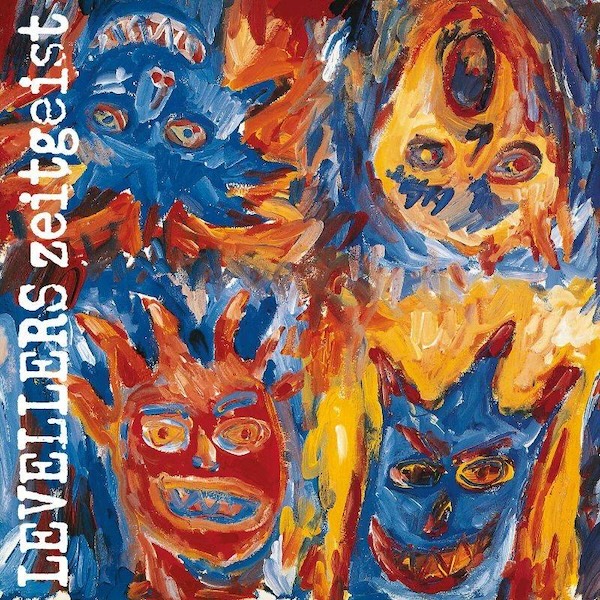
According to Cunningham, while Sevink looks after the audio archives, Cunningham has the responsibility to look after the cover art for the releases. Finding the original artwork for the re-release proved to be another challenge for Cunningham.
“It was lost; that artwork was lost for years. And I found it, my mum found it in her garage early this year, just in time for the reissues, so I could scan it again, get a proper, good, new scan from the actual artwork. And yeah, so yeah, it was lost for many, many years. So, it’s good to get it back. I, for one, I’m glad it’s back.”
Cunningham is a fan of music: “I mean, well, you know, our favorite bands were The Clash, Led Zeppelin, and Neil Young.” This meant that, although the band was familiar with the new music being made in the 1990s, their music was not exactly fashionable, especially as Britpop was starting to take hold.

LEVELLERS 1995 [PHOTO CREDIT: MARTYN GOODACRE]
One of the songs collected on the new Anniversary version of Zeitgeist is a song (“Just The One”) that was on the album but re-recorded for release as a single. “It’s totally our record label’s idea of making ‘Just The One’ a single. We hadn’t even thought about it. It was just like a late-night jam we had in the studio.” It proved to be a great decision as the song became a hit.
But, initially, it was just an album cut. “We put it on the album, kind of between songs, really. We didn’t really think about it. And then it was our record boss label, Derek Green, who was like, “I think that could make a really good single if you had an instrumental in it.”
That instrumental part proved to be a great experience for the band, because Joe Strummer came in to play piano. He wasn’t well known as a piano player, as he was a guitarist. However, Levellers liked his piano playing and invited him into the studio.
“And once we put the instrumental in it, then we realized, oh, we need a piano player on this one. And I realized that on London Calling, there are two piano credits. There’s one that says “Piano by Mick Jones.” And there’s one that says P-I-A-N-E-R by Joe Strummer. And so I was like, oh, that’d be great. You know, Joe Strummer playing that barroom out-of-tune piano. And so, I just said that as a joke that when everyone’s going, the record label, like, oh, we, we were like, we need a piano player. They’re like, ‘Who do you want?’ And so I went, ‘No, Joe Strummer.” And I didn’t think anyone would have taken any notice of it. And then a few days later, I get the call. Like, Joe wants to do it. So happy days. He turned up, and he’s like, ‘What am I doing here? I’m a guitar player, not a piano player.’ And Al Scott, the producer, just whispered in his ear, said, ‘You’re their hero.’ And he went, ‘Okay.’ That was it. I always thought that was interesting, too, that he played piano because he was known for guitar. And all of a sudden, I’m looking at this, and Joe Strummer’s on piano, and it’s only on the seven-inch or the single version.”
With an expanded, 30th anniversary version of Zeitgeist back in stores, and Levellers continuing on, Cunningham hopes that the original intention of the album lands on people.
“You know, it’s a real statement, I think, from the band. It’s a real positive, positive statement. Yeah, it was a very positive album, still is.”
Artist Links


SPILL ALBUM REVIEW: LEVELLERS – ZEITGEIST (30th ANNIVERSARY COLLECTION)

SPILL NEW MUSIC: DAS ICH RETURN AFTER YEARS OF SILENCE WITH THEIR LONG-AWAITED ALBUM ‘FANAL’

SPILL NEW MUSIC: FAMED CANADIAN ROCKERS HONEYMOON SUITE SHARE NEW SINGLE “FIND WHAT YOU’RE LOOKING FOR” | NEW STUDIO ALBUM ‘ALIVE’ OUT FEBRUARY 12

SPILL ALBUM REVIEW: SIERRA PILOT – PHANTOM PAINS

