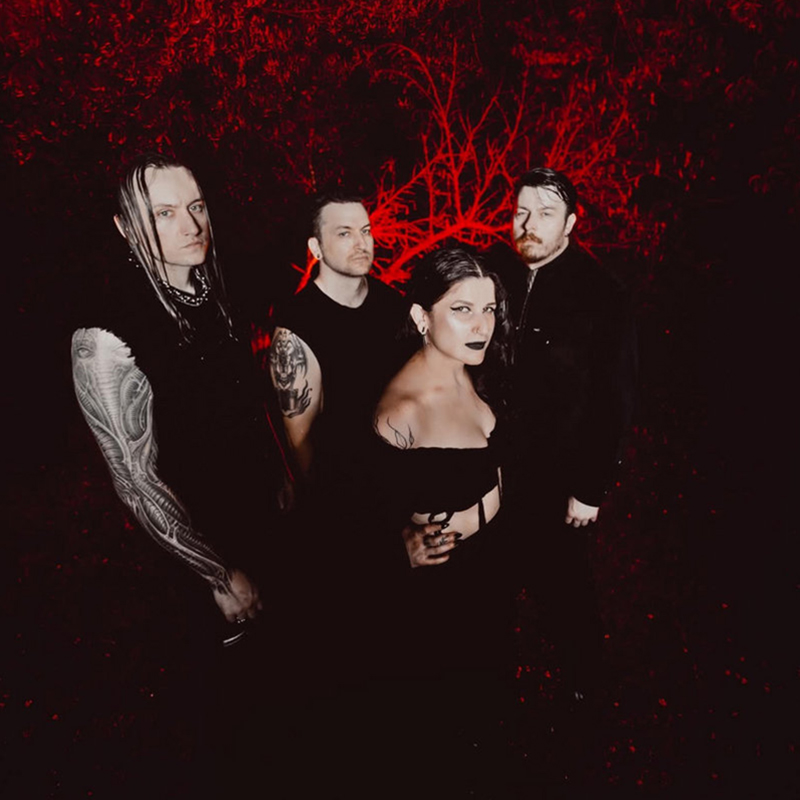
LEARNING TO STAND IN THE DARK
A CONVERSATION WITH CHANEY CRABB OF ENTHEOS
By the time most artists reach a fourth album, they’ve developed something like this black balloon of expectation. People expect refinement, bigger hooks, stronger technical execution, or something more polished than what came before. What people don’t always expect is honesty. At the same time, every band conjures a bit of poetic vulnerability in their releases; very few are as poetically radicalized as Empty on the Inside. For Entheos, Empty on the Inside is not just another chapter in what has already proven to be quite an illustrious career, but another gateway towards confronting an uncomfortable realization that the very things we dedicate our lives to and the very things we sacrifice day in and day out do not always provide us with solace or emotional elation we can imagine ourselves possessing after all the pain is gone. At its core, Empty on the Inside is about chasing something meant to provide clarity and discovering it doesn’t, and vocalist Chaney Crabb has built that journey around this new album. While emptiness can often feel like a void, it can also reset you and help you rediscover parts of yourself you couldn’t access before.
“Honestly, I’ve done a lot of interviews I don’t think anyone has asked me that so far. I was kind of halfway between the two things you’re referring to. It’s the basis of the album. What the album is about is, you know, feeling like you’ve sacrificed a lot of your life; you’ve been through a lot in life. Of course it can be something, someone, whatever it may be, and that you expect it to bring you a sense of fullness or happiness. You realize that that’s really not the answer, and then searching for the person that you were before that all began,” says Crabb. “For me, the catharsis of accepting emptiness is a reset; you know, the confrontation of it and the acceptance of, ‘Okay, this thing actually didn’t bring me to the point that I wanted to be at; this thing was not going for me in the way that I envisioned it.’ That, I think, is the ultimate reset because you have to kind of hit rock bottom to get back up again, right? And that’s where I was. I was in a place of acceptance; I mean, I honestly worked through the acceptance while writing this record, so it was a turning point in life, and I feel like it’s made way for me to go back now and read these things. Hindsight is 20/20, and I understand where I was then and use that as a tool to move forward.”
From there a title emerges, not from despair, from acceptance. From that perspective, something like emptiness that can often be interpreted as pretty black and white shifts almost entirely when it comes to what this record really means. What initially seemed like an album about loss or darkness reveals itself as something much more nuanced. The emptiness isn’t what keeps someone stuck on the journey; it’s the doorway to those answers.
However, Empty on the Inside repeatedly returns to a theme that echoes throughout the album: acceptance. It’s not passive or even hard-earned; it’s an acceptance that comes from exhausting everything to get there. The opening track “Hell is a Part of Me” serves as one of the major themes for that idea.
“It’s a song about me accepting that darkness,” Crabb says. “Looking at it and saying, ‘You know what? This is a part of me.’ I’m going to use it as a tool; it’s how I’m going to be an artist. For any dark thing in my life, art is my catharsis. So, I started looking at it in that way, and overall, I think you’ll hear growth as you go through the album, even though I didn’t mean to. I didn’t even know that the track listing. We didn’t choose the track listing until after the record was mostly complete, but you’ll hear growth throughout the record. I think the front half is a very aggressive confrontation, and then I go into more of a mellow, melancholy acceptance. At the end, we end up with “The World Will Move.” And that song is really me coming to terms with the fact that, you know, I wrestle with all of these things in my day-to-day life, all of the things I just named for you. But at the end of the day, the chorus is, ‘I see the answer in your eyes, my light is dimming now, the earth will move with or without me.’ That’s the acceptance: the earth will move; I’m fairly insignificant, my darkness is fairly insignificant, so I think I use that to heal from it.
For years, many of those questions about internal darkness existed beneath the surface. Questions about identity. Success. Relationships. Family. Purpose. One really painful subject involved the loss of her father, and the opportunity she never had to get to know him.
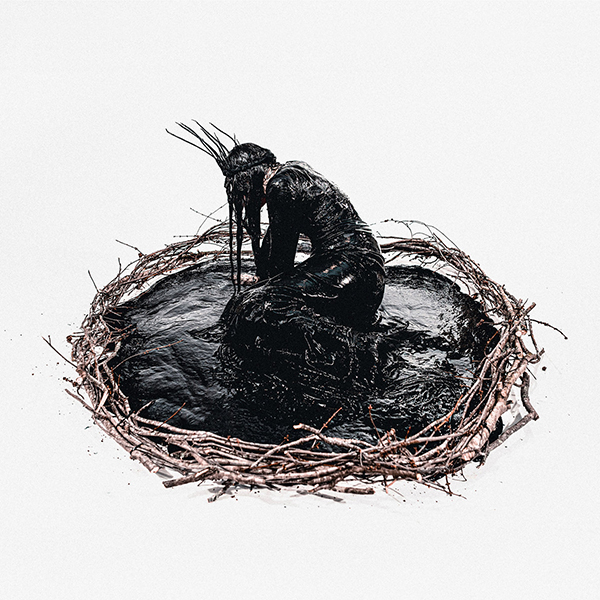
PURCHASE EMPTY ON THE INSIDE VIA BANDCAMP
“I’ve never met my father before; you know, I never knew him. He passed away a couple of years ago. I never had the opportunity to meet this man,” admits Crabb. “So, I’ve always been very strong, and that has never really hit me, but I think it started coming out a lot last year and showing its face. I was wrestling with the fact that I’ve dedicated my entire life to music, and I’m starting to try to understand, like, what does success mean to me in music? Do I feel full? Like, I feel like my life is full because I’ve dedicated my entire life to music, and so it’s a lot of different things, you know; some things in friendships and close relationships that I have, and all of that culminated into this.”
While this painful absence took its time to manifest and make itself known throughout her life, it began to take another form and a new kind of weight during the creation of Empty on The Inside. With these swirling questions surrounding friendships, relationships, and her lifelong love story with her music, everything converged into one emotional storm. That answer was not simple. In fact, Empty on the Inside exists because the answers were not easy to find.
One of the most compelling revelations had little to do with the music. It came from Crabb’s manifestation of self-worth throughout this process. Crabb has been making music for close to 25 years, and you would never know it from the glow and effervescent youthful energy she has when she speaks or even sings. Starting in her early teenage years, the DIY ethic became her identity, as did the grind and emotional authenticity in her craft. Eventually, those ways of life became impossible to separate from her personal life; they shaped the person and the artist we see today.
“I come from the emotional world, you know, the things I feel like our band has a lot of technical complexity that we’re referring to when we refer to my band is in the instrumentation. I think that Naveen and I being the central, the core unit of the band, we’ve grown together in such a way. We’re partners in life so it’s like we understand each other on such a deeper level,” Crabb says. “We’ve been together for 16 years, and it’s just come to a point for both of us where this doesn’t need to be like Navene [Koperweis]’s technical journey or Chaney’s journey; we need to serve each other. So, this was the album where I felt like I had to choose things like that the least amount. I just think that we’re four albums in, we’ve grown together. As I said, I am an emotional person. That’s the type of stuff I listen to. I don’t I don’t listen to technical death metal. Frankly, any time that I’ve been dissatisfied with our records in the past, it’s usually because of that, because there’s been a sacrifice for emotions, for technicality. And this record, if you hear it, when you hear it, this is the most Chaney that anyone has ever heard on an album. We joke in my band that Michael [Stancel], our guitar player, and I are the sad girls of the band. That’s just the world I can do stuff in and that I listen to on a daily basis, from the top down it’s like Fleetwood Mac, Chelsea Wool, Russian Circles, Isis, and shit that is very much rooted in emotion and being able to do that on the record made it the easiest record that I’ve ever written.”
That realization became one of the emotional foundations that surged in the undercurrents of Empty on the Inside. For years, success and happiness occupied the same space in her mind. More tours meant you could block out the noise in your head. More albums meant you could focus your energy on something constructive, not the mess in front of you. More achievements meant you could overwrite the not-so-bright parts of your life. More recognition meant you could distance yourself from the parts of your life when you were not as well-known. Surely fulfillment must have been waiting at the next milestone if you kept aiming higher. But what if it wasn’t? It’s a question most spend a lifetime trying to answer and understand. That very question has become the most profound realization beating underneath every note on Empty on the Inside.
“For the last week, I have filled space with projects, I guess, and next week. Because this last week has been so busy, I think next week will be introspection, but it changes constantly, you know? Soon it will be live performance. There are things; I think I’m just learning to accept that no matter what fills that space, it’s not going to be the thing that fills me or makes me happy; there’s no top of the mountain,” Crabb thoughtfully answers. “I think I’m starting to understand that, you know, I’m 38 years old now; I’m approaching my 40s. I think that just in life I’m starting to learn to become happy with where I am, and that, at the end of the day, I think that really will fill that space because I’ve looked at happiness a lot of my life as success. I’ve gotten those two things like intertwined to a bad degree, and that’s something that I’m working through in myself now. I’m trying to detach myself from thinking that any achievement, award, tour, or release is going to be the thing that means our life is complete. Nothing like that exists. And I think accepting that is helping me on the journey to become a fulfilled person.”
Artist Links


Photo Credit: Sav Bagshaw