FUNKADELIC
MAGGOT BRAIN (REMASTERED)
ORG MUSIC

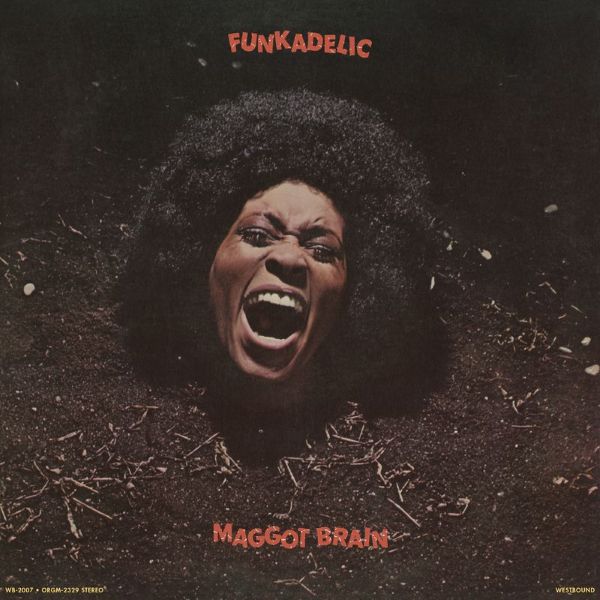
Originally released in 1971, Funkadelic’s seminal album, Maggot Brain, is an essential classic that plays like Geroge Clinton’s response to The Beatles, The Rolling Stones, and Led Zeppelin. In a single record, Clinton established himself among the greatest songwriters, bandleaders, and producers with a sprawling soundtrack for the Black Power era that remains powerfully influential. In celebration of the album’s 55th anniversary, and in keeping with the band’s recent string of releases, Maggot Brain has been remastered and reissued on vinyl, CD, and more.
Maggot Brain opens with the title song, a 10-min guitar solo that serves as a spiritual prelude. Eddie Hazel’s performance is perhaps among the most emotive instrumental passages you’ve heard and, as his guitar swirls, swells, and soars around the soft arpeggiated chords, leading off from Clinton’s spoken word intro, it is clear that this is among the greatest solos put to tape. “Maggot Brain” is a whirlwind of technique and soulful restraint. There is rage, sorrow, suffering and loss in this performance. You can feel the pain of post-MLK Black America in each and every bend, and yet, as the piece progresses, there are flashes of hope, longing, and redemption. “Maggot Brain” may very well be Clinton and Hazel’s opus as they flip the script on the Eurocentric classical overture before unleashing their Afrocentric odyssey that is to follow.
The jangle of an acoustic guitar ushers in the psychedelia of “Can You Get To That”, a song that is rooted in folk, rock, and Clinton’s early work as a doo-wop singer, before the electric funk of “Hit It And Quit It” rushes in with an unstable sway that pushes and pulls against a solid backbeat. Funkadelic are a tight outfit, as further seen on the hard funk of “You And Your Folks, Me And My Folks” or the hard rock riffage of “Super Stupid”. While none of these songs may quite measure up to the sonic perfection of “Maggot Brain”, they demonstrate a broader context of influences and songwriting and a performance that can range from soulful to unsettlingly dystopic, all unified under a single groove. Despite not offering anything new on this remaster, Maggot Brain is a marvel of songwriting and artistic pursuits that, even now, is worth celebrating.
1971 was the year that African American music shifted to better reflect the tone of the quest for equal citizenship, dignity, and survival from within a divided nation. You can hear it in the melodies of Marvin Gaye, in the songwriting of Sly Stone, and the performance of James Brown. In many ways, Maggot Brain is the sound of a culture amid a riot and expressing their very existence. There is nothing more to be said about Maggot Brain that has yet to be said. This is a masterpiece, one which recenters the perspective surrounding the whitewashing of rock and pop through an assertive artistic statement steeped in the African American roots of these genres while simultaneously supporting the sonic waves of the Afrofuturism movement Clinton’s main project, Parliament, was heavily centred upon. As a result, Clinton curated one of the most culturally relevant records of the decade, while further influencing the directions funk, rock, and pop would take in the ‘70s, as well as inspiring a wave of alternative rock and hip-hop in the future. As a result, Funkadelic’s Maggot Brain is a quintessential body of work that, even more than half a century later, feels peerless; ultimately, a one-of-a-kind statement of unbridled creativity, artistic vision, and limitless influence.
Artist Links


SPILL ALBUM REVIEW: FUNKADELIC – MAGGOT BRAIN (REMASTERED)
Gerrod Harris


SPILL ALBUM REVIEW: SABATON – LEGENDS

SPILL ALBUM REVIEW: BOY GOLDEN – BEST OF OUR POSSIBLE LIVES (DELUXE EDITION)

SPILL ALBUM REVIEW: DARREN HAYMAN – I’M YOUR TEAM

SPILL ALBUM REVIEW: SO FAINT – SO FAINT