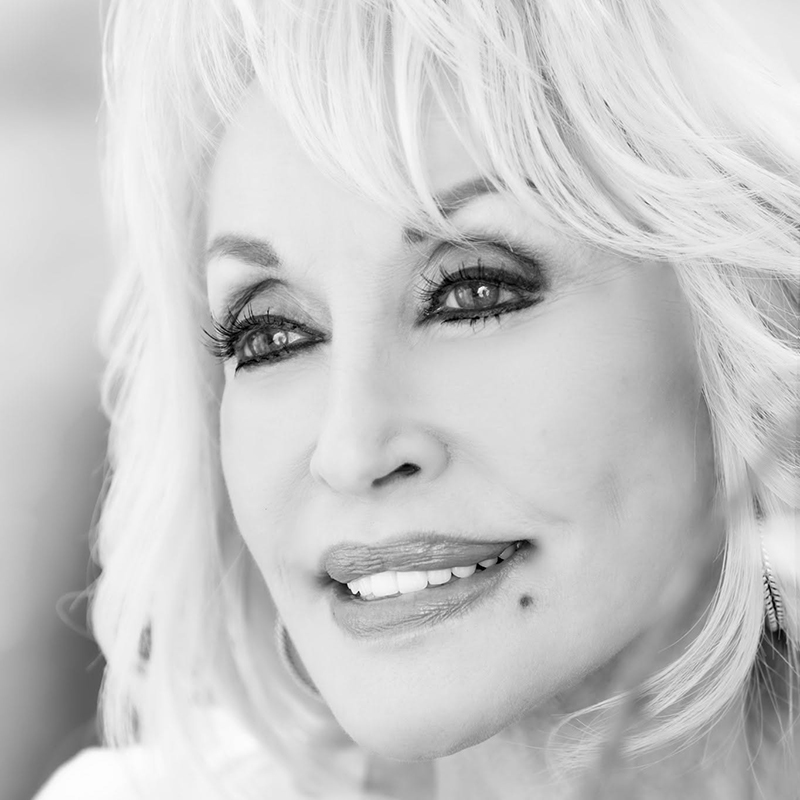
DOLLY PARTON
MORE THAN COUNTRY, MORE THAN ROCK ‘N’ ROLL
Few artists can genuinely claim to have crossed generations, genres, and cultures while remaining completely themselves. Dolly Parton was one of them. With her towering blonde hair, rhinestone-covered outfits, unmistakable Tennessee accent, and infectious laugh, she became one of the most recognisable figures in popular music. Yet behind the image was a songwriter, musician, businesswoman, actress, and philanthropist whose influence reached far beyond the country music world. Dolly Parton died on August 25, 2026, at the age of 80, leaving behind a legacy that is difficult to put into a single category. She was country, certainly, but she was also pop, rock, Americana, Hollywood, and perhaps most importantly, simply Dolly.
Parton’s story began in the mountains of East Tennessee, where she was born in 1946 into a family of 12 children. Her family had very little money, but music was always present. She grew up surrounded by traditional Appalachian music and gospel, and she began writing songs while still a child. By the age of 13, she was performing at the Grand Ole Opry, and shortly after graduating high school, she moved to Nashville to pursue music professionally. It was a bold decision for a young woman from rural Tennessee, but Parton had already developed something that would become one of the defining characteristics of her career: an absolute belief in herself.
In her early years in Nashville, she established herself as a songwriter and performer, eventually leading to her partnership with Porter Wagoner. Appearing on The Porter Wagoner Show introduced Parton to a national audience, but it also placed her in the shadow of an established male star. When she decided it was time to leave the show and pursue her own career, she wrote “I Will Always Love You,” a song that became a No. 1 country hit in 1974. Nearly two decades later, Whitney Houston recorded the song for The Bodyguard soundtrack and transformed it into one of the biggest-selling singles in music history.
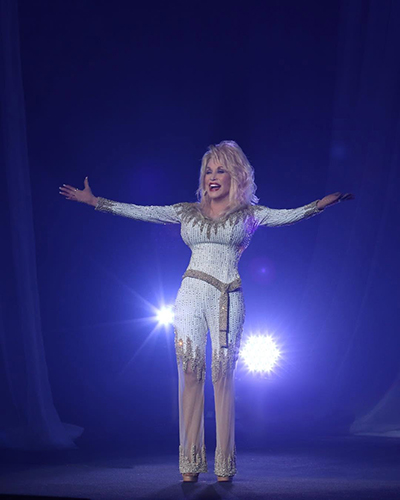
PHOTO CREDIT: PAUL WELLMAN
That story is important because it says so much about Parton as a songwriter. Her songs were personal, but they were never limited to her. She could take something from her own life and create something that another performer could make entirely of their own. “Jolene” is another perfect example. On paper, it is a simple story about a woman pleading with another woman not to take the man she loves. In Parton’s hands, however, it becomes a study in insecurity, jealousy, and desperation. The arrangement is restrained, the melody unforgettable, and the vocal performance filled with vulnerability. It remains one of the most recognisable songs in popular music.
“Coat of Many Colors” demonstrates Parton’s unique ability to turn personal hardship into universal emotion. Based on a patchwork coat her mother made from rags, the song confronts the harsh realities of childhood poverty and the peer bullying that came with it. When her classmates ridiculed her appearance, her mother’s perspective shielded her from the pain. By teaching Dolly that true wealth lies in family love and comparing the coat to the biblical story of Joseph, her mother washed away the shame. Ultimately, Parton channels a painful childhood memory into an empowering anthem, proving that emotional wealth far outweighs material riches. It is one of those songs that explains why her songwriting has remained so powerful for so many decades.
Parton also understood something that many performers never quite grasp: image can be a form of artistic expression. The hair, the clothes, the makeup, and the exaggerated glamour were not simply part of a costume. They became part of the Dolly Parton character, and Parton always controlled it. She understood that people might underestimate her because of the way she looked, and rather than fight the stereotype, she used it to her advantage.
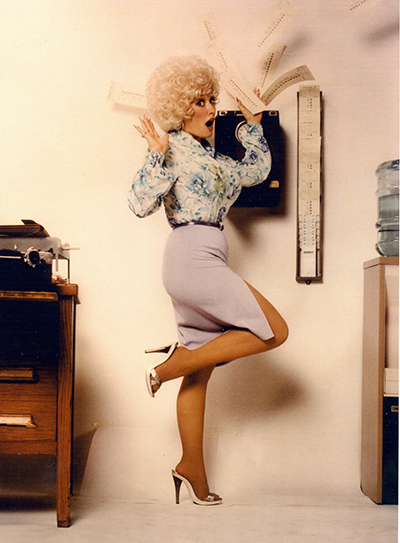
PHOTO CREDIT: STEVE SCHAPIRO
That may be one reason she became such an important figure for women in popular culture. Parton never pretended to be someone she wasn’t. She could be glamorous and funny while also being an extraordinarily shrewd businesswoman. She could laugh at herself while making sure everyone understood that she was the person making the decisions.
Her success eventually moved well beyond country music. “Here You Come Again” became a major crossover hit, and in 1980 she made her film debut in 9 to 5 alongside Jane Fonda and Lily Tomlin. The title song became one of her signature recordings and an anthem for working women. Parton received an Academy Award nomination for the song, further showing that the boundaries between country, pop, and mainstream entertainment were becoming increasingly irrelevant to her career.
She continued acting, appearing in films including The Best Little Whorehouse in Texas and Steel Magnolias, while also developing businesses and eventually opening Dollywood in Tennessee. She became one of the world’s most successful entertainers without ever abandoning the Appalachian roots that shaped her.
Another part of Parton’s legacy deserves as much attention as her music. Her profound empathy for her father, who was illiterate despite his sharp intelligence, became the direct catalyst for her most enduring philanthropic work. Through her Imagination Library, she created a literacy programme that provides free books to children around the world. It is difficult to separate this work from the person who grew up in a family where money was scarce, but books and music were deeply valued. Parton understood the difference that access to education and imagination could make in a child’s life.

ROCKSTAR ALBUM REVIEW
Her ability to connect with people who might otherwise have little in common became one of her greatest strengths. Country fans embraced her. Pop audiences embraced her. Rock musicians embraced her. Younger generations discovered her through film, television, social media, and the artists who continued to record her songs.
Then came the Rock & Roll Hall of Fame. When Parton was inducted in 2022, she initially questioned whether she belonged. Rather than simply accept the honour, she decided to make a rock album. The result was Rockstar, released in 2023, a massive 30-track collection featuring an extraordinary list of guests, including Paul McCartney, Ringo Starr, Stevie Nicks, Elton John, Joan Jett, Debbie Harry, Sting, Rob Halford, Miley Cyrus, Pink, Brandi Carlile, and many others.
Parton’s decision to make a rock album at 77 was classic Dolly. She didn’t need to prove anything to anyone. She had already sold millions of records and established herself as one of the most successful songwriters of her generation. Yet she seemed to genuinely enjoy the opportunity to enter another musical world and play with some of the artists she had admired for years.
The album gave Parton the opportunity to demonstrate her still-strong vocals and offer her own interpretations of some of rock’s most iconic songs. The album was certainly ambitious, perhaps even excessive at times, but it was also unmistakably Dolly.
That is ultimately what makes Parton’s relationship with rock ‘n’ roll so interesting. She did not suddenly become a rock artist when she released Rockstar. She had spent her entire career challenging the limitations placed around her.
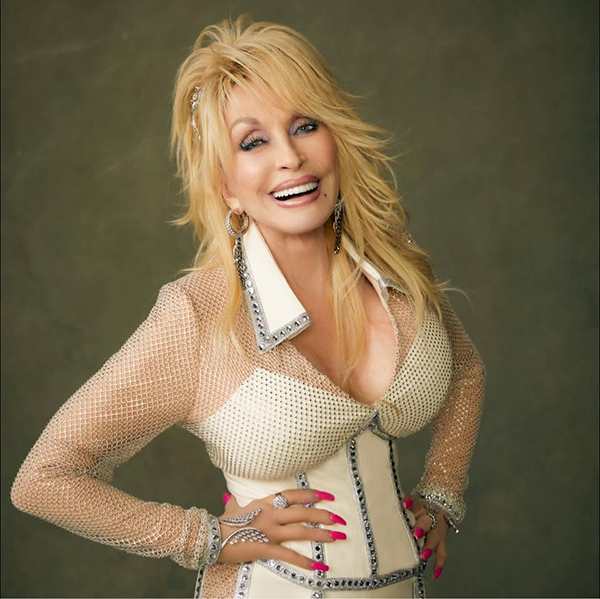
PHOTO CREDIT: VIJAT MOHINDRA
Rock ‘n’ roll have always been about individuality, rebellion, and refusing to follow the expected path. Parton did all of those things. And she did it all while wearing rhinestones.
Her influence can be heard throughout contemporary music. Artists across country, pop, and rock have recorded her songs, cited her as an influence or collaborated with her. She became an important figure for generations of female performers because she demonstrated that it was possible to be commercially successful without surrendering creative control. She also showed that femininity did not have to be something an artist apologised for or hid.
Perhaps that is why Parton’s death feels so significant. She had become more than a musician. She had become part of the cultural landscape.
There was something comforting about Dolly Parton. She seemed to belong everywhere. She could perform at the Grand Ole Opry, appear on a pop chart, star in a Hollywood film, collaborate with a rock musician, and still return home to Tennessee. Her appeal crossed political, cultural, and musical boundaries in a way that very few entertainers have managed.
And although her image was larger than life, her music was often remarkably intimate. She wrote about poverty, heartbreak, loneliness, love, family, work, and faith. She wrote about people struggling and people trying to find their place in the world. She could make millions of people laugh and then, within the space of a few minutes, break their hearts.
That may be her greatest achievement.
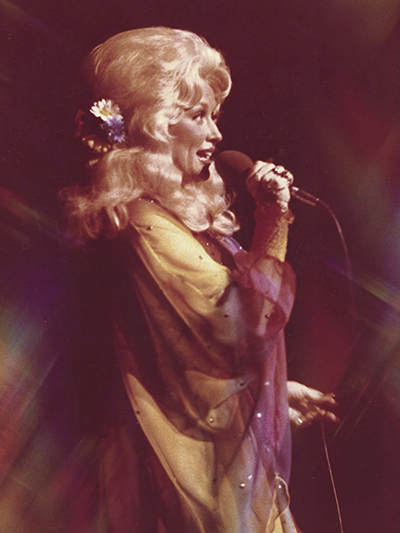
PHOTO CREDIT: DAVID REDFERN
Dolly Parton didn’t need a new identity to conquer popular music. She won over the world by becoming the most authentic version of herself.
The blonde hair, the rhinestones, and the larger-than-life personality will always be part of the Dolly Parton story, but they were never the whole story. Beneath the image was a remarkably disciplined artist who understood songwriting, performance, business and, perhaps above everything else, people.
She knew how to tell you a story.
She knew how to make you listen.
And she knew how to make you feel something.
Dolly Parton leaves behind a catalogue that generations of musicians will keep recording, performing, and rediscovering. She leaves behind films, businesses, books, philanthropic work, and a cultural legacy that extends well beyond music. Most importantly, she leaves behind songs that have become part of the fabric of popular culture.
Maybe Dolly Parton was never supposed to be a rock star.
Maybe that was never the point.
She was something much harder to define: an original.
And in the end, isn’t that what rock ‘n’ roll has always been about?
Artist Links


Main Photo Credit: Jim Wright | Background Photo Credit: Robby Klein

SPILL ALBUM REVIEW: DOLLY PARTON – ROCKSTAR