


FIGHT FOR LOVE PART 2
A CONVERSATION WITH NEIL OSBORNE OF 54•40
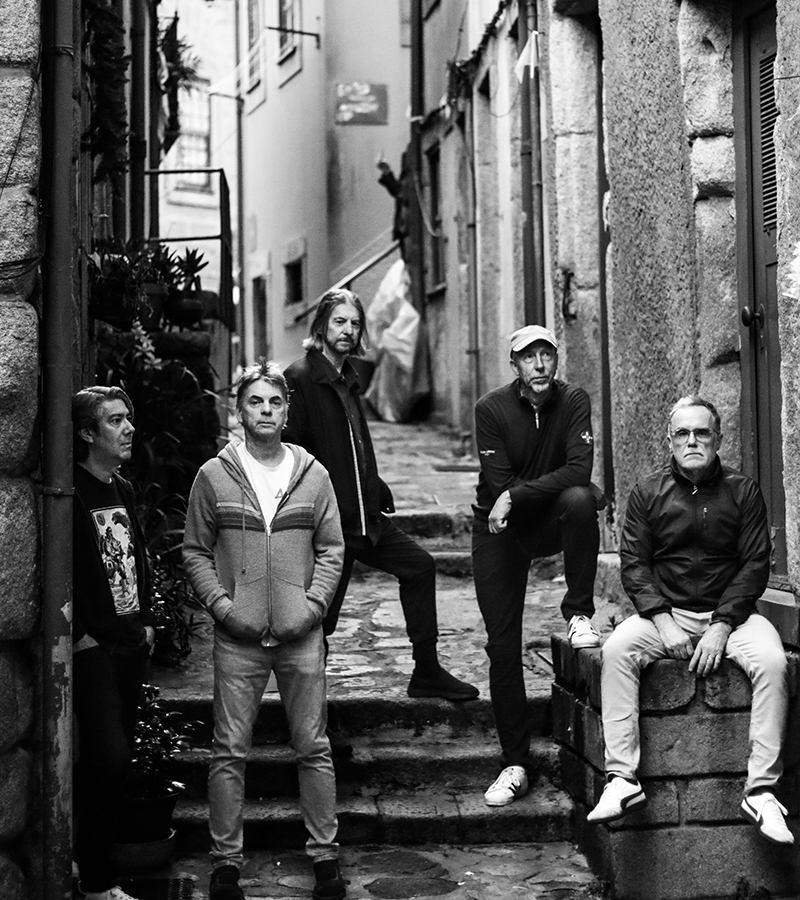
54•40, one of the most seminal Canadian alternative rock bands of the ‘80s and ‘90s, with songs like “I Go Blind,” “One Day In Your Life,” “Ocean Pearl,” and “She La” becoming massive staples on Canadian radio stations, has a new record upcoming called PORTO. Ahead of the release of PORTO, frontman Neil Osborne discusses the creative process behind the album.
“This is the third record that I never wrote a word down,” he explains. “I just had a melody in mind, just sort of like ‘I know what this is gonna be about,’ maybe even a title, and I would sit there or stand there and do three or four takes and come in with whatever pops into my head, not so much to get a vocal take but more to get a lyric take… I would go and listen to the three or four takes, and I’d go, ‘Oh, I like that line. I like this one.’ I would move them around on the computer and would have the basic sketch of the song and what it’s about, which is a fun way to do it. I did that on West Coast Band and on my solo record, too. It’s very immediate. It’s what they call in Carl Jung circles, the active imagination, which is pretty natural to a creator anyway. You just let your imagination go rather than think too much about it. It also saves a heck of a lot of time.”
54•40 used Jung’s writings for inspiration in the past. “I’ve called this Fight For Love Part 2 because Fight For Love, the record we did in 1989, was inspired by a lot of the writings of Carl Jung and a Jungian writer called James Hollis,” Osborne says. “A lot of that stuff is based on those writings of Carl Jung, who came up with a lot of terms like introvert, extrovert, shadow, and dream work. I did a lot of dream work. I thought here’s some stuff to go at as opposed to the last record, which was very literal stories about the band in a humorous way… We just had one of those phrases for the band; it’s either fun or funny – those are the two choices you get. We started recalling all these stories. Looking back, even the disasters were laughable because we survived them… It was kind of a departure from what we normally do. This one, we’re back into talking about stuff we deal with, and we think what everybody has to deal with eventually.”
“Running For The Fence” was heavily inspired by Jung’s writings. “I kind of borrowed a quote from Jung, which is we all carry the unlived life of our parents,” Osborne reflects. “In other words, the lives that our mothers or fathers didn’t get to live, or the shadows they’re carrying, get projected on their children, just like with their parents – your grandparents – and it just continues on. You carry that stuff whether you know it or not. It takes a while to navigate it. That song is more of ‘it is time to let the grip of my mother go, even though she is long passed.’ I’m a grown-up now. Set me free, which is what you’re supposed to do, but your mother, at least in my case, gets pretty attached to you and your life. She grew up in the 40s, 50s, and 60s. She was a smart woman, but her role was stay at home, cook, and raise the kids. She didn’t like to cook very much, but she hung out with the kids. I don’t have any regrets about that necessarily, but it was a factor, so it’s like, ‘Let me go.’ So, it’s more me of letting her go rather than asking her to let me go.”
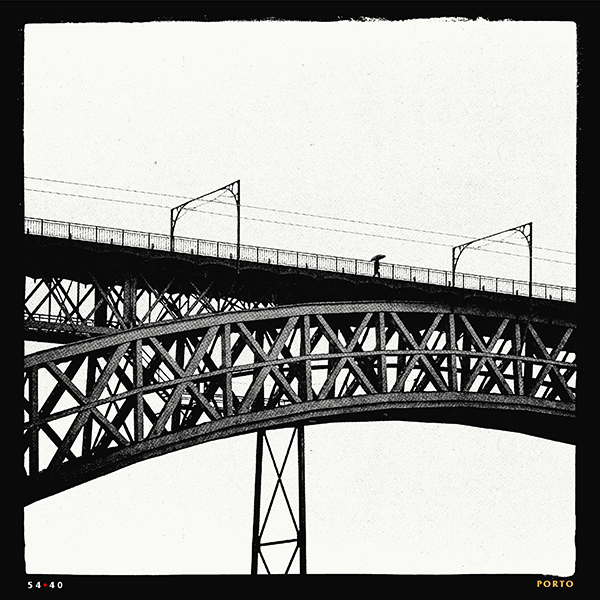
PURCHASE PORTO VIA BANDCAMP
Although Osborne is the only one who writes lyrics, it is still a very collaborative effort to finish the songs. “Generally, I come up with the idea and then hand it over to the pros – the other guys,” he laughs. “I just sing them, write the words, and come up with what it is. They turn it into a song that other people can understand… ‘Die To Heaven’ is pretty much true to what I brought them, but a song like ‘Time Will Tell’ was completely different. I had it as more of a folk song, and then they went, ‘Let’s do this,’ and I went, ‘OK, that’s cool. Yeah, let’s do that.’ They help the sound, and obviously, they are in charge of what they play, and then collectively we get together and kind of flesh out all the tunes.”
PORTO was a destination recording as 54•40 recorded the album in Porto, Portugal. Longtime producer Warne Livesey produced the album. What led them to record the album overseas? “This band, we’re pretty good friends, and get along pretty well,” Osborne says. “A lot of our shows, like in Calgary or Toronto, we’ll fly the night before and always get together for a nice dinner. We have a great time. We still hang out in the van and get into political discussions, sports, or whatever. I noticed when we would record and make records in the last 20 plus years that home calls, like ‘Oh, I got to do this. I got to fix the porch. So and so is dropping by to say hi.’ When we first started as a band, we were quite dedicated and militant, like, ‘OK, this is the time. No one is allowed in those doors. We’re gonna change the world, so we need to focus.’ You get everybody on the road like those dinners where we have those great times, well, what if we did that for a couple weeks somewhere in Europe, where the time zone is so different that you can’t really call home when you’re in the studio because they’re sleeping… We all lived in the same place, right on the riverbank, there in Porto, which is just gorgeous… We cooked breakfast together, walked to the studio – only a 30-min walk – went out for dinner somewhere, and then had a few nightcaps. We did it every day. It really worked in the sense that it was like a clubhouse for a band making music.”
Osborne shares that PORTO was recorded live and off-the-floor, which made the album feel like old 54•40. “It harkens back to the old school days of just playing the songs as a rock band,” he states. Occasionally, when the saxophone is utilized in tracks, they do something different. One example of this is the saxophone that David Osborne (Neil’s brother) plays in “Thank You Mother.” “It’s funny because we wanted it all done live except the actual vocals that get recorded, and we’re all in a giant room with drums, two guitars, and bass all pounding away, and with the saxophone, it’s all gonna bleed into there. He was in the hall with headphones playing along with us, but not in the room with us.”
PORTO is loaded with many great tunes. “Time Will Tell” has already become a new fan favourite. “We’ve heard from a few people that it reminds them of old 54•40,” Osborne smiles. “The driving eighth note thing does harken back to how we used to write songs in the 80s.”
One of the trickiest songs to get right was “Wail (Numinous).” “I didn’t really think that much about it in terms of it being in 6/8 ‘cause quite often how I write is I just follow the melody,” Osborne shares. “I had it in this Phil Collins cheesy keyboard thing that sort of blocked out the chords. When the band showed up, they said, ‘This is in 6/8. What do we want to do with it?’ We had some struggles with it. It was actually Warne who decided this is what we’re gonna do… He sort of rescued it as far as musically goes. If you’re familiar with the catalogue its kind of like Holy Cow, like with trippy vibey go off to those pseudo psychedelic directions.”
PORTO is set to drop on January 23. “This is gonna be a memory, and it’s a time stamp of where we’re at,” Osborne comments. “It was a nice feeling to know we were connecting in a vein creatively that almost just wrote, recorded, and produced itself.
Artist Links


Photo Credit: Trevor Cornish


SPILL NEWS: TEEN ROCK TRIO THUNDER QUEENS SHARE NEW TRACKS AHEAD OF SOPHOMORE ALBUM OUT THIS WEEK

SPILL NEW MUSIC: LEGENDARY CANADIAN ROCKERS 54-40 RELEASE NEW VIDEO FOR “SUBLIME LIKE ME”

SPILL NEWS: 54-40 PARTNERS WITH EL MOCAMBO RECORDS

SPILL FESTIVAL REVIEW: CANADIAN MUSIC WEEK 2017 – PHASE 2
