


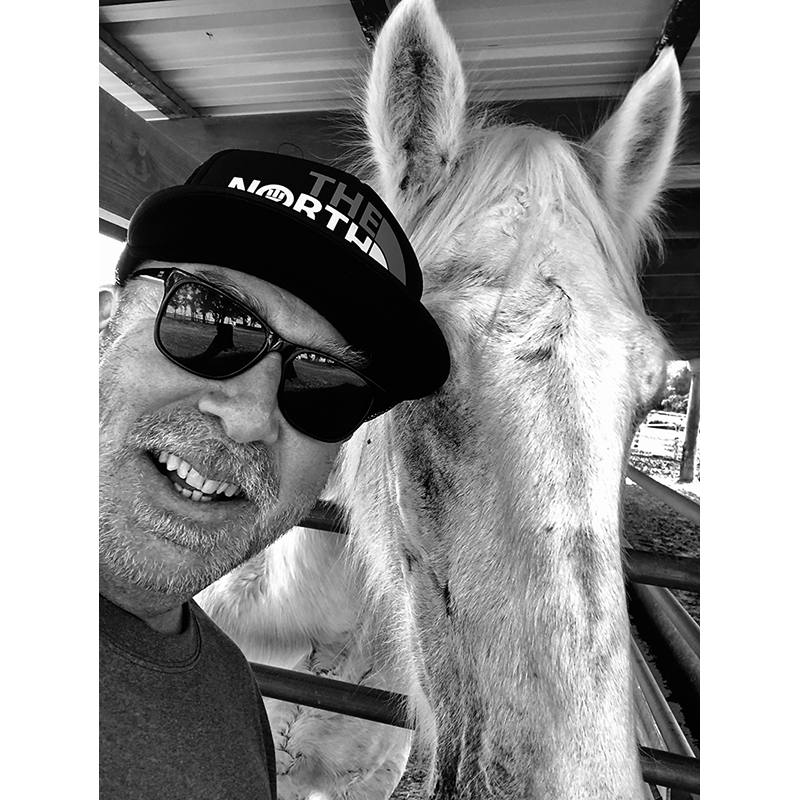
THERE IS A LOT OF SOUL SEARCHING IN THERE
A CONVERSATION WITH SIMON RAYMONDE
Simon Raymonde has had, and continues to have, a rather fascinating career. Along with Elizabeth Fraser and Robin Guthrie, he was one third of Cocteau Twins—he joined the band prior to their third album, Treasure in 1983—and a well-respected musician and producer. But he also runs his own record label, Bella Union, and has helped launch the careers of several artists/bands. He is also the son of the well respected and known music arranger/producer/composer Ivor Raymonde (Scott Walker). It only makes sense, given his history, that an autobiography would not only be warranted, but essential. No one can tell his story as well as he can.
The book, In One Ear: Cocteau Twins, Ivor Raymonde and Me, which was released last year in the U.K. is finally receiving a North America release. His inspiration came from Warren Ellis (Nick Cave and The Bad Seeds), In One Ear: Cocteau Twins, Ivor Raymonde and Me is its own distinct story and journey. But, in reading Ellis’ book, it allowed Raymonde to ask the important questions. “Why am I doing this, what is the point of this? Maybe I didn’t fully understand everything until I finish.” And this is part of what makes In One Ear: Cocteau Twins, Ivor Raymonde and Me such a brilliant book.
And with the book comes in-store signings for Raymonde and the chance to speak to him about his book and career. I recently was able to speak with him, via Zoom, as he was preparing dinner for him and his wife, “I have to stir my mushroom. “I never really planned to write a book, if I am honest. I was just too busy with the label and living life, this kind of thing. But I was at the age where I thought I should slow down and take stock, I was going too fast. Then the whole COVID thing happened, and I met up with Warren Ellis. That was the key to it, meeting Warren. I got to talk to him about his book, Nina Simone’s Gum, which is such an amazing book. That inspired me a little. I thought, do I just want to do a kind of ‘well, I did this, then I met this person and I did that’. Those kinds of books just bore me a little bit, I thought, maybe I don’t want to write that kind of book. With Warren, it encouraged me that it didn’t have to just be a sort of chronological trail through my life. Even though, of course a memoir is going to have that in there at some point, otherwise, it isn’t much of a memoir,” Raymonde laughed. “He just inspired me to do it, because I know he never had plans to write a book either. Just this thing happened in his life, and it became the catalyst of a way to tell a story.”
For Raymonde, he learned a great deal about writing while he wrote the book. Writing a memoir is very different from writing a song. It is a different skill set altogether. “You start writing because you think well, ‘people keep telling me I should, so maybe I should.’ And then you start learning stuff as you go along and you write bits, and you think ‘ah, actually that does make some sense.’ Because writing a book is not just about sitting down at a typewriter or computer, tapping away endlessly and then six months later you read it back and you say ‘yeah, that’s it.’ There is a lot of soul searching in there. Looking back and wondering why you did certain things, what led to this, what path you took when you could have taken that one. You know? I think I did that a lot in the book, and I found it a very pleasurable exercise.”
As Raymonde mentioned, this is not a standard memoir. In fact, although his life story is in the book, it is very much about his day and not only his relationship with his father but other aspects as well. “I felt that the story wasn’t just mine. It was very much a story that started with my dad, his story is in there too, because it felt, for me, to make sense of my life I had to make sense of his,” said Raymonde. Losing his father at a young age further complicated his overall relationship with his father. But through In One Ear: Cocteau Twins, Ivor Raymonde and Me he learned more about his father. “It helped me with the book, being able to look back at his life and see how his whole story came together. Because, you know, for me, that is a lot more interesting than my story.”
Given his father’s incredible career in music, working with some of the biggest pop and rock stars such as Dusty Springfield, The Walker Brothers, Billy Fury, and Ian Dury, to name just a few, helped shape Raymonde’s professional life. “I had a lot of unanswered questions, I suppose. Am I doing this, am I half decent at music because he was good at music?’ You know, there is all that stuff you go through. But I always thought I was so different. I was a simple, snotty punk kid doing music and I didn’t really have the training. He did music scores, he could write orchestrations. I never thought we were similar or even in the same industry for a long time. I thought, he is this guy, up here, and I am a kid doing this weird shit over here. I never saw a correlation between the two until much later, when I started doing the Scott Walker things. Then all of a sudden, the roads are converging quite a lot right now. By the time I finished the book, I saw a lot more parallels, not just personalities, but in our careers too.”
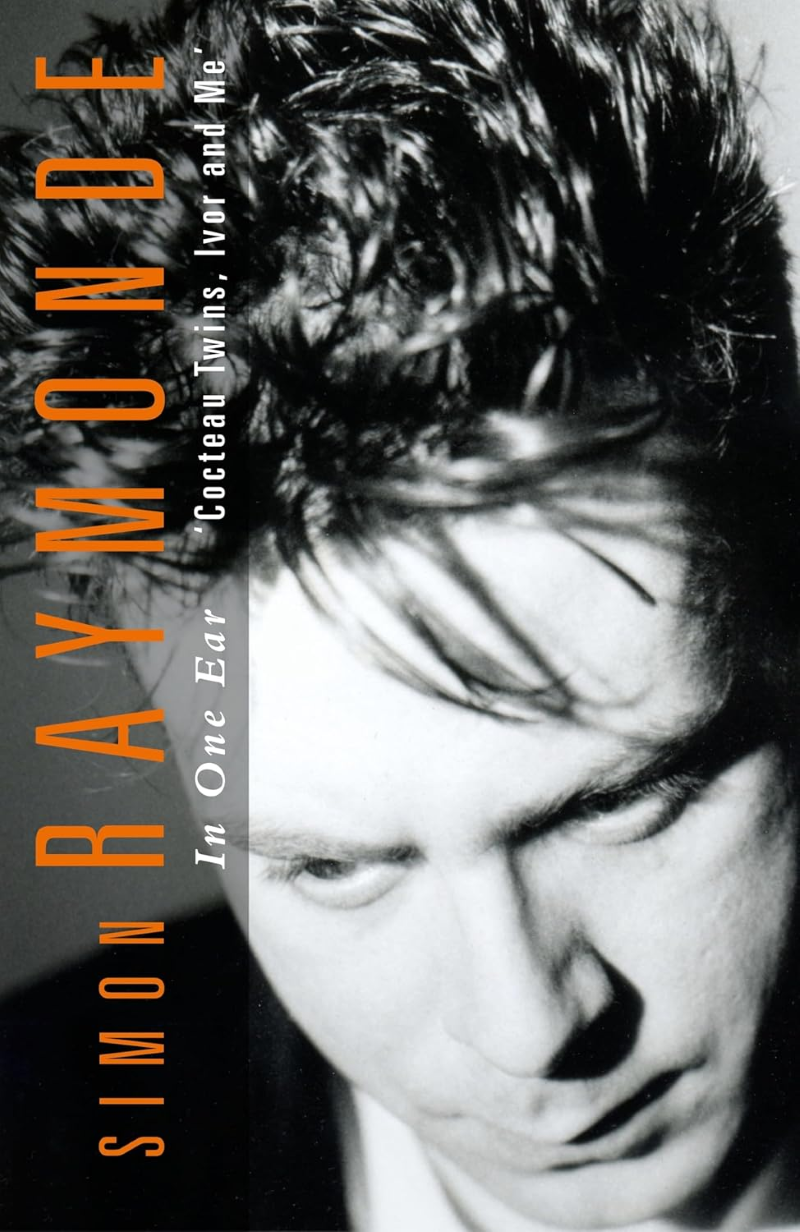
IN ONE EAR: COCTEAU TWINS, IVOR RAYMONDE AND ME BOOK REVIEW
“I think there are a number of reasons. Shoegaze was never that popular and we always shied away from being typecast or as anything particularly. Initially people called us a goth band, which we absolutely hated. I think when you are painted into a corner, it is never a particularly good thing. We always stayed clear of it. But there has been a resurgence of that music and has been nothing short of insane to watch. I mean, one of my own bands I work with, Beach House, they have been part of that resurgence. I think when you are young, 15 or 16, and you are starting to discover, not just music but culture and girls and boys and drugs and other things teenagers come across, there needs to be a soundtrack. And because our music was generally melancholic, kids are quite dark, they look at things through a different prism than the rest of us, and I think that partially explains it. There is a part of me that thinks ‘go find your own music’ but then I am absolutely thrilled people are still listening to it.”
In 1997 Raymonde and Robin Guthrie formed the record label Bella Union, with the intention of releasing Cocteau Twins records as well as solo music by the members. Raymonde also wanted to help new and unsigned bands. Things did not turn out as planned, certainly in terms of the Cocteau Twins who split shortly after the label was formed and Guthrie walking away from Bella Union, leaving Raymonde. But it was not all negative, as the label, which is still going strong, helped discover and launch the careers of bands such as Beach House, Fleet Foxes, Father John Misty and John Grant.
“That was the great irony of it all, really. I never ever intended to have a record label, so the fact that I am still doing that 28 years after we started, the joke is not lost on me, believe me. I never saw that happening. I never liked record labels all that much. It has taken up such a huge part of my life. I am very grateful for it. It has been challenging. It has never been more challenging than it is currently. And there is a lot more to the Bella Union story that is not in that book. I would have included a lot more, but my publisher was like ‘I think the way you got to it is fine’. I can always come back to that in the future and do a more exhaustive retrospective of the label, which will have a much smaller audience. But it is something I will probably do at some point. I love music so much, and love discovering new music. I like to help bands and artists get over some of the obstacles that are in the way, and God knows there are so many.”
Perhaps the other surprise for Raymonde was the success of Cocteau Twins. “We were quite weird about people liking our music back then. We did want people to like us; every band wants people to like them. We definitely found the attention difficult to handle. Stick a camera in front of us and we would all look down at the floor and shrivel away. Stick a microphone under our noses, we sounded like we had never spoken before, completely inarticulate when it came to the press. Our most comfortable place, to be honest with you, was in the studio, just being left alone to create our music,” Raymonde laughed. “We weren’t trying to be mysterious or have this image of us as a bunch of weirdos, we just literally did not like that kind of stuff. Our music just wasn’t suitable for balloons and dancing around on television. We just wanted to be left alone and enjoy the music.”
Raymonde is full of great stories, and he has a brilliant way of telling them. The book is an excellent read, and highly recommended. It really is a story of a person, their career and his complicated relationship with his father.
“I think it is a story of a guy who was in the music business for a long time and had some interesting stories along the way. I think the whole family thing is important, to be able to set things straight with a parent you never knew. For me, the stories that are in there are anecdotal about bands on tour and what happens to bands on tour. For me, the story is me discovering who my father was and the relationship between us and the similarities in our lives. It is an important thing that I got it done because I think my relationship with my father is better for writing the book. I made a lot of peace with that, not having much of a relationship with him when he was alive.”
Quite simply, Raymonde has the opportunity to explore his passion in life, besides his family—music. “I do love music, and I do love my time in music, that’s the important thing. My life is enormously enriched because of all the bands I worked with at Bella Union, and being in a band with Robin and Elizabeth, I couldn’t have dreamed of a better band.”
Artist Links


Background Photo Credit: Sheila Rock


SPILL BOOK REVIEW: SIMON RAYMONDE – IN ONE EAR: COCTEAU TWINS, IVOR RAYMONDE AND ME

SPILL ALBUM REVIEW: HAROLD BUDD, ELIZABETH FRASER, ROBIN GUTHRIE, SIMON RAYMONDE – THE MOON AND THE MELODIES

SPILL MUSIC PREMIERE: ROSE HAZE – “HEAVEN OR LAS VEGAS”

