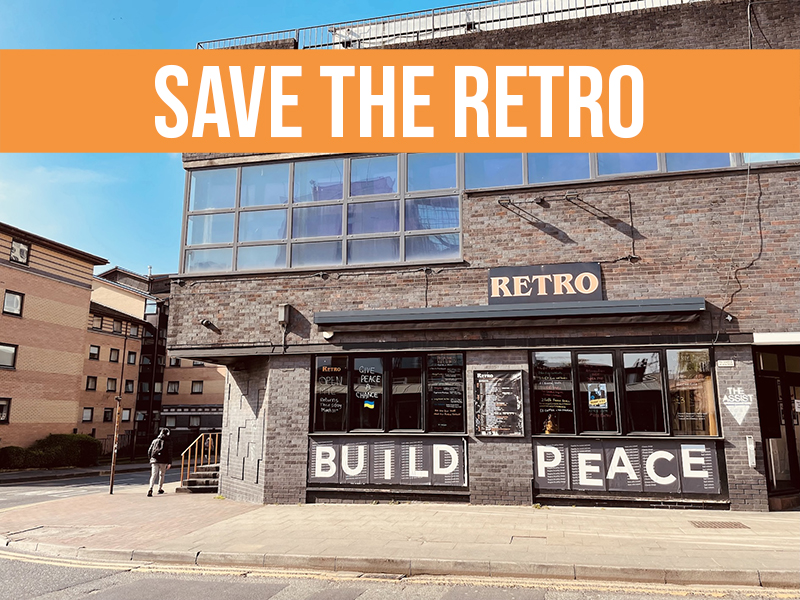
SAVE THE RETRO
A CONVERSATION WITH MANCHESTER’S RETRO BAR OWNER MARK ARMOR
This July, roughly a quarter of a million Oasis fans, over four days, will make a pilgrimage to Manchester to see the resurrection of a band thought long dead. Across the city, another musical institution will be shutting its doors – one that was thriving as far back as Oasis’s last visit to the city in 2010, and one that dates even as far back as the years that Liam Gallagher was croaking out his own neophyte songs at the infamous Boardwalk.
Retro Bar, or “The Retro” as it’s known to locals, is a grassroots music venue, nightclub and bar that has existed on Sackville Street, in the heart of the city’s student quarter, for over 30 years. It counts among its many claims to fame that of being the birthplace of The Chemical Brothers, Retro being the first place the duo DJed in the early ‘90s. Despite all that, in July, as revellers bear down on Heaton Park, Retro will cease trading, before being demolished in August.
The reason for its displacement and closure comes amid the acceleration of development on the “Sister Masterplan”, a £1.7bn venture between developers Bruntwood and Retro’s local neighbours, the University Of Manchester. Bruntwood did not respond to requests for comment on this article, nor any of Armor’s claims, but have since released their plans for the site, saying “Throughout the development process we have sought to shape our vision in collaboration with the surrounding community, heritage groups and a broad range of consultees. The result is a proposal that will support the city’s economic development and innovation ambitions, while at the same time, respecting the heritage of the site and creating new opportunities for their appreciation. Our proposals have been carefully considered, and we look forward to planning determination later this year,” according to the Manchester Evening News.
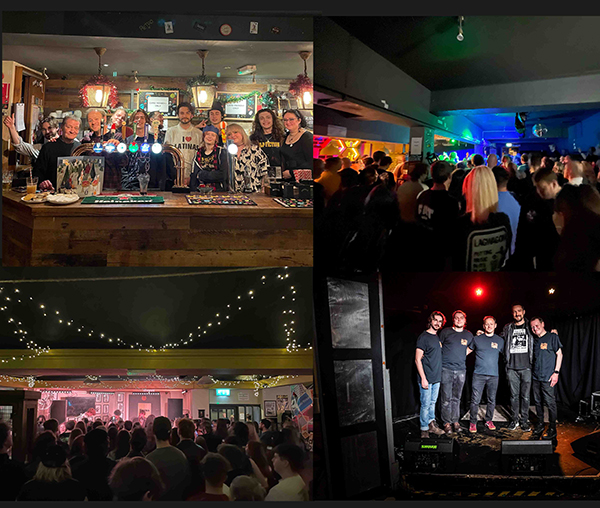
The closure and impending demolition has sparked outcry amongst the city’s cultural guardians, but Mark Armor, the venue’s owner and a 20-year veteran of the local grassroots music industry, does not paint the developers as unfeeling demons in this dispute, nor does he contest the reasons or need for the development.
“We’re completely in acceptance [of the site’s closure], because at the end of the day, we sit within a multi-storey car park which is a bit dilapidated – the site’s not had TLC for a number of years. I’m not going to be throwing myself in front of the bulldozers, because infrastructure projects happen.”
Instead, what has raised his and many others’ ire is the lack of care shown by the developers in catering for Retro’s displaced staff and desire to continue as a going concern. As the sole business displaced by the development, they feel they have not received any meaningful assistance in continuing their successful small business. As of my conversation with Armor, he has only been offered two other sites – one in the city centre but spanning four times the size of Retro’s current footprint (something that makes it financially unviable), and one in Stretford Mall, which sits more than four miles away from the city centre.
“The most frustrating thing is the lack of understanding of what we do. We work with a lot of artists around the punk and alternative scene, as well as doing club nights for different communities, and yet I think the developers just see us as a bar. It’s complete ignorance really, because it doesn’t take much to come into our space and see exactly what we do.”
Exacerbating this is the developers’ low offer of supporting funds, which, according to Armor, only gives the venue enough to wind down and pay out small shutdown costs.
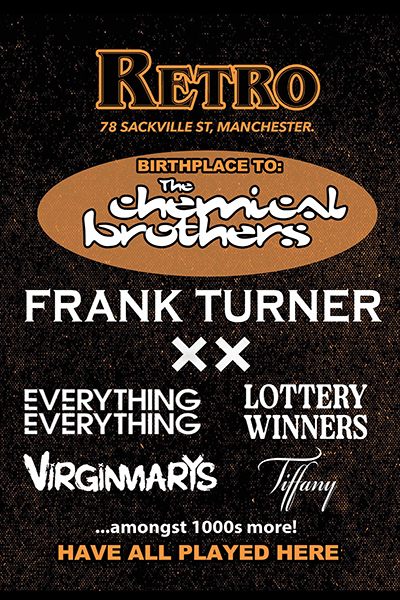
To plug the gap, local sentiment has spawned a viral crowdfunding campaign, supported on social media by the likes of Frank Turner and Everything Everything, who played some of their first gigs at Retro. Looking to attract around £50,000, at the time of writing, it’s raised around £4000, enough to keep operations going and fund essential works for the setting up of a new space.
Armor welcomes the backing from the site’s famous friends, but points out something important, too: “If you put every musician that’s played on the street outside, you’d probably fill the 22 acres! It speaks for itself, honestly. It’s not just the bands that went on to have successful careers, some bands see our venue as their Glastonbury – to get a gig in the city centre, and maybe one day sell it out and headline, that’s their achievement. Watching those bands develop and grow, and to be a part of that process…well, we just feel lucky that we can.”
I catch up with Armor as he finalizes plans for Retro’s yearly ‘R-Fest’ – a showcase of new and exciting talent drawn from the city of Manchester and many of its suburbs. It’s easy to feel the passion and genuine love that Armor has for being able to do the things he does within the industry, and there’s no question of not carrying on, provided, of course, a suitable site can be found. As Armor says: “It [asking for help finding a site] is a fairly straightforward ask, because we have everything else we need: a wonderful team of people, equipment, and something like fifty grand in assets that we’ve built up over seven years. If we can’t continue somewhere else, then what? Do we liquidate and sell our equipment? It doesn’t seem right. If we can continue, it’ll be a venue that Manchester has created, seemingly, without any developer support.”
Armor does make a point of lauding the Music Venue Trust, which have been providing help and support throughout the process of attempting to find a new venue. The Trust said in a statement that it is “is in ongoing dialogue with the venue team, Manchester City Council, Greater Manchester Combined Authority and Bruntwood SciTech, and calls for all parties to work towards a solution that secures the future of Retro in a viable new location and prevents the loss of this important and well-loved venue.”

What’s perhaps missing from this story is some of the wider context, that of an ongoing battle between the development of Manchester, largely in residential buildings, and its cultural element, which many feel drives people to live in the city in the first place. In 2018, the Greater Manchester Cultural Authority stated that it “will care for and invest in our artists, audiences, heritage assets and cultural organisations, creating the conditions for creative businesses and communities to thrive and for people to enjoy, create, learn, understand and express themselves” in its Greater Manchester Strategy for Culture, Heritage and Creativity, yet over the last decade, pillars of the local music scene such as Sound Control and Ruby Lounge have been demolished, making way for newer developments. Also, Northern Quarter institution Night & Day infamously had a court battle of its own to retain a license amid resident complaints. The GMCA did not respond to a request for comment for this article.
This clash of ideologies leads some, including Armor, wondering, what, then, does Manchester want to be? Reached for comment, Manchester City Council offered an encouraging response, saying “Manchester City Council is proud of our musical heritage and we absolutely recognise that the city’s grassroots venues are a vital part of Manchester’s renowned musical ecosystem and the contribution they make to the city’s cultural cache and local economy. Retro Bar is a good example of the importance of such venues – one that has supported many musicians through their early careers for more than three decades. So, it’s important that we look to carefully balance vital investment and economic growth in the city with protecting the ongoing success of our venues and wider culture sector. And as such, the Council is keen to work constructively with all parties to attempt to find an agreeable solution and help protect the legacy of venues like Retro Bar.”
While the council is somewhat hamstrung by the fact that it only has a bystander role in this stand-off, owning neither the land in the development area, nor being part of the development partnership, both bands and revellers alike will be hoping that the Council is able to back up its words and indeed resolve this impasse surrounding Retro Bar.
If it cannot, the next Oasis may have to be found elsewhere, and Manchester will, once again, be faced with the loss of a part of its cultural identity.
SAVE THE RETRO – CROWDFUNDER CAMPAIGN HERE
The Retro Links



SPILL ALBUM REVIEW: EVERYTHING EVERYTHING – MOUNTAINHEAD