PICK YOURSELF UP, DUST YOURSELF OFF, JUST KEEP GOING
A CONVERSATION WITH NATALIE MacMASTER
Celtic fiddler Natalie MacMaster is a Canadian music icon. Playing the fiddle from age nine, and releasing her first professional recording at 16, she has used her talent, skill, and artistry over the decades to shine a light on the traditional fiddle music of Cape Breton, NS, and has shared her love of music with the world. Through years of recording and touring, whether solo, with her husband Donnell Leahy, or in the family band with their children, Natalie MacMaster has put her indelible stamp on music in this country.
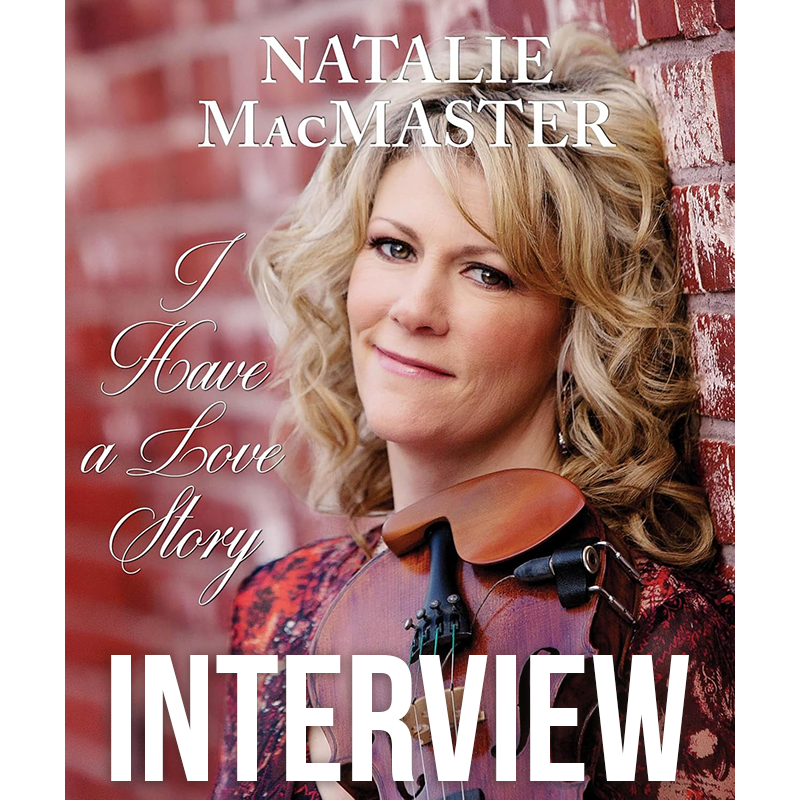
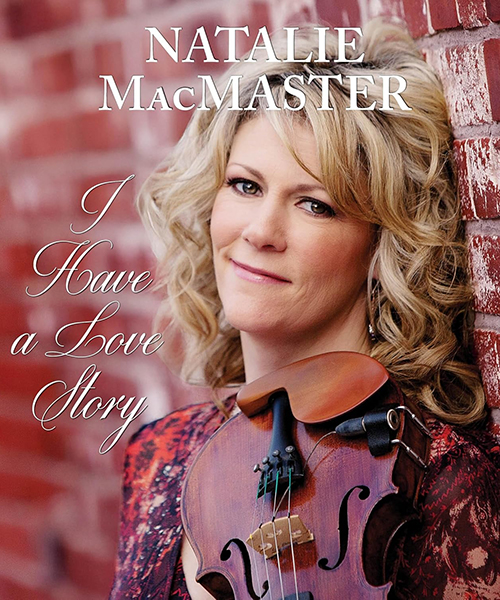
The Grammy-nominated, Juno Award-winning, Order of Canada recipient can now add the title of ‘author’ to her credits. Released this fall, MacMaster’s book, I Have a Love Story, is everything that one might expect from this artist. While it is a multifaceted look at her life and career, it is also a book of memories, photos, recipes, and unique gems of advice – all of which contribute to her ‘love’ story.
Laughing when she admits to writing the bulk of her book on her smartphone, MacMaster is pleased with how the final product came together. Originally meant to simply contain text, with no embellishments, MacMaster relates, “I remember with a couple of the stories I was describing, in particular when [daughter] Sadie was born, I’m like ‘Oh my gosh, they just have to see a picture of Sadie!’ Then, as I was writing I would think, ‘Oh my gosh, I’ve got a picture of this moment’, and I realized I have to have some pictures! I didn’t want to put too many in. Less is more, I kind of went with. After that, the floodgates opened. So, when I was talking about Donnell and I getting married, that two days before we had forgotten to gift something to our guests. Donnell came up with the idea of a tune. We had been playing it for years. I thought, ‘Oh, my gosh, I’ll put the music in the book.’ As it went on with the recipes, I thought, ‘If it were me, getting this book, and somebody was telling me about all of these delicious recipes, I would want to know what they were’. As I was writing the book, I thought that food is such a part of how to love people.”
While the process of writing a book is decidedly different from composing and performing music, both are creative pursuits. Of this idea, MacMaster states, “I see so many parallels. The obvious one that comes to mind is, having gone through writing the book, in the beginning, there was a deadline, and I’m like, ‘Okay, I did what I could and made it to the deadline. Now let’s start working. Now, let’s start shaping it.’ It’s like being in the studio. Now that we’ve laid the bed tracks, now we’re going to create the colours, create the magic. To start going after the details, and to pull and push on people’s emotions. So now I’m ready to start the sculpting, you know? There are similarities in that way.”
While the words in I Have a Love Story are all hers, MacMaster credits the support of John Serafini, an “incredible guide” who helped her to shape and focus this project. Speaking about Serafini’s guidance, MacMaster relates, “He got involved after my first draft was due. I was confused and wanted to get another opinion… and so I sent it to him. It was him, and his enthusiasm. He said, ‘Natalie, I think I can really help you with this,’ and he re-structured everything. He took the twenty-seven chapters I originally had – and they were much shorter – and he kind of broke it all apart and pieced it back together. He said, ‘I really think you should see the book in this way’, and he described how each chapter would go, with the exception of the first chapter. My husband did that one. He was like, ‘I think you should start out with something really exciting, to get their attention. Why don’t you talk about us, when we first met?’”
PURCHASE I HAVE A LOVE STORY
Wanting her book to be a good read for people, and to clearly get her points across, MacMaster emphasizes that her whole purpose for writing is to spread love, and to have people think about love. She kept the qualities of a good book in her sights, with suggestions from Serafini, asserting, “He had researched what makes a great book and that type of thing. He was recommending those things all the time, which were really, really helpful.’
As I Have a Love Story generally follows a chronological narrative, the author touches on many aspects of her life, not the least of which is her music. She mentions a number of early influences, most notably her uncle, the renowned Cape Breton fiddler Buddy MacMaster. Speaking about him, Natalie enthuses, “Buddy was a huge influence! I heard his music more than anyone else’s. I heard it both live, and on recordings. His sound was the sound I heard the most, and it was very inspiring to me. Even to watch him! I was sitting there, as I described, the two pools of sweat laying under his elbows, playing for a square dance. That was such a vivid image that will never leave me. As a kid I was like, ‘Wow! Could I ever be that good, that I could work that hard, and sweat that much?!’(chuckles). So, it was inspiring!”
As the title suggests, the over-arching theme of the book is love, with sub-themes of family, faith, and music. As our conversation turns to the balance of those life elements, MacMaster is thoughtful, saying, “If one of those things is off, you’re not fully complete, or you’re not fully at peace… but fortunately, I have all those elements. So, if one of them was off, I’d feel it. I would definitely feel it. It would be all-consuming.”
She also writes specifically about her Catholic faith while growing up, and how it continues to play a role in her life. Addressing her comments about faith, MacMaster is direct as she remarks, “It was hard for me. That was one of the things that made me fearful, I guess, to put the book out at all. People just make assumptions. I mean it’s not very cool to be Catholic, that’s for sure. Not in this day and age. But it’s only been a source of growing who I am as a human being. So, for me it’s only been positive. I know that people have a lot of issues, and I understand those things. I also wrote in the book, I said, ‘It’s impossible to get a sense of someone’s inner self or their inner faith or their inner beliefs, the details and the depth of them, just in passing conversation.’ That’s why I was just fearful. People are just going to assume things about me, and I didn’t want that. But I had to override the fear, and just work with it.”
Struggling somewhat, when it came to writing about the more personal aspects of her life, MacMaster is surprisingly quite candid, and really lets the reader in at certain points. “If I was putting out a music record, it’s different. I think I have quite a good confidence about what I am and ‘here’s what I am’ kind of thing. Whereas, with the book, I find myself much more curious about what people think, than I would be about my music, and I wonder why that is. I think part of it is that I’m wondering, ‘Oh, gosh, did I say too much about our personal, intimate, you know, having babies, and all that?’ Those are parts that I wonder about. Every time I wondered, ‘Should I take the out? Am I saying too much? Am I not saying enough?’ I come to the same conclusion every time, which is, how love has manifested itself with us… I wanted to connect with people and say, ‘You know what? On the outside it might look like we’re so lucky, we’ve got this, that and the other thing. But, on the inside we have had real struggles.’ To make people know that there’s no difference here… The whole moral of the story I think, is just, pick yourself up, dust yourself off, just keep going. Just keep choosing love and keep going.”
Whatever the subject matter, Natalie MacMaster presents her story in her uniquely natural and up-front fashion. As a musician, she has led from her heart and soul with honesty, for her entire career. With I Have a Love Story, she does the same with her words, giving the reader a glimpse of the person behind the persona, and continuing to share the love.
Artist Links