ONE FINE MORNING
A CONVERSATION WITH PAUL HOFFERT OF LIGHTHOUSE
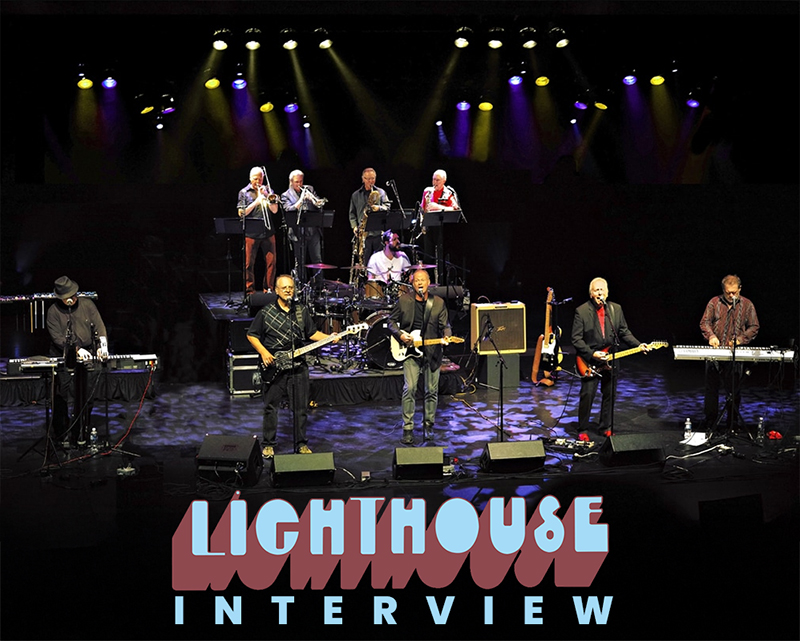
When keyboardist Paul Hoffert met vocalist/drummer Skip Prokop, previously of The Paupers, they discovered many commonalities between the two. Both were already firmly established in the music world, and not just in Canada. Both were well known in New York and throughout Europe, Hoffert for his jazz, playing, and writing, as well as Prokop for his outstanding vocals and drumming talents. They also had a love of jazz and wanted to combine jazz with rock and roll. Not merely have horns in songs, but a full-on horn section that could combine jazz with some pretty heavy rock. From that idea, Lighthouse became a reality.
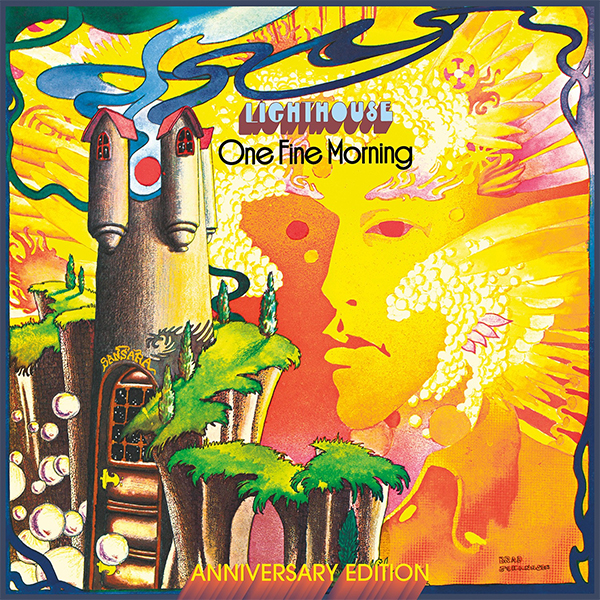
In 1971, Lighthouse released the album One Fine Morning, which was their breakthrough album. It made the top 20 in Canada (achieving gold and platinum status) and the top 50 in America. They went on to bigger albums, but One Fine Morning featured their first two hit singles, “Hats Off (To the Stranger)” and, of course, “One Fine Morning.” Although the album was a huge success, during the last two decades, it was not available for fans to buy. That has been corrected by Anthem Records, who are re-releasing the album on double vinyl featuring bonus material not on the original album.
“I am really pleased with the work that Anthem did. They worked with us for a long time on it, and it came out very well,” said Hoffert. “The One Fine Morning album, with all of its wonderful music, was the defining album for Lighthouse after three albums on RCA (One Fine Morning was originally released on GRT Records in Canada) that failed in the marketplace. I mean, they sold tens of thousands of records, but the cost of maintaining Lighthouse as a 13-piece touring band was so high, and RCA had made such a huge commitment when we first signed with them, that in order to recoup the cost of supporting us touring…we just didn’t sell enough records.”
The first three albums on RCA are all now considered classic albums (Lighthouse, Suite Feeling, and Piecing It All Together); they did not have the same commercial impact as One Fine Morning. They sold out Carnegie Hall when they made their New York City debut and performed at many festivals. Hoffert explained that the main reason is that Lighthouse was an album-oriented band and had not come up with hit singles yet. And FM radio, where Lighthouse would have most of its airplay, had not yet established itself.
“We knew full well that the only radios people had were AM radios. It was a hit, top 40 format, where the songs had to be short and between two and a half and three minutes long. And we didn’t fit that. In fact, the songs on the first three albums changed tempo, they started and stopped, orchestral, and lots of solos. The year One Fine Morning came out, I believe that was the first year that automobiles came with options for FM radios. This brought in formats that allowed for Lighthouse material. But no other record company would sign us unless we were willing to change the format of the songs we were performing. We found a producer who was willing to produce us, who we thought and think is great, Jimmy Ienner, and he came with the condition of us agreeing to change the format of our material for the One Fine Morning album, so that it would be more, what they called ‘radio-friendly’. We gave Jimmy complete control of picking the songs the guys had written. We gave him complete control of the mixes, where previously it was Skip Prokop and myself.”
ONE FINE MORNING (ANNIVERSARY EDITION) ALBUM REVIEW
Skip Prokop and Hoffert cofounded the band, and their meeting was somewhat unusual and quite fortuitous. “Skip was an up-and-coming rock ‘n’ roll star. He had played Peter Paul, and Mary, and The Mamas and The Papas, and supersession. He was managed by Albert Grossman, who also managed Bob Dylan and Janis Joplin. Skip also had his band, The Paupers. By that time, I had already released my first jazz album, when I was 16 years old and had written the score for two movies, one of which went to the Cannes film festival, and won an award, and I wrote an off-Broadway musical that had run in New York City for six months. I was doing studio work, jingles, TV, movies, that sort of thing.
“Skip and I met totally by accident. When I was in New York for my off-Broadway show, I walked into The Electric Circus, or one of those clubs, and it turned out it was the last night of Skip performing with his band, The Paupers, and at the intermission, he came up to me. He actually recognized me. He said, ‘I play in a rock ‘n’ roll band, but I really love jazz. I go to all the jazz clubs in Toronto, and I love your playing. I always ask if I can sit in, and you always say ‘no’. We had a brief chit-chat and then the next morning, totally by accident, Skip Prokop was sitting next to me on a flight from New York to Toronto, and he brought me up to date with what he was doing.”
This led to a conversation that sparked the idea of Lighthouse.
“He said to me, ‘I was thinking that since his passion was film scores,’ he loved going to westerns, and all he loved it when the horses would come over the horizon, and you would hear the French horns. He loved large orchestral film scores. He was interested in what I was doing, which included writing a couple of film scores. He suggested that between us we could put together a band that had the orchestral resources to do large scores, large arrangements, but could go out and perform our records live, exactly as they were on the disc. I thought that was a really great idea. That was the beginning of Lighthouse.”
Along with the remastered version of the album, the new release of One Fine Morning features a number of bonus songs, previously unheard by the general public and fans.
“When we were going through the archives,” Hoffert said, “for material that new listeners may be interested in, it turned out that we had saved the demos the band had made for the One Fine Morning album. We found 10 of them. Of the 10 demos, five were selected by our producer to be on the album. There were demos for the hits, like “One Fine Morning,” but others had been rejected by Ienner, and some of the ones that had been rejected were really wonderful songs. And I had never heard all of them; I only played on a few demos. To listen to Skip’s original demo of “One Fine Morning,” in which he was singing the song, and not even playing the drums, it is almost like a Santana demo, with me on bongos. And compare the demo to the finished recording and all the string parts and Bob McBride’s lead vocal. It is incredible.”
For those of us of a certain age, the return of this album is like the return of a long-lost friend. For others, One Fine Morning will be a new listening experience. However, you come across the new double album really doesn’t matter. The important thing is to listen and enjoy this rich and exciting music.
Artist Links


Photo Credit: Brenda Hoffer



SPILL CONTEST: WIN A COPY OF THE VERY LIMITED LIGHTHOUSE ALBUM ‘ONE FINE MORNING (ANNIVERSARY EDITION)’ THREE-COLOUR SPLATTER VINYL!