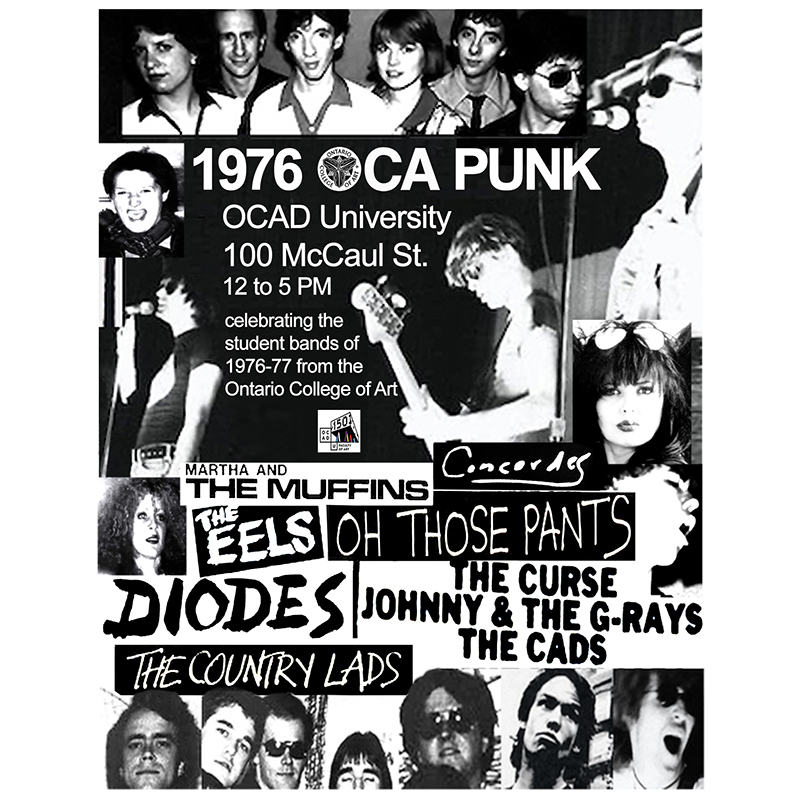
1976 OCA PUNK + ART ATTACKS: ROUNDTABLE ON ART, PUNK, AND THE QUEEN WEST SCENE OF THE ’70s AND ’80s
@ OCAD UNIVERSITY, TORONTO
NOVEMBER 20-21, 2026
It was a punky weekend party at OCAD this weekend as the 200-year-old art institution shone a light on an intriguing period in its distinguished history at the heart of Toronto’s art world.
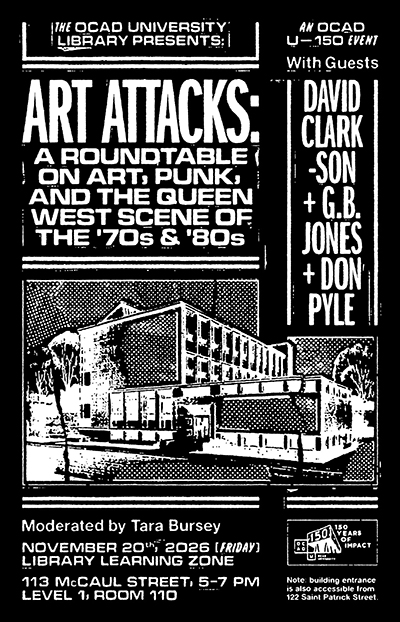
The two-day event opened with a well attended panel discussion, ably moderated by Tara Bursey, featuring three OCA graduates who were at the school in the late 70s. On the panel was David Clarkson (founding member of The Diodes), G.B. Jones (Fifth Column, musician and artist), and Don Pyle, (Shadowy Men On A Shadowy Planet).
Each one of the panelists was able to give quite a vivid picture of the atmosphere at the school and in the surrounding neighbourhood, and how this allowed an eclectic artistic scene to develop. The availability of factory and warehouse spaces meant that there were cheap rehearsal and living spaces in the area. This brought a number of young musicians from the suburbs to these spaces, some enrolled at OCA, but others were attracted by the scene that was starting to spring up around the school. Add to this the integration of the new technology into art, the atmosphere of experimentation that was so characteristic of this time and you had quite a heady mixture.
The title of the panel session was Art Attacks but there was very little political commentary, which I think reflects the nature of the punk movement in Canada. The scene here always seemed less doctrinaire, more interested in an inclusive artistic community than other notable punk scenes. Toronto didn’t have the economic crisis that the youth in the UK experienced and was not bankrupt like New York. The pure intensity of the punk bands like Johnny and The G-Rays, The Viletones, or The Demics, mixed easily with the art school influenced bands like The Dishes and Oh Those Pants.
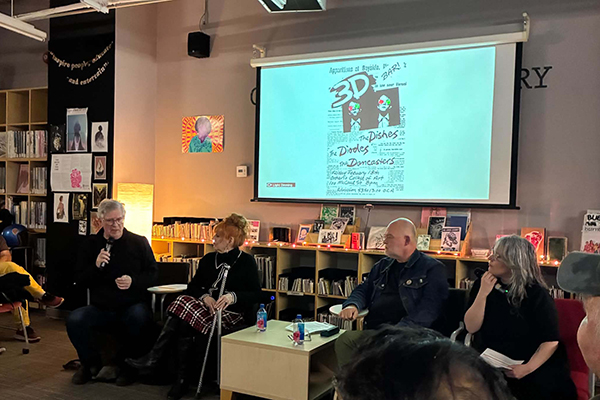
PANEL: (L TO R) DAVID CLARKSON, G.B. JONES, DON PYLE, TARA BURSEY (MODERATOR)
In the area surrounding OCA there was The Beverley Tavern for bands to play (also a de facto classroom for some students!) but also a number of artist-run spaces and experimental music coops. At OCA they had Sound Labs which gave artists a chance to explore the intersection of art and music. Toronto itself was an extremely lively place for the alternative arts at that time with General Idea, A Space, and many other people dedicated to art and music. At the same time, Marshall McLuhan and Northrop Frye were teaching just up the street, the commercial Canadian music scene was exploding and there was a great appetite for new and exciting ideas in art.
The series of live concerts at OCA, in 1976 and 1977, although not the first alternative music in that stretch of Queen Street, seems to have been a factor in giving bands a place to play. The panel featured a concert in January 1977 as a turning point in the development of the scene and although the bands were quite different from each other a community soon developed, with the heavier punkish bands mixing with bands that were more into fashion, style and humour.
In the area surrounding OCA there was The Beverly Tavern for bands to play (also a defacto classroom for some students!) but also a number of other clubs, artist run spaces and experimental music co-ops. At OCA they had Sound Labs which gave artists a chance to explore the intersection of art and music. Toronto itself was an extremely lively place for the alternative arts at that time with General Idea, A Space, and many artist-run galleries and spaces. The link seems to be that all these artists and musicians had an affinity for experimentation, random noise and a DIY aesthetic. Interestingly all the panelists went on to have long and artistic careers, incorporating much of the music and art that informed their time at OCAD.
Saturday afternoon was a very different but equally well attended event. Held in the main OCAD building this was centred around the music and the community that existed at the time. The mood was cheerful, many familiar faces, some grey hair and some notable absences. It was wonderful to hear some of the musicians playing together in various combinations, including Johnny and The G Rays and The Diodes. There were of course no completely original line-ups, but music was made in the DIY spirit of the times. The room was packed, some long-time supporters but also some younger faces, interested in this community built around music and art.
Partway through the afternoon everything stopped for a bit of magic. Mark Gane and Martha Johnson played a stripped down and very emotional version of Echo Beach, probably commercially the biggest song out of that era and ironically the one that turned this nascent scene into New Wave. Then Mark proceeded to cement the OCA Sound Labs connection that was so integral to the formation of his band and play a 15-minute solo guitar piece that was at once musical, electronic, and avant-garde in the best sense of the word.. Then David Clarkson read out a touching tribute that Martha Johnson wrote for Steven Leckie, whom she went to high school with, and who passed away last year, and in all his intensity with The Viletones was the dynamic engine for the whole scene.
And just like that it comes full circle. We go outside, chat with our old friends. A first-year student at OCAD tells me how inspired she is by this show, the excitement of creation is everywhere. The memories blend into a sunny November afternoon, McCaul Street is busy. I’m glad to know that people still dream, and they still come to downtown Toronto to make art and make music …and if you’re not busy, I think The Beverley is still open.
OCAD Links


SPILL LIVE REVIEW: JASON BONHAM’S LED ZEPPELIN EVENING @ THE ARENA AT PICKERING CASINO RESORT, PICKERING
SPILL LIVE REVIEW: LOW CUT CONNIE w/ BRIAN DUNNE @ THE BOWERY BALLROOM, NEW YORK (NY)
SPILL LIVE REVIEW: SLOW PULP w/ HER NEW KNIFE @ THE DANFORTH MUSIC HALL, TORONTO
SPILL LIVE REVIEW: BASEMENT w/ HIGH VIS, BIG BOY & LOWERTOWN @ THE DANFORTH MUSIC HALL, TORONTO