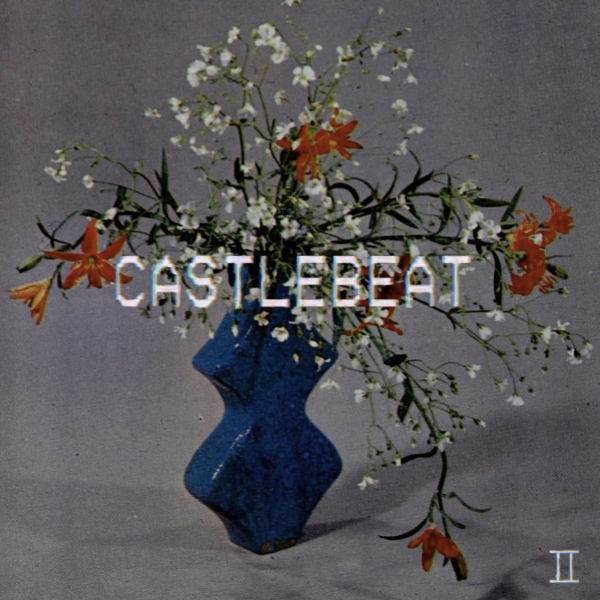
CASTLEBEAT
CASTLEBEAT II
SPIRIT GOTH

Ten years after CASTLEBEAT’s self-titled debut, Josh Hwang returns to where it all began with CASTLEBEAT II. Conceived as an anniversary record that circles back to the project’s original sound, the album does not simply recreate the past. Instead, Hwang filters it through a decade of distance, creating a lush immersion of dreamy analogue sound that feels caught somewhere between memory and the present.
“Awake” immediately establishes this atmosphere. Layers of hazy instrumentation seem to drift in and out of focus, while Hwang’s distant vocals feel less like something being performed in front of you than something remembered. It is an effect that persists throughout CASTLEBEAT II: melodies emerge through the fog before dissolving back into it, giving the record the strange familiarity of revisiting a place you have not seen in years.
That nostalgia, however, carries a soft ache. On “Stay With Me” and “My Love,” warmth and melancholy bleed into one another as Hwang turns toward attachment, absence, and the difficulty of letting go. The production rarely forces these emotions to the surface. Instead, they seep through washed-out synths and dreamy textures, allowing sadness to linger at the edges of otherwise inviting songs. “This Takes Time” provides one of the album’s brighter moments—its momentum briefly cutting through the surrounding haze without breaking the record’s dreamlike spell.
“Soft Light” is perhaps the album’s most fittingly named track. Its warm, diffused sound unfolds like sunlight reaching your skin through a layer of clouds: gentle rather than radiant, carrying as much wistfulness as comfort. By “Sun God,” that imagery becomes even more explicit, but the album’s relationship with light has already become part of its emotional language. Brightness is always present, though seemingly just beyond reach.
However, the record’s greatest strength can occasionally become its limitation. Its commitment to immersing the listener in a single hazy atmosphere means that some tracks meander and blur into one another, particularly through the middle stretch. Yet that sameness also makes CASTLEBEAT II feel less like a collection of isolated songs and more like a continuous recollection.
As the album meanders toward its final songs, the mood grows increasingly introspective, almost meditating on the expedition Hwang has taken us through. CASTLEBEAT II ultimately succeeds because its return to the past never feels like an attempt to live there. It captures the peculiar feeling of looking backwards while knowing time is still moving forward: familiar, distant, comforting, and quietly aching all at once.
Artist Links


SPILL ALBUM REVIEW: CASTLEBEAT – CASTLEBEAT II
Rei Kong


SPILL ALBUM REVIEW: MICHAEL KIWANUKA – FUDGE

SPILL ALBUM REVIEW: MICHAEL NAU – POPFLY

SPILL ALBUM REVIEW: FENNE LILY – WIN WIN
SPILL ALBUM REVIEW: STRAWBS – STRAWBS 50 YEARS ON – GRAVE NEW WORLD LIVE