SOMETHING TOO IRISH
A CONVERSATION WITH CHARLES HENDY OF THE MARY WALLOPERS
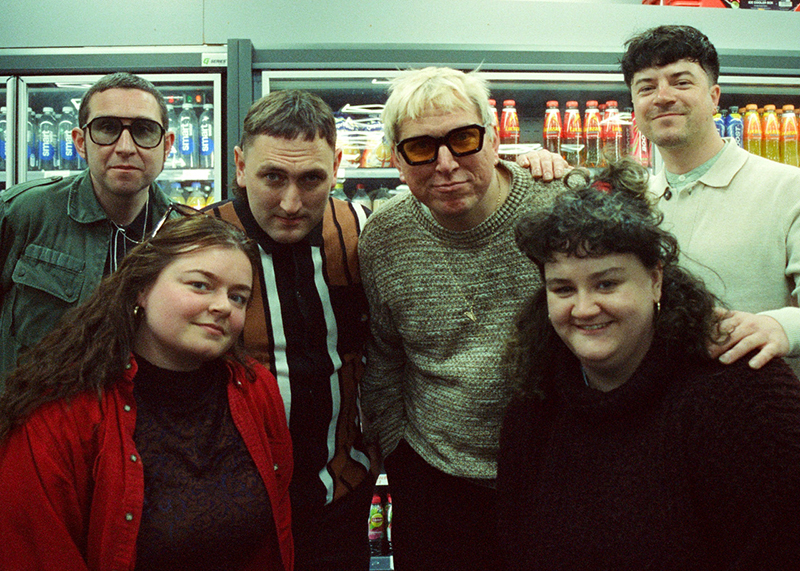
The Mary Wallopers are back with their third album, Paddywhackery, and a North American tour in 2027 which brings them to History in Toronto in March. The band just finished up performing at two of Ireland’s biggest music festivals, All Together Now and Electric Picnic, where they played to an estimated 80,000. Very impressive for a band that two brothers, Charles and Andrew Hendy formed (along with Seán McKenna) a mere six years ago in Dundalk, Ireland.
While The Mary Wallopers enjoy having a good time and sincerely hope that their fans have a raucous time, there is a serious side to them as well. While the name of their new album, Paddywhackery, may seem amusing, there is a lot of meaning and hurt to that word, and The Mary Wallopers want to explain.
I recently had the extreme pleasure of talking with Charles Hendy. This has been an exciting year for the band, with their third album, tours, festivals and exciting music videos. I reminded him of the incredible year The Mary Wallopers are having in 2026. “We are glad to get back into the festivals; they are always a bit wild. You also end up playing to people you have never played to before. Yeah, we are busy, it is all good.”
This brings the conversation back to the new album, Paddywhackery. “It was recorded in Liverpool with James Skelly of the band The Coral. It was a good crossover. He came over to Dundalk to see us practice. It was interesting. It was my favourite album we have recorded. Because I have a low attention span for making sure everything is perfect and recording everything over and over again. I prefer to just get stuff done and capture a moment, and James is like that and I was delighted that was how he wanted to do it. He wanted to capture what was happening then and there. It was fairly quick, I think we spent two weeks recording it.”
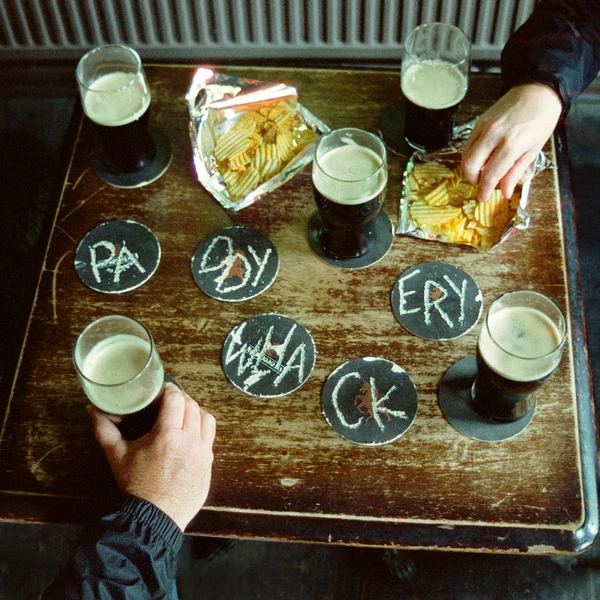
With the album recorded, it was time to find a suitable title for their third album. The title is very important to the band. “Paddywhackery is a phrase that is kind of an insult in Ireland, about something that is too Irish. Michael Flatly [American-Irish choreographer] might be paddywhackery. It is playing up to Irishness in order to sell anything really. We have been referred to as paddywhackery before and we always thought it was because we were just being ourselves. And because we are Irish and we happen to love drinking and singing songs, so maybe we are a bit of a stereotype, but there is so much more to it. Calling the album Paddywhackery, well it is very hip to be Irish at the moment. So, it is a comment on that. What is paddywhackery? Is it us or is it the commercial Irishness that is being sold at the moment, I don’t think we are that commercial. Which we wear as a badge of pride. It is really a derogatory term for Irish art that plays up to your Irishness to make money. The Blarney Stone is probably paddywhackery, the actual stone. Whoever came up with that…”
PADDYWHACKERY ALBUM REVIEW
In North America the band is perhaps seen as part of the new trad scene in Ireland. They, themselves, do not want to see themselves pigeonholed because there is a lot more to their music.
“Well, it is just because we are so different. What we are doing with the traditional music is different from whatever anyone else is doing. Not that other people are not developing it and doing interesting stuff with it, no one is doing what we are doing where we are pushing the rock ‘n’ roll side of it a lot. It can be frustrating, of course, because people like to put stuff in boxes. But I suppose that is why our second album was called Irish Rock N Roll, because it is the closest or the best way we can describe it. Because it has elements of Irish traditional, folk music, rock ‘n’ roll. More folk music than traditional Irish stuff. Our crowds get it, because our gigs are not like that of a traditional Irish concert. Not like a folk concert. It is more of a rock ‘n’ roll gig. It is what it is, people like to label things.”
And when discussing folk music, Hendy is clear that folk music and the perception of folk music has changed over the years. “People like to think folk music is really people just sitting around singing ‘Kumbaya’” but as he is quick to point out, folk roots are far from that. “The folk songs of antiquity up until now are not like that. Folk music is not meant to be soft. It is hard music. Woody Guthrie, Pete Seeger, were not singing soft songs. It is social, political and it is aggressive. We want to inject a bit of that into it. Our town, Dundalk, because it is on the border [between Ireland and Northern Ireland] has a raw spirit to itself. It is halfway between Dublin and Belfast, and if you were going to Belfast, you had to pass through Dundalk. A lot of bands would add in a date in Dundalk, just to make more money or something. So, Dundalk got a lot, Roy Orbison, Johnny Cash, The Smiths. They wouldn’t play anywhere else. But it was the main road.”
The band’s third album will be released on their own, independent label. “We’re fiercely independent,” said Hendy. He added, “it’s more work, but it pays off. We have had major labels try to sign us, but it was never a fit. They were trying to rip us off, really. I don’t think we would suit a major label because we would have to shut up about things.”
And while the band is excited about the new album, Paddywhackery, the band loves to perform live. But at the same time, he recognizes that technology, like the internet, has been underutilized by musicians. The Mary Wallopers are famous for their live stream marathons. “Our favourite thing was always performing. If we can’t perform, what’s the point of being in a band? I think it is down to gigging all the time. For a few years we did not stop, ever. One year we did something like 300 gigs in one year. There may have been two years of that. If we were asked to play, we played. We played to five people. In Hull, in England, people were coming up to us asking ‘why were we playing in Hull?’ You know? And we said, ‘because we were asked.’ We got very used to performing. I get more nervous playing at a session than playing to 40,000 people. That many people, it is kind of like a monoculture, just one entity at that stage.”
Hendy does have a few hopes for the album, and how it is received by the public. “I hope that people will feel hopeful. I think that our music has always been to try and make points about stuff we think but also entertain. I hope people have a laugh and feel a bit supported. The world seems mental now and it is mental, but everyone is not mental. So, I hope people feel hopeful and maybe questioning stuff…the make-up of society. But I think being hopeful is an act of resistance. Because no one wants us to feel hopeful, not the powers that be anyway. But everything’s all right, not everyone has gone crazy…yet.”
Artist Links


Photo Credit: Sorcha Frances Ryder